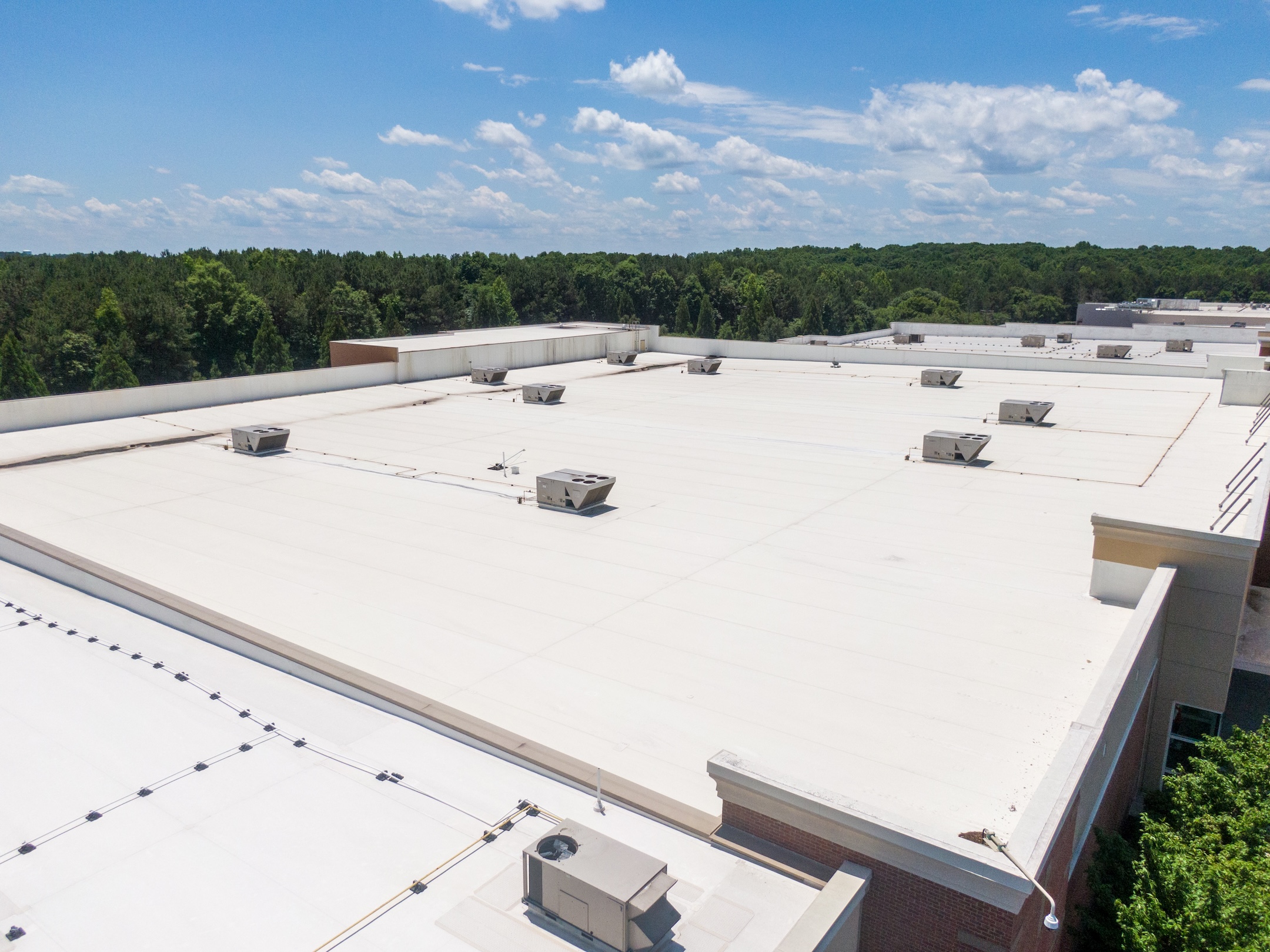

When comparing tpo vs pvc roofing, commercial property owners often want to know which membrane offers the best durability, efficiency, and return on investment. Both systems are single-ply roofing membranes commonly used on flat and low-slope commercial roofs. While they share similarities in installation and appearance, their performance characteristics differ in ways that can impact long-term costs and building protection.
- Energy efficiency: Both membranes offer reflective surfaces to reduce heat absorption.
- Durability factors: Chemical resistance and flexibility vary between materials.
- Cost considerations: Initial installation and lifecycle costs differ.
For business owners in Huber Heights and surrounding areas, selecting the right membrane can directly affect maintenance expenses and long-term building performance.
What Is TPO Roofing?
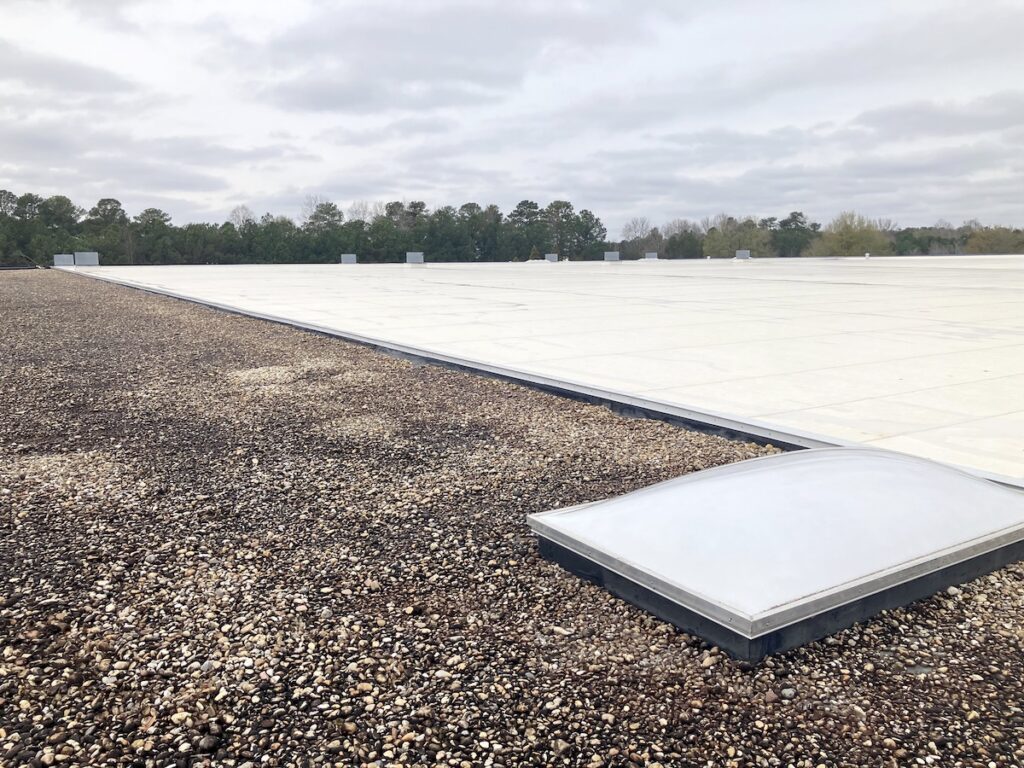
Thermoplastic Polyolefin, commonly known as TPO, is a single-ply membrane made from a blend of rubber and reinforcing fillers. It is widely used in commercial roofing due to its balance of affordability and performance. For a deeper dive into its specific material composition, our comprehensive guide on what TPO roofing is covers exactly how these internal fiberglass reinforcing fillers add incredible tear strength to the membrane.
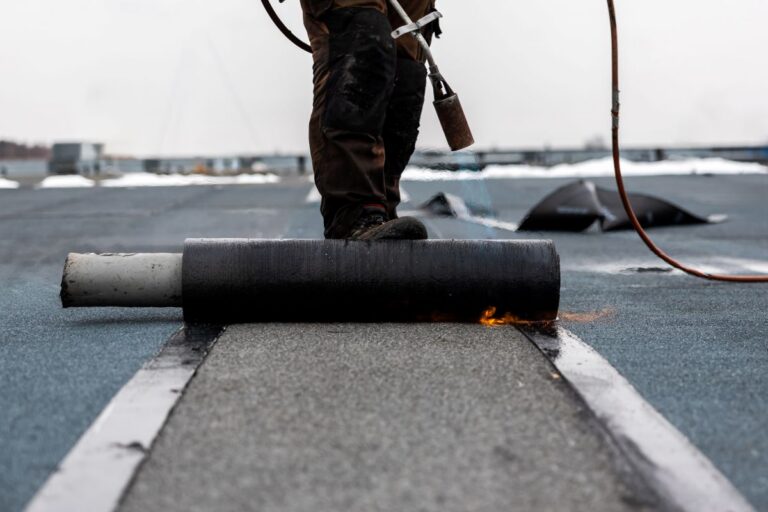
TPO membranes are typically white and highly reflective, helping reduce cooling costs during warmer months. Seams are heat-welded to create a watertight bond, which enhances durability and leak resistance when properly installed.
What Is PVC Roofing?
Polyvinyl Chloride, or PVC, is another single-ply membrane system commonly installed on commercial flat roofs. PVC membranes are reinforced with polyester or fiberglass and are known for their chemical resistance and long lifespan.
Like TPO, PVC roofing uses heat-welded seams for strong, waterproof connections. However, PVC contains plasticizers that improve flexibility, making it particularly effective in environments where chemical exposure or grease is common.
Key Differences Between TPO and PVC
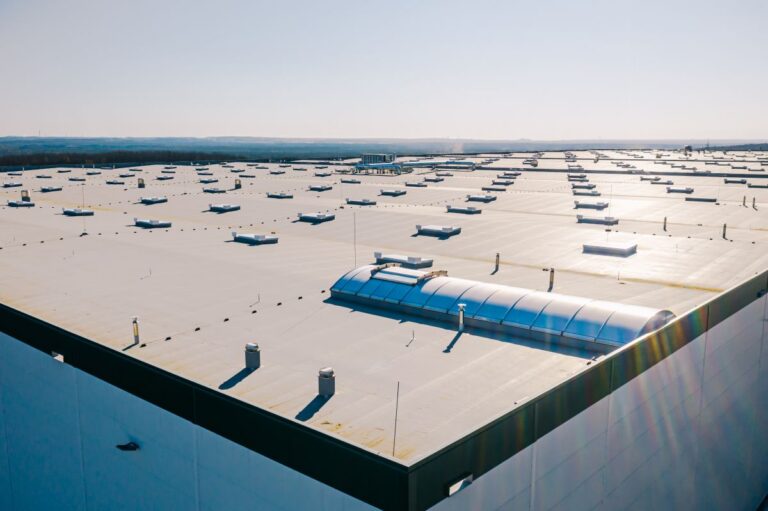
Although TPO and PVC look similar at first glance, there are important distinctions that affect performance, durability, and cost. Understanding these differences helps commercial property owners make informed decisions.
- Chemical resistance: PVC offers stronger resistance to oils, grease, and chemicals.
- Flexibility: PVC tends to remain more flexible over time in extreme conditions.
- Cost: TPO is generally more affordable upfront.
- Longevity: PVC often provides a longer service life in demanding environments.
- Maintenance needs: Both require periodic inspections to maintain warranty coverage.
Choosing the right membrane depends on your building’s usage and environmental exposure.
4 Factors to Consider When Choosing Between TPO and PVC
Selecting the best membrane for your building requires evaluating your operational needs, budget, and long-term goals. These four considerations can guide your decision.
1. Building Use and Chemical Exposure
The function of your commercial property plays a significant role in membrane selection. Restaurants, factories, and facilities with chemical discharge often benefit from PVC’s enhanced resistance.
- PVC advantage: Resists grease and chemical runoff effectively.
- TPO suitability: Works well for offices, retail spaces, and general commercial buildings.
Matching the membrane to your building type improves performance and durability. Because of this unique chemical tolerance, installing PVC roofing is widely considered the industry standard for restaurants with heavy exhaust vents and manufacturing plants with regular rooftop discharge.
2. Budget and Lifecycle Cost
Upfront installation cost is important, but lifecycle cost provides a more complete financial picture. TPO typically offers a lower initial price, making it attractive for budget-conscious projects.
- Lower upfront cost: TPO often requires less investment at installation.
- Long-term value: PVC may last longer in demanding conditions, reducing replacement frequency.
Evaluating total cost over time helps ensure smart capital planning.
3. Climate and Weather Conditions
Ohio weather can include heavy rain, snow accumulation, and temperature fluctuations. Both TPO and PVC perform well in these conditions when properly installed.
- Reflectivity: Both membranes reduce heat absorption during summer.
- Cold-weather flexibility: PVC may offer slightly better flexibility in extreme cold.
In Huber Heights and surrounding areas, climate resilience is a critical factor for flat roofing systems.
4. Installation Expertise and Warranty Options
Proper installation is just as important as material selection. Heat-welded seams require precision to maintain watertight integrity.
- Certified installers: Work with experienced commercial roofing contractors.
- Warranty coverage: Compare manufacturer warranties for both systems.
A professionally installed membrane ensures maximum lifespan and performance.
Durability and Performance Comparison
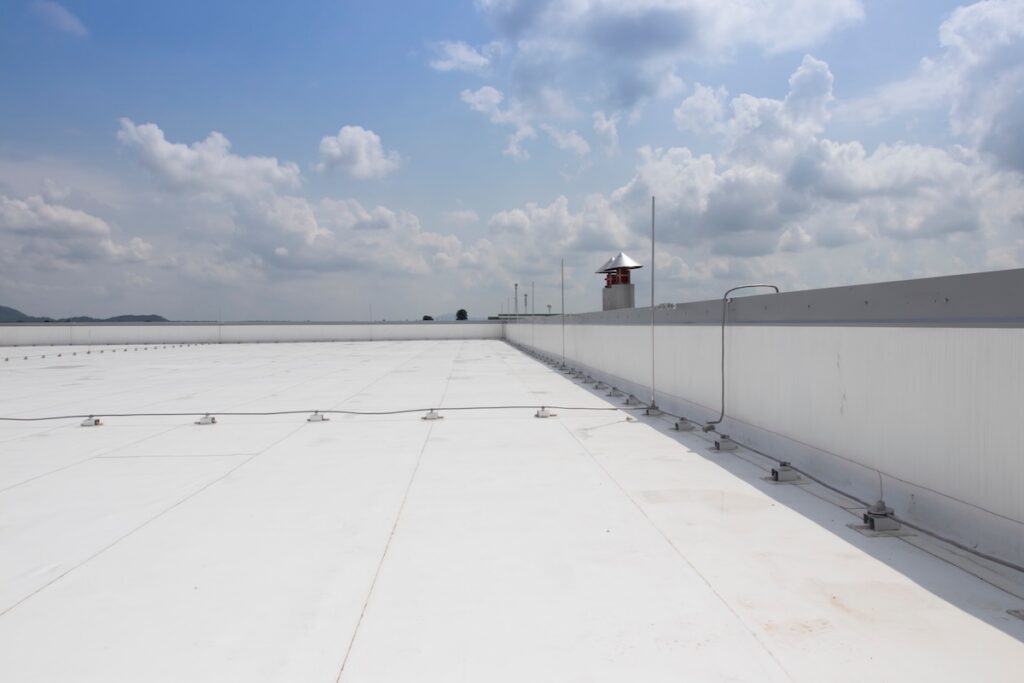
Both TPO and PVC offer strong puncture resistance and UV protection. However, PVC’s longer track record often makes it a preferred option in high-demand commercial environments.
TPO technology has improved significantly over the years, offering enhanced durability and flexibility compared to earlier generations. Today’s TPO membranes provide reliable performance when installed by qualified professionals.
Energy Efficiency and Sustainability
Both TPO and PVC membranes are known for their reflective surfaces, which help reduce urban heat buildup and lower cooling costs. Reflective roofing can also contribute to energy efficiency certifications and sustainability initiatives.
By reducing heat absorption, these systems decrease strain on HVAC systems, helping commercial property owners lower operational expenses. Over time, energy savings may offset a portion of the initial roofing investment.
Maintenance Requirements
Regular maintenance ensures both TPO and PVC systems perform as expected. Commercial flat roofs should be inspected at least twice annually and after severe weather events.
- Seam inspection: Check for separation or lifting.
- Drain cleaning: Ensure proper water flow to prevent ponding.
- Flashing review: Confirm all penetrations remain sealed.
- Surface inspection: Look for punctures or wear.
- Documentation: Maintain service records for warranty compliance.
Consistent inspections protect your roofing investment and extend its lifespan. Addressing these blockages immediately is crucial, as chronic ponding on a flat roof can slowly degrade the seams of both TPO and PVC systems under the immense weight of the standing water.
When Replacement May Be Necessary
If your existing membrane shows widespread cracking, repeated seam failures, or significant water intrusion, replacement may be more cost-effective than continued repairs.
Commercial property owners should weigh repair frequency against replacement cost. In many cases, upgrading to a newer, more durable membrane improves efficiency and reduces long-term maintenance expenses.
Choosing the Right Commercial Roofing Partner
Selecting between TPO and PVC is only part of the equation. Working with an experienced commercial roofing company ensures accurate assessment, proper installation, and ongoing support.
Contractors familiar with both membrane systems can recommend the best solution based on your building’s layout, usage, and budget.
Protect Your Building With Johnson Restoration
At Johnson Restoration, we help commercial property owners in Huber Heights and surrounding areas navigate the decision between TPO and PVC roofing with confidence. Our experienced team provides detailed inspections for commercial buildings, honest recommendations, and high-quality installations tailored to your building’s needs.
As a trusted commercial roofing company, we prioritize quality craftsmanship, safety compliance, and long-term performance. Whether you are planning a membrane upgrade or evaluating repair options, contact Johnson Restoration today. We are here to deliver dependable roofing solutions that protect your business and provide lasting peace of mind.