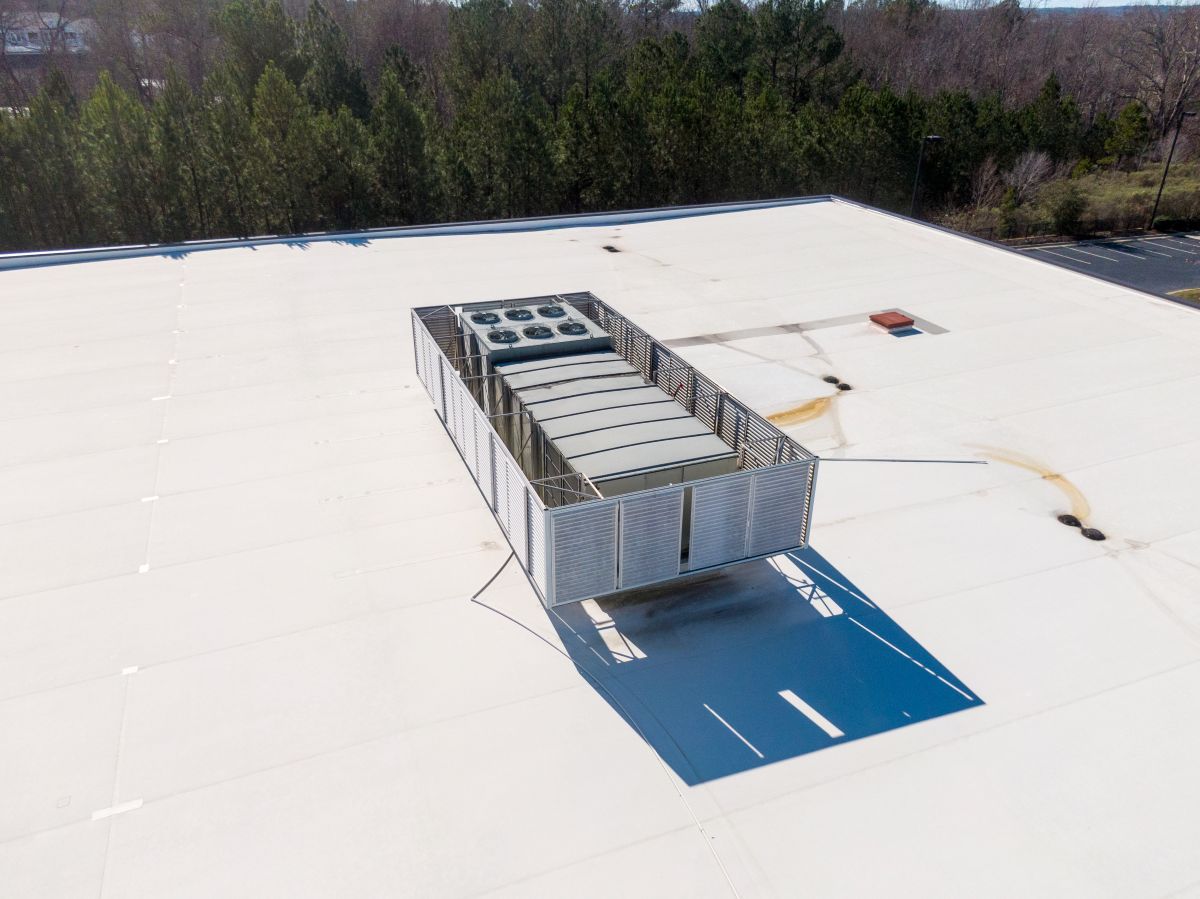

TPO roofing colors are one of the most consequential specification decisions a commercial property owner or facility manager can make, because the color of the membrane directly affects solar reflectance, cooling costs, roof surface temperature, and long-term operating expenses on a low-slope commercial building. Thermoplastic polyolefin (TPO) is one of the most widely specified single-ply commercial roofing membranes in North America, and while all three standard colors (white, gray, and tan) deliver the same waterproofing performance, they differ significantly in how much solar energy they reflect. A large commercial roof with high solar reflectance can shave meaningful dollars off the annual HVAC bill while extending the life of the membrane by reducing thermal cycling stress. For commercial properties in Lebanon and surrounding areas, understanding the trade-offs between the three TPO color options helps building owners make specification decisions that pay back over the 20 to 30 year life of the roof.
- Why color matters: Solar reflectance directly affects cooling costs and roof surface temperatures.
- What all three colors deliver: The same waterproofing, seam strength, and warranty coverage.
- What you will learn: The 3 TPO color options, their efficiency profiles, real cost impact, and answers to common commercial building questions.
Why TPO Membrane Color Matters More Than It Seems
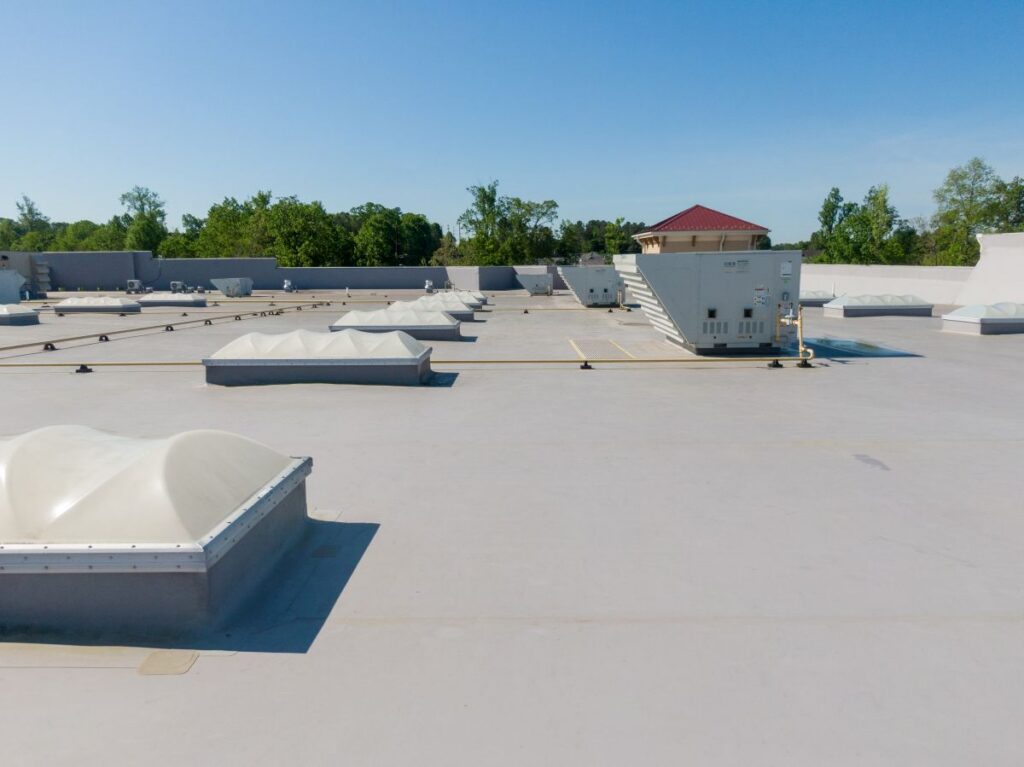
Why TPO membrane color matters more than it seems comes down to the physics of how sunlight interacts with roof surfaces on large commercial buildings. Understanding this dynamic is the foundation for making an informed specification decision.
How Cool Roofs Reduce Commercial Cooling Costs
Cool roofs reduce commercial cooling costs by reflecting solar energy back into the atmosphere instead of allowing it to be absorbed into the roof membrane and transferred into the building. According to the U.S. Environmental Protection Agency, a cool roof absorbs and transfers less heat from the sun to the building compared with a conventional roof, and in air-conditioned buildings, solar reflectance from a cool roof can reduce peak cooling demand by 11 to 27 percent. For a 50,000 square foot commercial building in Lebanon and surrounding areas, this reduction can translate to thousands of dollars per year in HVAC operating costs, particularly during Ohio’s hot and humid summers when air conditioning runs continuously. The Cool Roof Rating Council (CRRC) independently rates and publishes solar reflectance and thermal emittance values for TPO products, which is what makes color-based specification decisions data-driven rather than a matter of preference.
- 11 to 27 percent: Peak cooling demand reduction per EPA.
- Solar reflectance: The percentage of sunlight bounced back away from the roof.
- Thermal emittance: How efficiently the roof releases absorbed heat.
- CRRC ratings: Independent verification for TPO product performance.
Why Roof Surface Temperature Affects Membrane Longevity
Roof surface temperature affects membrane longevity because every degree of additional heat accelerates thermal cycling, UV degradation, and expansion/contraction stress on the seams. A dark roof surface can reach 150 to 180°F on a hot summer day, while a highly reflective white TPO membrane can stay 50 to 60°F cooler under the same conditions. Over decades, this temperature difference translates to less material fatigue, fewer seam failures, and a longer usable life. The reduced thermal stress also lowers the maintenance costs and extends the interval between roof recovers or replacements. For commercial property owners in Lebanon and surrounding areas thinking about total cost of ownership over 20 to 30 years, the temperature impact on membrane life is often just as important as the immediate energy savings.
- 50 to 60°F difference: Between white TPO and dark roof surfaces on hot days.
- Reduced thermal cycling: Less expansion and contraction stress on seams.
- Slower UV degradation: Cooler surfaces age more slowly.
- Longer service life: 5 to 10 additional years possible on cool roofs.
3 Standard TPO Roofing Colors and How They Affect Efficiency
Three standard TPO colors are stocked by virtually every major manufacturer (Carlisle SynTec, Versico, GAF, Elevate, Johns Manville, IKO Commercial, and others), and they represent the vast majority of commercial TPO installations. Each color has a distinct efficiency profile and best-use scenario for commercial buildings.
1. White TPO (Highest Reflectance and Efficiency)
White TPO is the most reflective and energy-efficient standard color option, typically delivering initial solar reflectance values between 0.78 and 0.87 (meaning it reflects 78 to 87 percent of solar energy) and thermal emittance values around 0.89 to 0.90. Three-year aged solar reflectance typically holds at 0.68 to 0.73 after weathering. White TPO is the default choice for commercial buildings prioritizing energy efficiency, LEED certification, ENERGY STAR compliance, and code compliance in jurisdictions with cool roof requirements. It qualifies for the strongest cooling energy savings, keeps the roof surface temperature dramatically lower than darker options, and supports the longest expected membrane life. The main downside is that white surfaces show dirt, algae, and pollution staining more visibly than tan or gray, though this is largely a cosmetic issue that does not significantly reduce the membrane’s performance.
- Solar reflectance: 0.78 to 0.87 initial; 0.68 to 0.73 aged.
- Best for: Maximum energy savings, LEED credits, code compliance.
- Cooling impact: Highest reduction in peak cooling demand.
- Trade-off: Shows dirt and staining more visibly than darker colors.
2. Gray TPO (Mid-Range Reflectance with Aesthetic Flexibility)
Gray TPO offers a middle-ground option with lower solar reflectance than white but still significantly better performance than dark commercial roofing options like black EPDM or built-up roofing (BUR). Standard gray TPO typically delivers initial solar reflectance values between 0.30 and 0.50, with “Energy Gray” formulations from some manufacturers pushing values higher (up to 0.60+) through specialized pigments. Gray works well for commercial buildings where aesthetics matter (visible from adjacent buildings or public spaces), where glare from white surfaces would be problematic, or where dirt accumulation would be unsightly on a white roof. Efficiency modeling by GAF and others confirms that gray TPO still delivers energy savings compared to a dark membrane like EPDM, just less than white TPO. For code compliance in jurisdictions with strict cool roof requirements (California Title 24, some ASHRAE 90.1 zones), gray typically requires the specialized “Energy Gray” formulation to meet minimums.
- Solar reflectance: 0.30 to 0.50 standard; higher with “Energy Gray” formulations.
- Best for: Aesthetic considerations, glare reduction, dirt masking.
- Cooling impact: Moderate; better than dark membranes but less than white.
- Code compliance: May require specialized formulation for cool roof standards.
3. Tan TPO (Warm Aesthetic with Better Efficiency Than Gray)
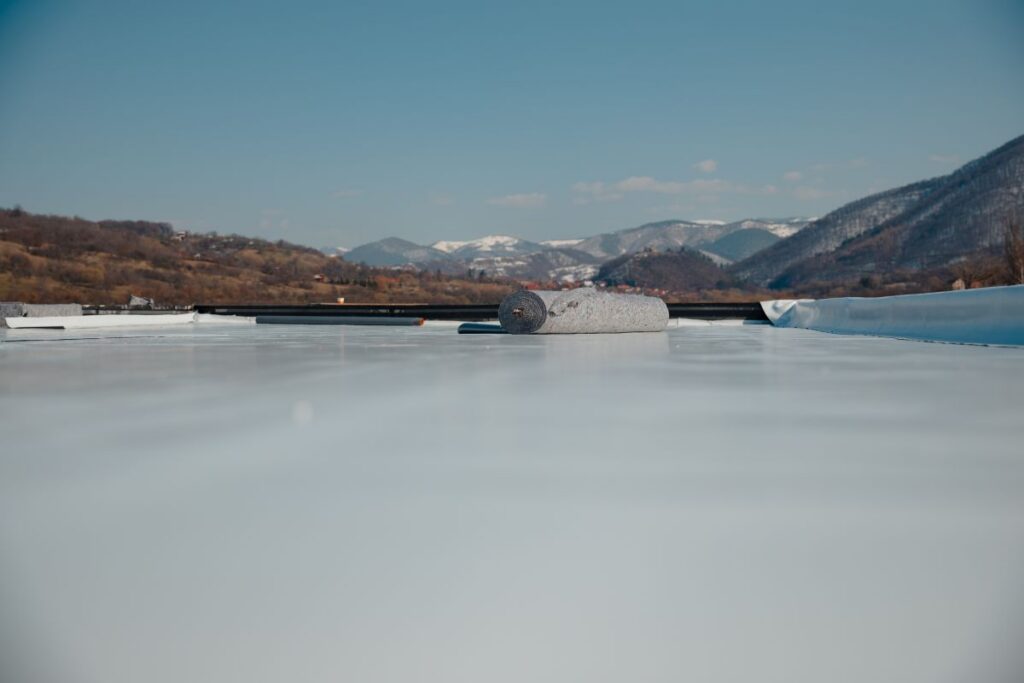
Tan TPO delivers reflectance values that sit between gray and white, typically ranging from 0.65 to 0.79 for initial solar reflectance and around 0.62 to 0.70 after three years of weathering. This makes tan a strong compromise for commercial buildings that want a warmer visual palette than white without giving up substantial energy performance. “Energy Tan” formulations from major manufacturers can meet cool roof requirements in most jurisdictions, including California Title 24 for commercial buildings. Tan also hides dirt and staining better than white, reducing the appearance of weathering over time. Tan TPO is often specified for commercial buildings in warmer climates where the reflectance is still needed for cooling costs but the visual softness of tan is preferred over stark white. For LEED compliance, tan TPO can qualify for the same credits as white in some cases, depending on the specific product’s Solar Reflectance Index (SRI).
- Solar reflectance: 0.65 to 0.79 initial; 0.62 to 0.70 aged.
- Best for: Warm aesthetics with strong energy performance.
- Cooling impact: Close to white; substantially better than gray.
- LEED eligibility: Can qualify for the same credits as white with proper SRI.
How to Choose the Right TPO Color for Your Commercial Property
How to choose the right TPO color for your commercial property depends on the specific building, its climate zone, code requirements, and how the roof will be viewed from surrounding structures. A structured approach helps commercial property owners make an informed specification.
What Factors Should Drive the Decision
Factors that should drive the decision include: local energy code requirements (does your jurisdiction have a cool roof mandate?), climate zone (Ohio is climate zone 5, where cooling benefits are meaningful but not extreme), roof visibility from surrounding buildings, HVAC operating cost sensitivity, LEED or ENERGY STAR certification goals, and the age of the building’s insulation and HVAC systems. A commercial building with an inefficient HVAC system and poor roof insulation gains more benefit from a highly reflective white membrane than a well-insulated building with high-efficiency HVAC. For most commercial properties in Lebanon and surrounding areas, white TPO is the default recommendation, with tan considered when aesthetics matter and gray reserved for specific glare or code-driven situations.
- Local code requirements: May mandate specific solar reflectance minimums.
- Climate zone: Determines the value of cooling energy savings.
- Building insulation: Higher benefit from cool roof if insulation is poor.
- HVAC efficiency: Older systems benefit more from reduced load.
What Questions Should I Ask a Commercial Roofing Contractor
Questions to ask a commercial roofing contractor include: What is the initial and three-year aged solar reflectance of the specific TPO product you propose? Is the product listed with the Cool Roof Rating Council (CRRC)? Does the specified color and product meet the applicable energy code for our jurisdiction? What is the estimated annual energy savings for our building based on the DOE Cool Roof Calculator or similar modeling? How does the warranty on this color compare to the warranty on white TPO? A qualified commercial roofing contractor will provide specific numerical answers to these questions in writing and be able to walk you through the trade-offs between the color options.
- CRRC listing: Confirms independent verification of performance.
- Code compliance: Verify with jurisdiction-specific requirements.
- Energy modeling: DOE Cool Roof Calculator gives building-specific estimates.
- Warranty terms: Confirm equivalent coverage across colors.
Frequently Asked Questions
How Much Do Commercial TPO Roofs Cost by Color?
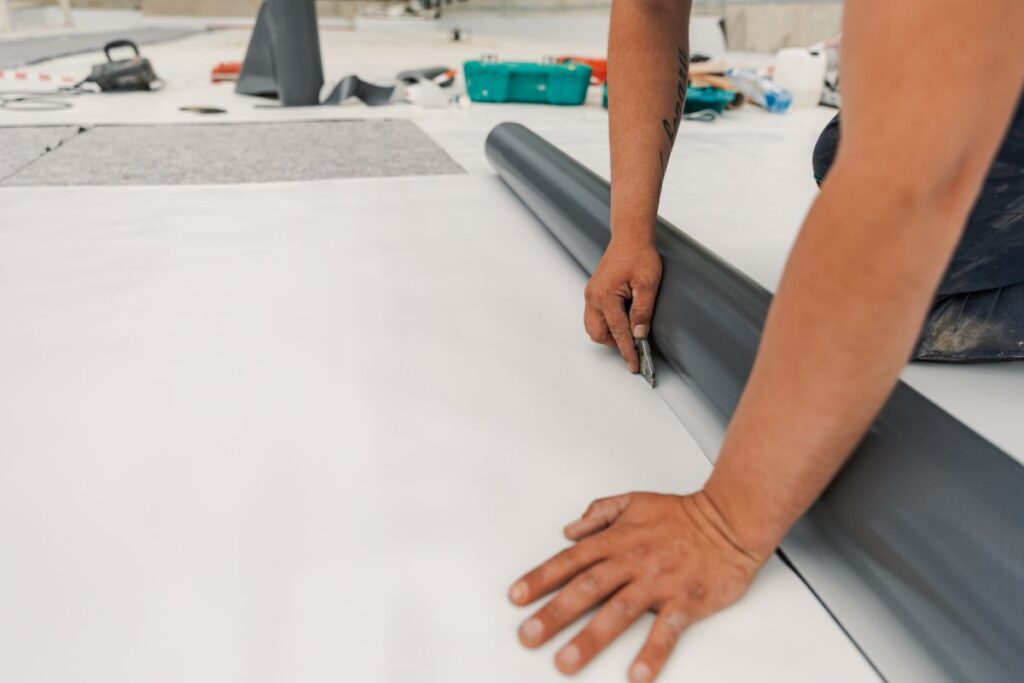
Commercial TPO roofs typically cost $5 to $12 per square foot installed regardless of color, with white, gray, and tan all priced similarly since the manufacturing process is essentially the same. Custom or specialty colors (like green, red, or blue) require minimum order quantities of 40,000 square feet or more and cost 15 to 25 percent above standard colors. For a typical 50,000 square foot commercial building in Lebanon and surrounding areas, expect total project costs of $250,000 to $600,000 depending on complexity, insulation upgrades, and tear-off requirements.
Does White TPO Really Save That Much on Cooling Costs?
Yes, white TPO can save significantly on cooling costs, with EPA data showing 11 to 27 percent reductions in peak cooling demand compared to conventional dark roofs. For a large commercial building in Ohio, this typically translates to $0.10 to $0.30 per square foot per year in cooling savings, or $5,000 to $15,000 annually on a 50,000 square foot building. Actual savings depend on the building’s HVAC efficiency, insulation, occupancy patterns, and local utility rates.
What Is the Solar Reflectance Index (SRI)?
The Solar Reflectance Index (SRI) is a combined measure of solar reflectance and thermal emittance developed to represent how “cool” a roof surface stays under standardized conditions. It is calculated per ASTM E1980 and ranges from 0 (typical black surface) to 100+ (highly reflective white surface). LEED requires a minimum aged SRI of 64 (or initial SRI of 82) for cool roof credits on low-slope commercial roofs. White TPO typically achieves aged SRI values of 85 or higher, while tan reaches around 77 and standard gray around 48.
Do Local Ohio Codes Require a Cool Roof?
Ohio does not currently mandate cool roofs statewide, but local building codes and utility rebate programs can incentivize or require them for certain commercial construction projects. The 2021 International Energy Conservation Code (IECC) includes cool roof provisions that many Ohio jurisdictions have adopted with amendments. Commercial property owners in Lebanon and surrounding areas should check with local building departments for the current requirements applicable to their specific building type and location.
Will Color Affect the TPO Warranty?
Color typically does not affect the manufacturer warranty on TPO roofing, with white, gray, and tan all receiving the same 20 to 30 year warranty terms from major manufacturers. Custom colors sometimes have modified warranty terms due to the different pigments used. Warranty coverage depends primarily on membrane thickness (45-mil vs. 60-mil vs. 80-mil), installation quality, and adherence to manufacturer specifications, not on color choice.
Can I Retrofit an Existing Roof With a Different Color?
You can retrofit an existing commercial roof with a different TPO color as part of a re-roofing project or roof recover, but you cannot change the color of an existing membrane in place without either replacing it or applying a compatible field-applied roof coating. Cool roof coatings (typically white acrylic elastomeric) can be applied over aging TPO or other flat roof membranes to add solar reflectance without full replacement, at a cost of $1 to $3 per square foot compared to $5+ per square foot for full replacement.
Why Lebanon Commercial Property Owners Trust Johnson Restoration for TPO Roofing
TPO color selection is one of the most consequential decisions in a commercial roofing project, and the right choice depends on balancing energy efficiency, aesthetics, code compliance, and long-term operating costs against the specific characteristics of your building and location. Johnson Restoration brings over a decade of industry experience to commercial TPO roofing projects in Lebanon and surrounding areas, with workmanship warranties, financing options, and the expertise to help property owners specify the right color, thickness, and manufacturer for their specific building and operating priorities. Whether you are planning a new commercial roof installation, replacing an aging membrane, or evaluating a cool roof upgrade for energy savings, contact Johnson Restoration today for a free estimate and let our team help you make a specification decision that pays back over the entire life of the roof.