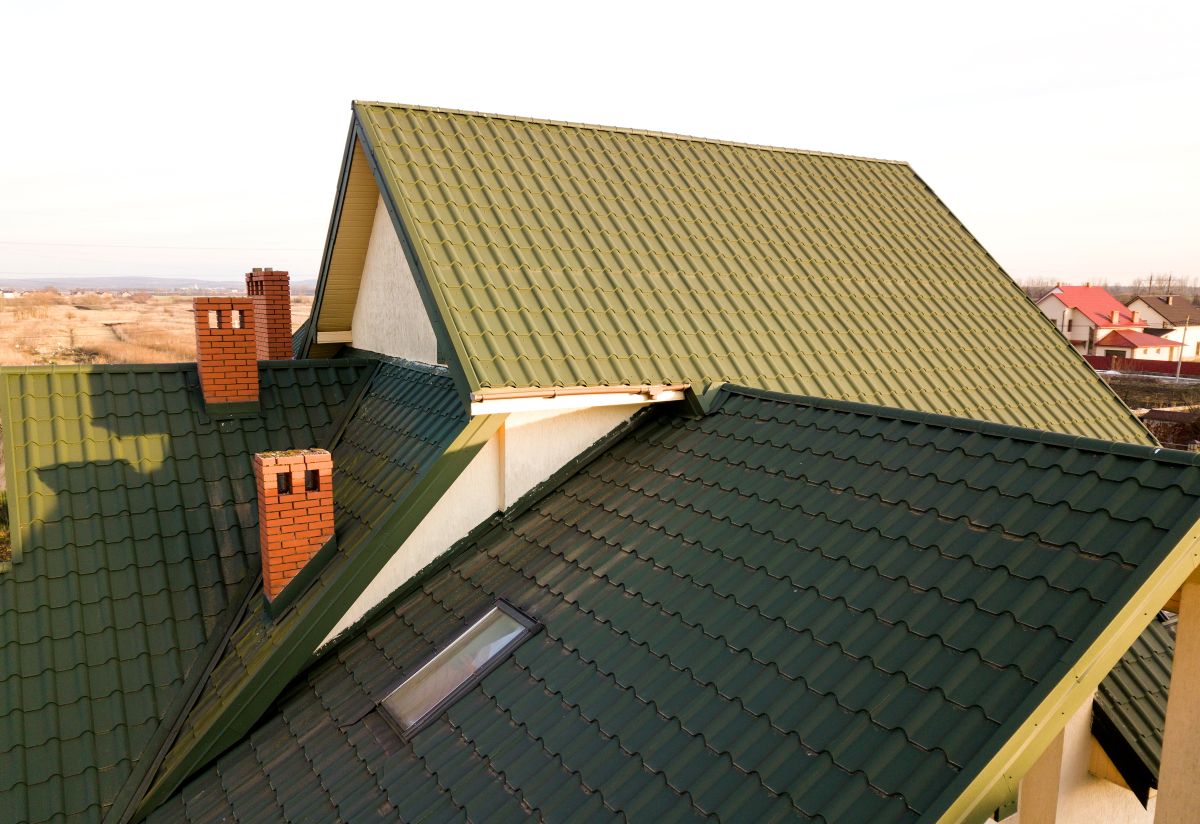

Metal roofing Mason OH homeowners have installed over the past decade continues to grow in popularity for one simple reason: nothing else on the market matches metal’s ability to handle Ohio’s punishing combination of thunderstorm winds, spring hail, heavy winter snow, and constant freeze-thaw cycles year after year for decades. Metal roofing has moved well beyond its old associations with barns and industrial buildings, and today’s residential metal roofs come in styles that mimic shingles, shakes, tiles, and slate while delivering 40 to 70 years of service life with minimal maintenance. Ohio’s climate is particularly demanding on roofing materials because it combines high summer humidity, severe spring storms, hail-producing weather patterns, and repeated freeze-thaw cycles from November through March. Homeowners in Mason and surrounding areas who are weighing metal roofing against traditional asphalt shingles benefit from understanding the specific ways metal outperforms other materials in this climate.
- Why metal in Ohio specifically: Wind, hail, snow, and freeze-thaw all favor metal over asphalt.
- What today’s metal roofing looks like: Shingle, shake, tile, and slate profiles in dozens of colors.
- What you will learn: 6 climate-specific reasons metal stands up in Ohio, plus cost, lifespan, and FAQs.
Why Ohio’s Climate Is Uniquely Hard on Roofs
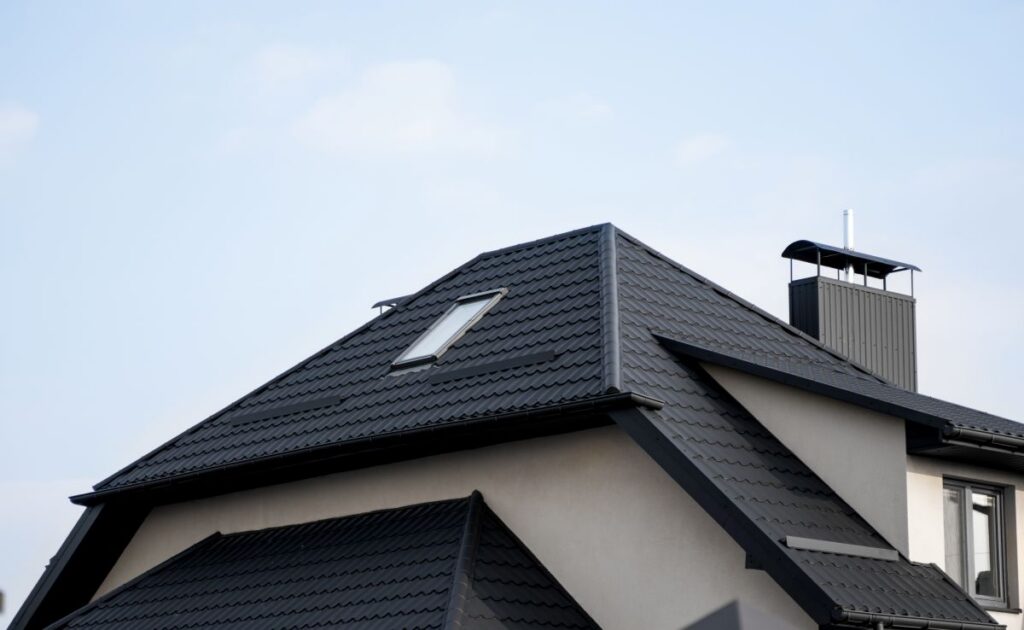
Why Ohio’s climate is uniquely hard on roofs comes down to the combination of weather stresses this region experiences, which is more varied than most parts of the country. Understanding these stresses is the foundation for understanding why metal roofing performs so well here.
What Ohio Weather Does to Traditional Asphalt Shingles
Ohio weather does specific and predictable damage to traditional asphalt shingles: severe thunderstorm winds lift and blow off shingles at the roof edges, hailstorms crack and dent the granular surface leading to accelerated aging, heavy snow loads compress shingles and force water infiltration at fasteners, freeze-thaw cycles crack shingles that would otherwise flex, and summer UV combined with high humidity accelerates the loss of protective granules. The average asphalt shingle roof in Ohio lasts 15 to 20 years despite manufacturer warranty claims of 25 to 30 years, largely because these overlapping stresses shorten actual service life. Metal roofing sidesteps most of these failure modes entirely, which is why the total cost of ownership over 50 years often favors metal despite the higher upfront cost.
- Wind blow-off: Severe thunderstorm gusts commonly exceed 60 mph in Ohio.
- Hail damage: Ohio averages several damaging hail events per year.
- Snow load and freeze-thaw: Compress and crack shingles repeatedly.
- UV plus humidity: Accelerates granule loss and shingle aging.
How Metal Roofing Addresses Ohio-Specific Stresses
Metal roofing addresses Ohio-specific stresses through fundamentally different material properties: interlocking panels or concealed fastener systems resist wind uplift far better than exposed shingle edges, thicker gauge metal absorbs hail impacts without cracking, smooth surfaces shed snow and ice quickly to prevent load buildup, and metal does not degrade from UV exposure or absorb moisture the way asphalt does. Modern residential metal roofing systems are also designed with concealed fasteners (standing seam) or hidden clip systems that keep the weather-tight barrier intact even under the most severe conditions. For homes in Mason and surrounding areas, this combination of properties translates directly to fewer post-storm repairs, longer service life, and lower long-term cost.
- Interlocking panels: Resist wind uplift better than shingle edges.
- Thicker gauge metal: Absorbs hail impacts without cracking.
- Smooth surfaces: Shed snow and ice quickly.
- No UV or moisture degradation: Metal does not break down like asphalt.
6 Reasons Metal Roofing Stands Up in Ohio
Six specific reasons make metal roofing particularly well-suited to Ohio’s climate, and each addresses a different failure mode that shortens the life of traditional roofing materials.
1. Wind Resistance Rated for 140 mph Gusts
Wind resistance rated for 140 mph gusts is the first reason metal roofing stands up in Ohio’s severe thunderstorm and tornado season. According to the Metal Roofing Alliance, a quality metal roof system can withstand gusts of wind up to 140 mph, equivalent to an F2 tornado, and many metal roofing systems provide significantly better wind performance than traditional shingle roofs. Ohio sits within the eastern edge of Tornado Alley and regularly experiences severe thunderstorm gusts of 70 to 100 mph, straight-line “derecho” winds that can exceed 100 mph across wide areas, and occasional tornadic events. These wind speeds are well within the range that lifts asphalt shingles but nowhere near metal’s failure threshold. For homeowners in Mason and surrounding areas who have seen neighbors lose entire sections of asphalt shingles after storms, metal’s wind resistance is often the single biggest factor in choosing to upgrade.
- 140 mph rating: Equivalent to F2 tornado wind speeds.
- Ohio thunderstorms: Regularly produce 70 to 100 mph gusts.
- Concealed fasteners: Standing seam systems eliminate wind uplift points.
- Post-storm data: Metal consistently outperforms asphalt in field inspections.
2. Hail Impact Resistance for Ohio’s Storm Season
Hail impact resistance for Ohio’s storm season is a critical advantage of metal roofing, since Ohio sits in a corridor where damaging hail is common every spring and early summer. Metal roofs made from 24-gauge or thicker steel typically achieve Class 4 impact resistance under UL 2218 testing (the highest rating available), meaning they withstand hail up to 2 inches in diameter without cracking or puncturing. While hail can still dent metal panels cosmetically, the roof’s waterproof integrity remains intact, unlike asphalt shingles that lose granules or crack completely under similar impacts. Many insurance carriers offer premium discounts of 10 to 25 percent for homes with impact-resistant metal roofing, which can partially offset the higher installation cost. Standing seam metal roofs in particular retain their Class 4 rating throughout their 40 to 70 year service life.
- Class 4 rating: Highest impact resistance under UL 2218.
- 2 inch hail: Can be absorbed without cracking or puncturing.
- Insurance discounts: 10 to 25 percent premium reductions common.
- Cosmetic vs. functional: Dents don’t compromise waterproofing.
3. Snow Shedding for Ohio Winters
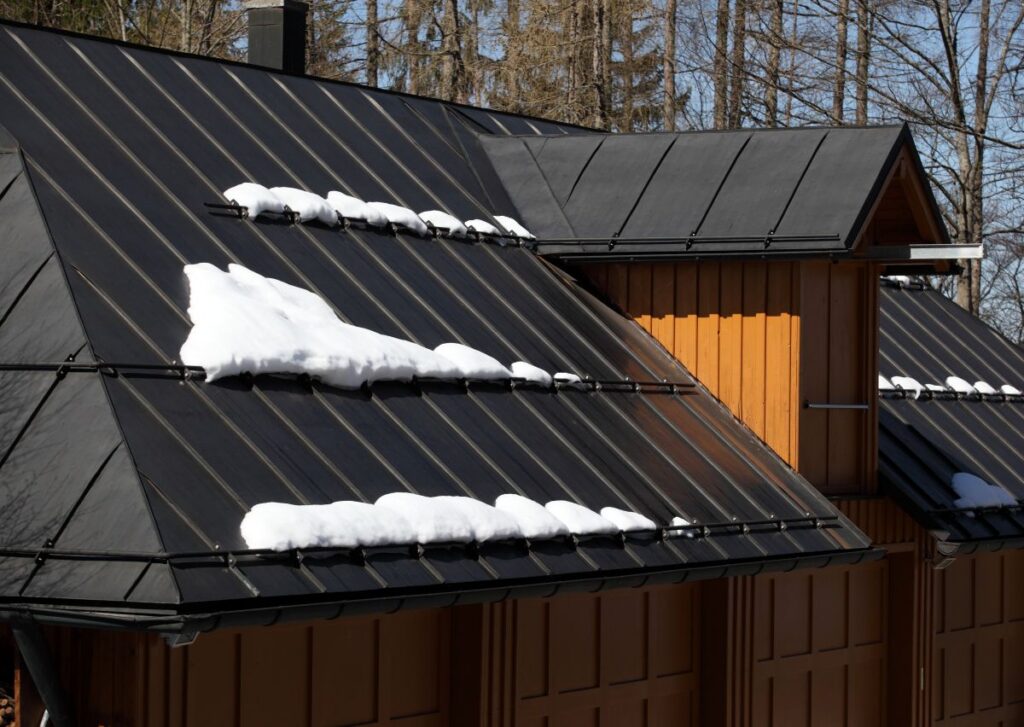
Snow shedding for Ohio winters is another climate-specific advantage of metal roofing. The smooth, non-porous surface of metal panels combined with the low friction between snow and painted metal causes snow to slide off in sheets rather than accumulating and creating heavy loads that stress the structure. This behavior prevents ice dam formation at eaves (a common problem on asphalt shingle roofs in Ohio), reduces the risk of water infiltration when snow melts and refreezes, and eliminates the weight stress that can damage rafters over multiple winter storms. Snow guards can be installed on metal roofs to control the timing of snow release if needed to protect landscaping or people below. Ohio’s average annual snowfall of 20 to 30 inches in the Mason and surrounding areas region makes this snow-shedding behavior a meaningful practical benefit.
- Smooth surface: Low friction lets snow slide off in sheets.
- Ice dam prevention: Reduced formation at eaves.
- Weight stress: Eliminated by fast snow shedding.
- Snow guards available: Control timing if needed.
4. Class A Fire Resistance
Class A fire resistance is the highest fire rating available for roofing materials, and virtually all metal roofing systems achieve this classification. Class A means the roof material is non-combustible and will not ignite when exposed to flame or extreme heat. While Ohio is not a wildfire-prone state like California, house fires still occur, and having a non-combustible roof significantly reduces the risk of a small fire (from a chimney, adjacent structure, or fireworks) spreading to consume the entire structure. Class A fire resistance also qualifies for insurance premium discounts in most policies, though the savings are smaller than for hail or wind resistance. For homeowners in Mason and surrounding areas who value the peace of mind of maximum fire protection, metal’s non-combustible nature is a meaningful safety upgrade over asphalt shingles.
- Class A rating: Highest fire resistance available.
- Non-combustible: Will not ignite under flame or heat.
- Insurance benefits: Fire-resistance premium discounts.
- Peace of mind: Superior protection against localized fire spread.
5. Freeze-Thaw Cycle Durability
Freeze-thaw cycle durability is where Ohio’s climate really punishes materials that absorb moisture, and where metal roofing has an especially strong advantage. Ohio typically experiences 60 to 90 freeze-thaw cycles per winter (compared to just 10 to 20 in southern states), and each cycle stresses porous materials as absorbed water expands by 9 percent when it freezes. Asphalt shingles absorb small amounts of water at their edges and fastener penetrations, and repeated freeze-thaw over 15 to 20 years leads to cracking, curling, and eventual failure. Metal is non-porous and non-absorptive, so it cycles through freeze-thaw without any material stress. The finish and coating on metal roofing is also designed to handle thermal expansion and contraction across the temperature range Ohio experiences (from below zero winter nights to 90+ summer days).
- 60 to 90 cycles per winter: Ohio’s freeze-thaw stress load.
- 9 percent expansion: When absorbed water freezes.
- Metal is non-porous: No moisture absorption, no expansion damage.
- Coating designed: For thermal expansion and contraction.
6. 40 to 70+ Year Service Life
Service life of 40 to 70+ years is the longest-term reason metal roofing stands up in Ohio. Standing seam metal roofs (the highest-durability residential option) typically last 40 to 60 years, and coated steel systems using aluminum-zinc protective coatings have been documented to last in excess of 60 years in commercial installations. Compare this to the typical 15 to 20 year lifespan of asphalt shingles in Ohio’s climate, and the total cost of ownership math starts to favor metal significantly. A homeowner buying a metal roof at age 45 will likely never need to buy another roof, while the same homeowner choosing asphalt shingles would probably reroof two more times over the same lifespan. For homeowners in Mason and surrounding areas planning to stay in their home long-term, this lifespan difference is one of the strongest financial arguments for metal.
- Standing seam: 40 to 60 year typical service life.
- Coated steel: Documented 60+ year lifespans.
- Compared to asphalt: 2 to 3 times longer service life.
- Total cost of ownership: Often favors metal despite higher upfront cost.
How to Decide If Metal Roofing Is Right for Your Home
How to decide if metal roofing is right for your home depends on how long you plan to stay in the home, your tolerance for upfront cost, and your priorities around maintenance and durability. A structured approach helps homeowners make the decision confidently.
When Metal Roofing Makes the Most Sense
Metal roofing makes the most sense for homeowners who plan to stay in their home 15+ years, want to eliminate the need for future roof replacement, prioritize storm damage protection over aesthetics of traditional shingles, live in a heavily wooded area where fire risk is a concern, or want to reduce cooling costs through reflective metal finishes. The upfront cost is 2 to 3 times higher than asphalt shingles, but the payback comes through avoided replacements, insurance discounts, and reduced maintenance. Homes with complex rooflines (many valleys, dormers, or intersecting sections) can be more challenging for metal installation and may not see as favorable a cost comparison.
- 15+ year stay: Long-term ownership favors metal’s lifespan.
- Storm damage priority: Best-in-class wind and hail resistance.
- Reduced maintenance: Nearly zero upkeep for decades.
- Cost multiplier: 2 to 3 times asphalt shingle installation.
What Questions to Ask a Metal Roofing Contractor
Questions to ask a metal roofing contractor include: What gauge of steel or metal will be used (24-gauge is thicker and more durable than 26 or 29-gauge)? Is this a standing seam or exposed fastener system? What is the manufacturer’s paint and finish warranty? What is the workmanship warranty on installation? Are there references from other metal roofing installations in Mason and surrounding areas I can contact? Will the installation include an ice and water shield underlayment? A qualified metal roofing contractor will provide clear written answers to all of these questions and have completed metal roofing projects in the area you can visit or verify.
- Gauge: 24-gauge is thicker and more durable than higher numbers.
- System type: Standing seam is generally more durable than exposed fastener.
- Warranties: Manufacturer paint plus contractor workmanship coverage.
- Local references: Verify completed metal roofing projects nearby.
Frequently Asked Questions
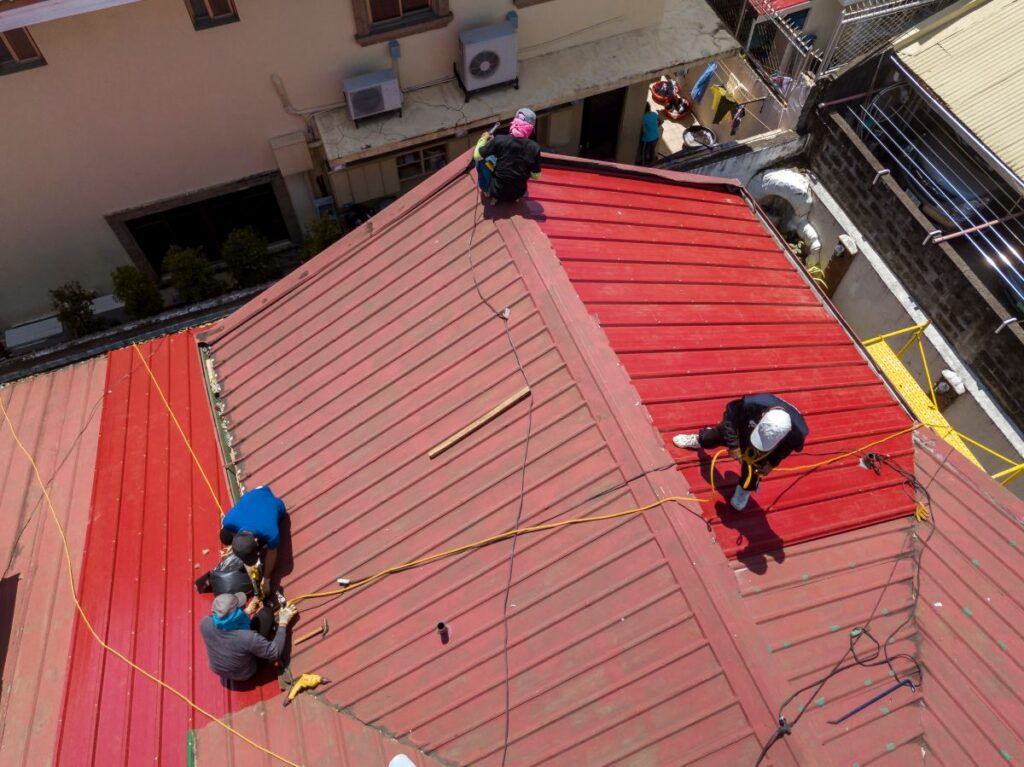
How Much Does Metal Roofing Cost in Ohio?
Metal roofing in Ohio typically costs $10 to $18 per square foot installed for standing seam systems, and $6 to $12 per square foot for exposed fastener panels, compared to $4 to $8 per square foot for asphalt shingles. For a typical 2,000 square foot home in Mason and surrounding areas, expect total installed costs of $20,000 to $36,000 for standing seam or $12,000 to $24,000 for exposed fastener systems. Copper and zinc premium metals cost significantly more (up to $30 to $50 per square foot installed).
Are Metal Roofs Noisy During Rain?
Modern residential metal roofs are not significantly noisier than asphalt shingles during rain, because they are installed over solid roof decking (plywood or OSB) with underlayment and attic insulation acting as sound barriers. The old association of noisy metal roofs comes from uninsulated barn roofs installed directly on rafters. A properly installed residential metal roof with standard attic insulation transmits rain noise at levels comparable to or quieter than asphalt shingles.
Do Metal Roofs Attract Lightning?
Metal roofs do not attract lightning any more than other roofing materials, since lightning is influenced by a building’s location, height, and surrounding topography, not the roof material. If lightning does strike a home with a metal roof, the metal actually helps dissipate the electrical charge safely rather than igniting the way wood or asphalt might. Metal roofs are non-combustible, which makes them safer during lightning strikes than combustible materials.
Can Metal Roofing Be Installed Over Existing Shingles?
Metal roofing can sometimes be installed over existing asphalt shingles, which reduces tear-off costs and labor time, but the practice depends on local building codes, the condition of the existing roof deck, and the specific metal roofing system. Most professional installers recommend removing the old shingles to inspect the deck, install proper underlayment, and address any hidden damage. Overlay installations are more common for exposed fastener systems than standing seam.
Will a Metal Roof Reduce My Home’s Value?
A metal roof typically increases a home’s value in most markets, particularly in areas prone to severe weather where the durability and insurance benefits are recognized by buyers. Studies show that homeowners typically recover 50 to 70 percent of metal roofing installation costs at resale, and in some markets the return is even higher. Metal roofs also appeal to buyers looking for low-maintenance homes and can be a differentiator in the Mason and surrounding areas market.
How Long Will a Metal Roof Actually Last in Ohio’s Climate?
A properly installed metal roof in Ohio’s climate will typically last 40 to 60 years for standing seam systems and 20 to 40 years for exposed fastener systems. The finish (paint or coating) may need touch-up after 20 to 30 years, but the underlying metal typically outlasts the finish. Ohio’s climate is actually milder for metal roofing than coastal environments (which have salt corrosion issues), so metal performs at the high end of its expected service life range in the Mason and surrounding areas market.
Why Mason Homeowners Trust Johnson Restoration for Metal Roofing
Metal roofing is one of the most significant home improvement investments a homeowner can make, and the right installation combined with the right materials can deliver 40 to 70 years of low-maintenance protection against everything Ohio’s climate throws at your home. Johnson Restoration brings over a decade of industry experience to metal roofing projects in Mason and surrounding areas, with workmanship warranties, financing options, and the expertise to help homeowners select the right gauge, profile, color, and installation approach for their specific home and long-term goals. Whether you are replacing an aging asphalt shingle roof, planning a new build, or evaluating storm damage repair options, contact Johnson Restoration today for a free estimate and let our team help you protect your home for decades to come.