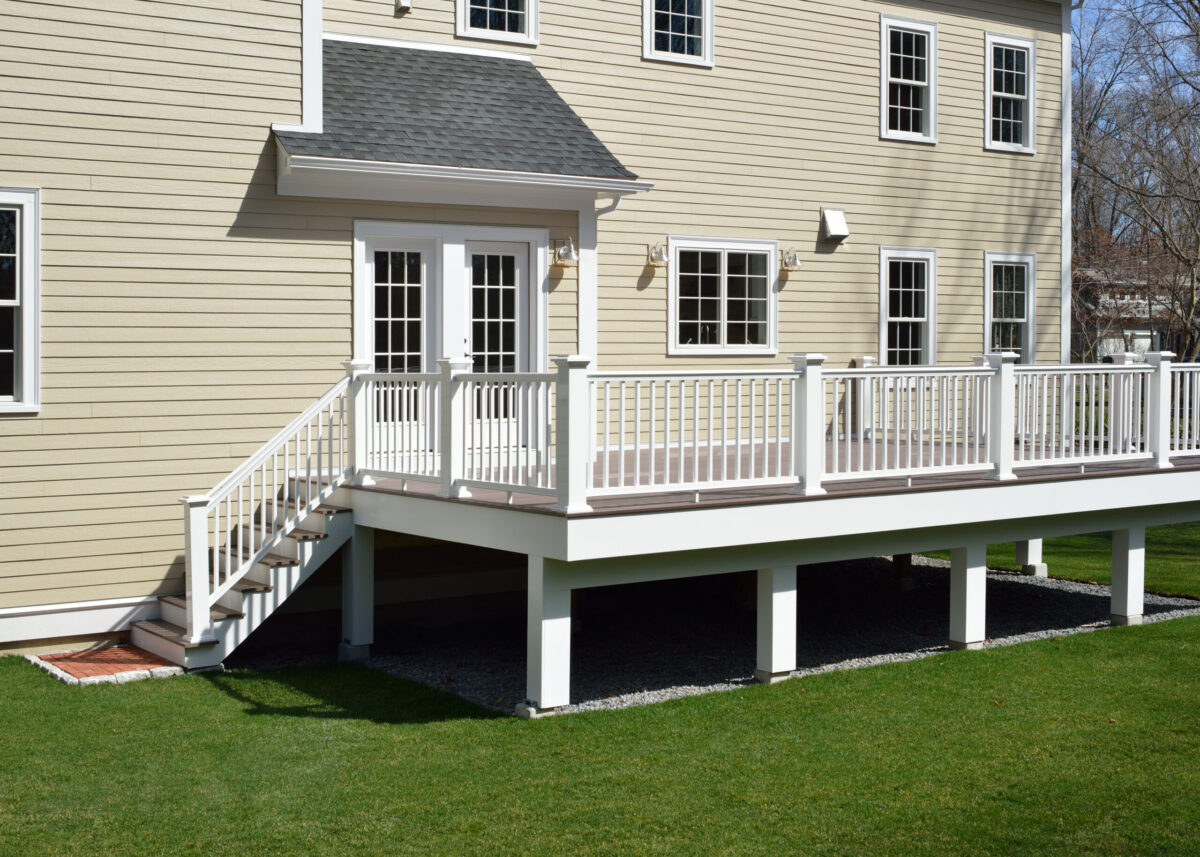

“What is composite siding made of” comes down to a blend of two or more raw materials combined into a single engineered product that outperforms any single component on its own, and the specific mix determines everything from cost and durability to how the finished siding looks against the house. Composite siding covers a broad category of products that layer materials like cellulose fibers, cement, wood particles, polymers, resins, and minerals to create siding that resists moisture, insects, impact, and fading better than traditional wood or basic vinyl. The category has grown substantially over the past 30 years as manufacturers have developed proprietary blends to solve specific weaknesses of older siding types. Homeowners in Beavercreek and surrounding areas who understand the different composite materials can make more informed decisions about which product best fits their budget, climate, and long-term maintenance preferences.
- What composite siding is: Engineered products that combine two or more materials for better performance than any single material.
- Why there are so many types: Different blends solve different problems: moisture, impact, fire, cost, or appearance.
- What you will learn: 6 main composite siding materials, real cost ranges, and answers to common homeowner questions.
Why Composite Siding Has Become So Popular
Why composite siding has become so popular comes down to the fact that traditional wood siding requires constant maintenance, basic vinyl looks cheap and can crack, and higher-end materials like brick and stone cost far more than most homeowners want to spend. Composite siding fills the gap by offering wood-like appearance with dramatically lower maintenance, better durability, and more competitive pricing than premium materials.
How Composite Siding Solves Traditional Siding Problems
Composite siding solves traditional siding problems by engineering out the weaknesses that plague single-material sidings. Traditional wood siding rots when wet, attracts termites, and burns readily. Basic vinyl siding cracks in cold weather, fades in sun, and offers weak impact resistance. Composite products engineer around these specific problems, resulting in siding that lasts 30 to 50 years or more with minimal maintenance. For homeowners in Beavercreek and surrounding areas, where Ohio’s freeze-thaw climate stresses every siding material, this durability matters.
- Wood-plastic composite: High wind-borne debris and pest resistance.
- Fiber cement: High fire and pest resistance.
- Traditional wood: Rots, attracts insects, burns easily.
- Basic vinyl: Cracks in cold, fades in sun.
What the Word “Composite” Really Means
The word “composite” really means any material made from two or more distinct raw materials that retain their individual properties within the finished product, working together to deliver performance neither material could achieve alone. In siding, this typically means combining a strong base material (like cement or wood fiber) with a binder (like polymer resin or Portland cement) plus reinforcing fibers and often protective coatings. The result is a product with the workability of the softer material and the strength of the harder one. Different manufacturers use different proprietary blends, which is why product names like James Hardie, LP SmartSide, Everlast, and others perform quite differently even when described broadly as “composite siding.” Understanding what is actually in each product helps homeowners compare quotes accurately.
- Multiple raw materials: Combined in specific proportions.
- Base + binder + fibers: Common structural approach.
- Proprietary blends: Different brands perform differently.
- Appearance vs. content: Similar looks can hide different compositions.
6 Composite Siding Materials Compared
Six composite siding materials dominate the residential market today, each with a distinct composition, price range, and best-use scenario. Understanding the differences between them helps homeowners match the material to their specific priorities.
1. Fiber Cement Composite
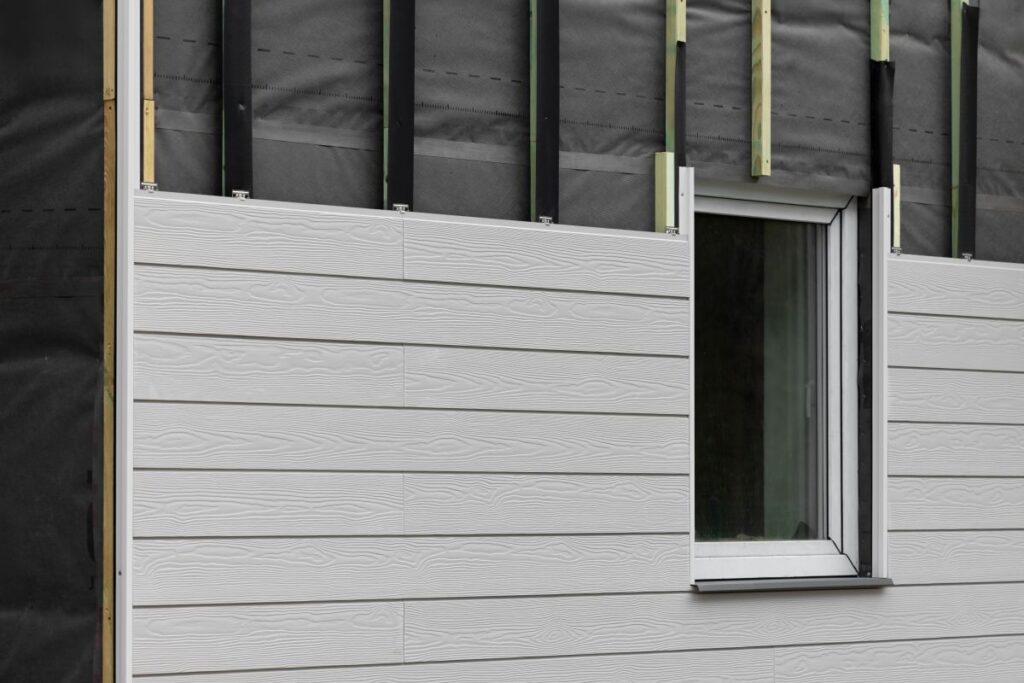
Fiber cement composite is made from a precise blend of Portland cement, sand or silica, cellulose fibers, and water, pressed and cured into rigid panels or planks that mimic the appearance of wood siding. The Portland cement provides strength, fire resistance, and pest resistance, while the cellulose fibers add flexibility and workability. James Hardie is the best known fiber cement manufacturer (originating the category), with Allura, Nichiha, and CertainTeed WeatherBoards also popular. Fiber cement typically costs $7 to $10 per square foot installed and lasts 30 to 50 years with minimal maintenance. It rates highly for fire resistance (Class A non-combustible), pest resistance (termites cannot digest cement), and moisture resistance. Downsides include the material’s weight (requiring more labor to install), brittleness (can crack from impacts if not installed carefully), and the need for periodic repainting every 10 to 15 years.
- Composition: Portland cement, sand, cellulose fibers, water.
- Cost: $7 to $10 per square foot installed.
- Lifespan: 30 to 50 years with minimal maintenance.
- Best for: Homeowners prioritizing fire resistance and durability.
2. Engineered Wood Composite
Engineered wood composite is made from wood strands, fibers, or particles combined with resin binders, wax for moisture resistance, and often zinc borate for pest and rot protection, all pressed under heat and pressure into planks that look like natural wood. LP SmartSide is the dominant brand, with TruWood also common. Engineered wood typically costs $6 to $10 per square foot installed and lasts 20 to 30 years, coming in longer plank lengths (up to 16 feet) than fiber cement, which reduces seams. The finished product is lighter than fiber cement, easier to cut and install with standard tools, and delivers a more convincing wood-grain appearance. Downsides include being less fire resistant than fiber cement, still susceptible to moisture damage if the protective coating fails, and requiring periodic repainting.
- Composition: Wood strands or fibers, resin binders, wax, borate treatments.
- Cost: $6 to $10 per square foot installed.
- Lifespan: 20 to 30 years with maintenance.
- Best for: Homeowners who want authentic wood look at moderate cost.
3. Wood-Plastic Composite (WPC)
Wood-plastic composite (WPC) is made from a blend of wood fibers and thermoplastic polymers (typically polyethylene, polypropylene, or PVC), with additives for UV protection, pest resistance, and color stability. The wood provides the natural texture and workability, while the plastic provides moisture resistance, dimensional stability, and rot immunity. WPC siding typically costs $7.50 to $9.50 per square foot installed and lasts 25 to 40 years. According to DOE Building America data, wood-plastic composite performs well against wind-borne debris and hail (rated “High”) and pest resistance (rated “High”), though it has lower fire resistance than fiber cement. WPC handles surface moisture better than pure wood because of the polymer matrix, and it does not rot or attract termites. Downsides include being more expensive than basic engineered wood and having limited fire resistance in wildfire-prone areas.
- Composition: Wood fibers, thermoplastic polymers, UV stabilizers.
- Cost: $7.50 to $9.50 per square foot installed.
- Lifespan: 25 to 40 years.
- Best for: Wet climates where moisture resistance matters most.
4. Polymer or Polymeric Composite
Polymer or polymeric composite is made from a blend of polymeric resins, inorganic minerals, acrylic colorants, and sometimes granular stone, with no organic wood content, resulting in a product that cannot rot, swell, warp, or be attacked by insects. Everlast Advanced Composite Siding is the best known example, with Norandex and other brands also available. Polymer composites typically cost $10 to $16 per square foot installed and are designed to last for the lifetime of the home with essentially zero maintenance (no painting, staining, or sealing required). Because the color is integrated throughout the material (not just on the surface), scratches don’t show underlying colors. Downsides include higher initial cost and a somewhat more limited color and texture range compared to painted fiber cement or engineered wood.
- Composition: Polymeric resins, inorganic minerals, acrylic colorants.
- Cost: $10 to $16 per square foot installed.
- Lifespan: 50+ years with essentially no maintenance.
- Best for: Homeowners wanting no-maintenance, no-painting siding.
5. Vinyl Composite (Insulated Vinyl)
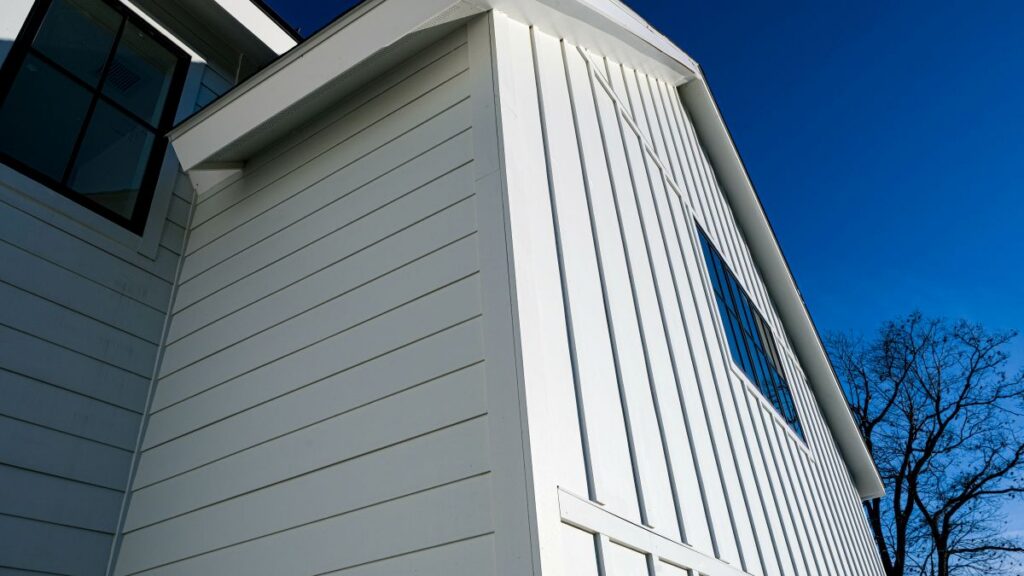
Vinyl composite (also called insulated vinyl) is made by fusing standard PVC vinyl siding to a rigid foam insulation backer, creating a composite product that combines the low cost of vinyl with better durability, impact resistance, and energy efficiency. The foam backer eliminates the hollow feel of standard vinyl, resists impacts that would crack basic vinyl, and adds R-2 to R-4 of insulation value. Vinyl composite typically costs $4 to $9 per square foot installed and lasts 20 to 40 years. The foam backer also improves the look of the siding by providing rigid support that keeps the vinyl straight and prevents the “wavy” appearance that plain vinyl can develop. Downsides include the still-plastic appearance (visible seams and less realistic wood grain than fiber cement or engineered wood) and limited fire resistance.
- Composition: PVC vinyl fused to rigid foam insulation backer.
- Cost: $4 to $9 per square foot installed.
- Lifespan: 20 to 40 years.
- Best for: Budget-conscious homeowners who want energy efficiency.
6. Cellular PVC Composite
Cellular PVC composite is made from foamed PVC (polyvinyl chloride) with a closed-cell structure, sometimes with mineral additives, resulting in a lightweight rigid material that looks like painted wood but resists moisture, insects, and rot completely. Azek and Kleer are common manufacturers. Cellular PVC typically costs $9 to $14 per square foot installed and is often used for trim, soffit, and accent siding rather than full-home cladding, though full siding installations are also available. The material can be cut, routed, and worked with standard woodworking tools, giving builders more flexibility than fiber cement. Cellular PVC lasts 30 to 50 years and never needs painting (though it can be painted for custom colors). Downsides include higher cost per square foot than most other composites and lower fire resistance than fiber cement.
- Composition: Foamed PVC with closed-cell structure, mineral additives.
- Cost: $9 to $14 per square foot installed.
- Lifespan: 30 to 50 years.
- Best for: Trim, accent siding, or full siding on high-end homes.
How to Choose the Right Composite Siding for Your Home
How to choose the right composite siding for your home depends on your budget, climate, architectural style, and how much maintenance you’re willing to do over the coming decades. A structured approach makes the choice manageable.
What Questions Should Guide the Decision
Questions that should guide the decision include: What is my total budget for siding materials and installation? How long do I plan to stay in the home? How much maintenance am I willing to do (painting every 10 to 15 years vs. never)? Does my area have specific hazards like wildfires (favoring fire-resistant materials) or heavy insect pressure (favoring wood-free composites)? How important is the wood-grain appearance? Answers to these questions typically narrow the choice to two or three composite types, at which point specific product comparisons within those categories become the next step. For most homeowners in Beavercreek and surrounding areas, fiber cement and engineered wood are the two most common choices, with polymer composites gaining ground for those willing to spend more upfront to eliminate maintenance entirely.
- Budget: Determines material category.
- Time horizon: Longer stays favor durable, low-maintenance options.
- Maintenance tolerance: Some materials need repainting; others don’t.
- Local hazards: Fire risk favors fiber cement; insect pressure favors wood-free.
What Signs Suggest You Need to Replace Your Current Siding
Signs that suggest you need to replace your current siding include peeling paint that returns quickly after repainting, warping or buckling planks, visible rot or soft spots, mold or mildew that keeps returning after cleaning, cracked or broken sections, gaps around windows and doors, higher-than-expected heating and cooling bills, and any siding that is more than 20 to 30 years old. Composite siding is often the natural upgrade choice when replacing failing wood, aluminum, or first-generation vinyl siding because the newer composite products deliver dramatically better durability and lower maintenance than what they’re replacing.
- Peeling paint: Signals moisture problems behind the siding.
- Warping or buckling: Structural failure of the siding material.
- Visible rot: Requires immediate replacement.
- Age over 20 to 30 years: Time to plan an upgrade.
Frequently Asked Questions
How Much Does Composite Siding Cost to Install?
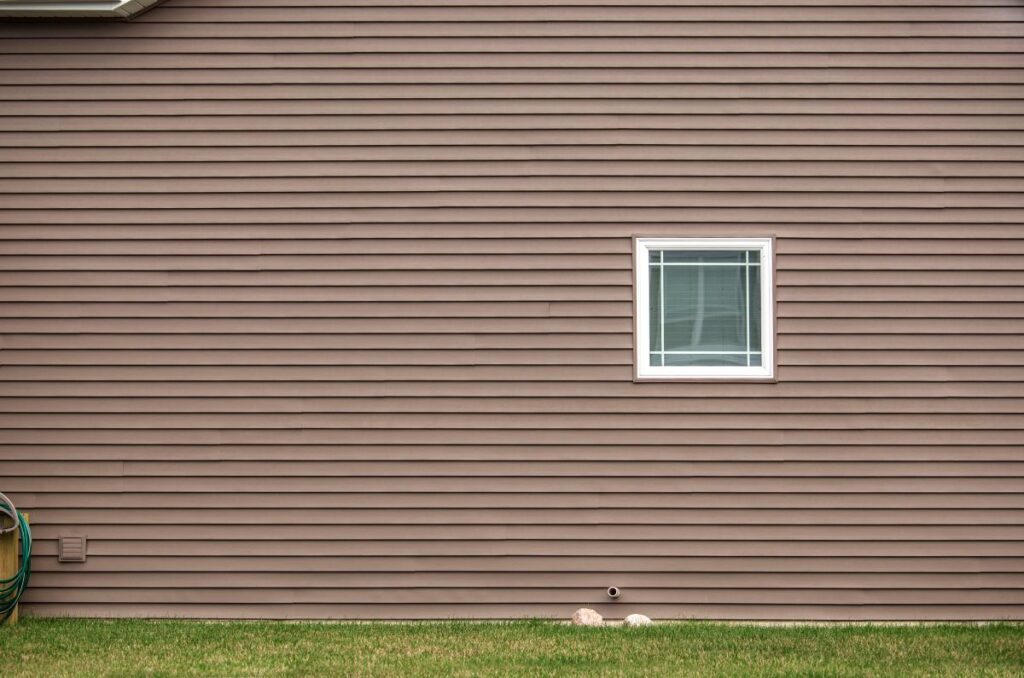
Composite siding typically costs $6 to $16 per square foot installed depending on the specific material, with fiber cement and engineered wood at the lower end ($6 to $10 per square foot), polymer composites at the higher end ($10 to $16 per square foot), and cellular PVC in between ($9 to $14 per square foot). For an average 2,000 square foot home in Beavercreek and surrounding areas, total costs run $12,000 to $32,000 for a full siding replacement including labor and materials. Getting itemized estimates from multiple contractors helps ensure accurate pricing comparisons.
How Long Does Composite Siding Last?
Composite siding lasts 20 to 50+ years depending on the specific material and how well it’s maintained. Basic engineered wood composites last 20 to 30 years, fiber cement lasts 30 to 50 years, wood-plastic composite lasts 25 to 40 years, polymer composites can last 50+ years with essentially no maintenance, and cellular PVC lasts 30 to 50 years. Actual lifespan depends heavily on installation quality, especially proper flashing and rainscreen construction.
Does Composite Siding Need to Be Painted?
Some composite siding needs to be painted (fiber cement, engineered wood) while others never need painting (polymer composites, cellular PVC with integral color, vinyl composite). Fiber cement typically requires repainting every 10 to 15 years, and engineered wood every 7 to 12 years. Polymer composites with baked-in color and vinyl composite products maintain their color for the life of the material without repainting.
Is Composite Siding Fire Resistant?
Fire resistance varies significantly by composite type: fiber cement is Class A non-combustible (the highest fire rating), while engineered wood, wood-plastic composite, vinyl composite, and cellular PVC all have lower fire resistance and can melt or burn under high heat. Polymer composites vary depending on formulation. In wildfire-prone areas, fiber cement is the strongest choice; in the Beavercreek and surrounding areas market, standard fire risk means multiple composite options are appropriate.
Can Composite Siding Be Installed Over Existing Siding?
Composite siding can sometimes be installed over existing siding depending on the condition of the underlying material, but most professional installers recommend removing the old siding first to inspect the sheathing, add proper flashing, and install a modern weather-resistive barrier. Installing over old siding can trap moisture, hide structural damage, and reduce the warranty coverage on the new siding.
What Is the Difference Between Composite and Engineered Wood?
The difference between composite and engineered wood is that engineered wood is technically a type of composite (wood strands or fibers bonded with resin), while “composite” more broadly encompasses any siding made from multiple materials, including fiber cement, wood-plastic composite, polymer composite, and cellular PVC. In common usage, “composite siding” often refers to non-wood composites like fiber cement or polymer products, while “engineered wood” specifically means wood-based composites like LP SmartSide.
Why Beavercreek Homeowners Trust Johnson Restoration for Composite Siding
Composite siding is one of the highest-value exterior upgrades a homeowner can make, transforming both the appearance and long-term durability of the home while eliminating many of the maintenance headaches that come with traditional wood or first-generation vinyl siding. Johnson Restoration brings over a decade of industry experience to siding installation in Beavercreek and surrounding areas, with workmanship warranties, financing options, and the expertise to match the right composite material to your budget, architectural style, and local climate conditions. Whether you are replacing aging siding, upgrading to a low-maintenance material, or planning a full exterior renovation, contact Johnson Restoration today for a free estimate and let our team help you choose the composite siding that will protect your home for decades to come.