
K style vs half round gutters is one of the most common comparisons homeowners run into when planning a gutter replacement, because the choice affects not just how the home looks but also how effectively rainwater gets moved away from the foundation, how often the gutters need cleaning, and how much the project costs. The two profiles are the dominant options for residential gutters in North America, and while they perform the same basic function (collecting roof runoff and directing it to downspouts) they differ significantly in shape, capacity, maintenance requirements, cost, and architectural fit. K style gutters dominate modern residential installations, but half round gutters remain popular for historic homes, upscale properties, and homeowners who prefer the softer traditional look. Homeowners in Sugarcreek and surrounding areas benefit from understanding both options before signing a contract, because the right choice depends on the home’s architecture, roof size, and how the gutters will be maintained.
- Why the choice matters: Shape affects capacity, cleaning, cost, and how the gutter looks against the home’s exterior.
- When each makes sense: K style for most modern homes; half round for historic, high-end, or heavily-textured exteriors.
- What you will learn: 5 key differences to compare, real cost ranges, and answers to common homeowner questions.
Why Gutter Profile Choice Matters More Than Most Homeowners Realize
Why gutter profile choice matters more than most homeowners realize comes down to the fact that gutters are one of the most functional components of a home’s exterior, and small differences in shape have outsized impacts on water handling, maintenance, and durability. Understanding the profile trade-offs helps avoid the two most common gutter mistakes: undersizing capacity or picking a profile that clashes with the home’s architecture.
How Gutter Sizing Standards Actually Work
Gutter sizing standards actually work based on rainfall intensity, roof drainage area, and profile capacity, with the industry-standard sizing method published by the Sheet Metal and Air Conditioning Contractors’ National Association (SMACNA). According to SMACNA, gutter and downspout sizing uses the 5-minute duration rainfall intensity for a 10-year or 100-year storm (per Table 1-2 in the Architectural Sheet Metal Manual), with the required gutter size dependent on the number of sections, the length of gutter sections, the number of downspouts, and the gutter width to height ratio. The result is that two different gutter profiles at the same nominal width (say 5 inches) can have significantly different actual water-handling capacity, which is why the K style vs half round comparison matters so much. In Sugarcreek and surrounding areas, where thunderstorms regularly drop 1 to 2 inches of rain in short bursts, choosing the right profile and size can be the difference between a system that keeps up and one that overflows during every storm.
- SMACNA standard: Industry-standard sizing methodology.
- 5-minute duration intensity: Peak burst rainfall for design purposes.
- 10 or 100 year storm: Design return periods for capacity planning.
- Multiple variables: Sections, downspouts, and width-to-height ratio all matter.
Why Profile Shape Determines Real-World Performance
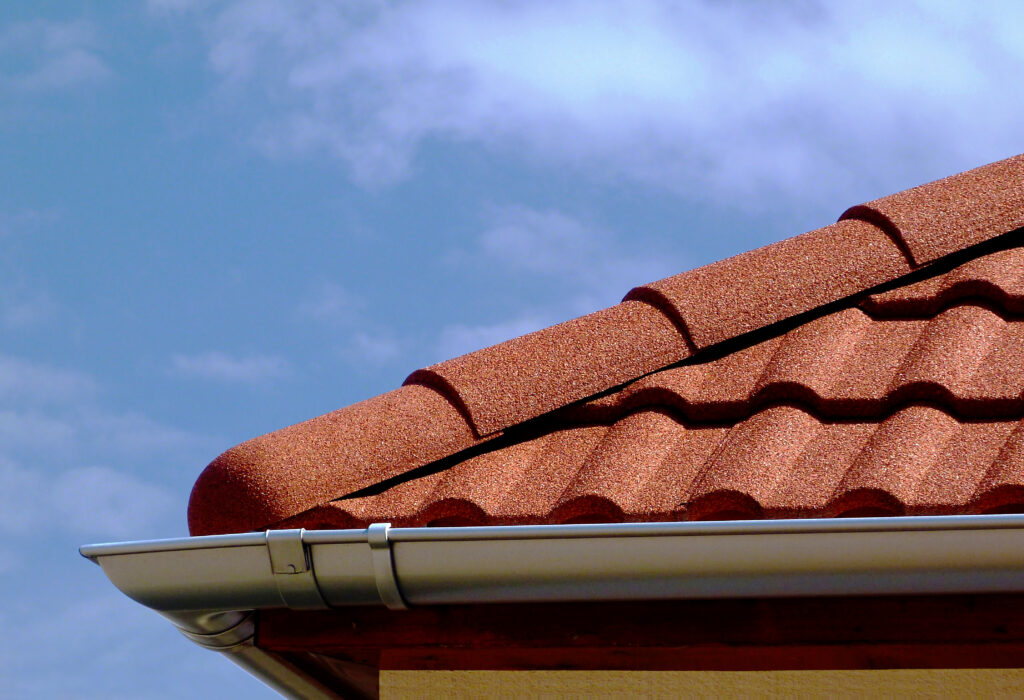
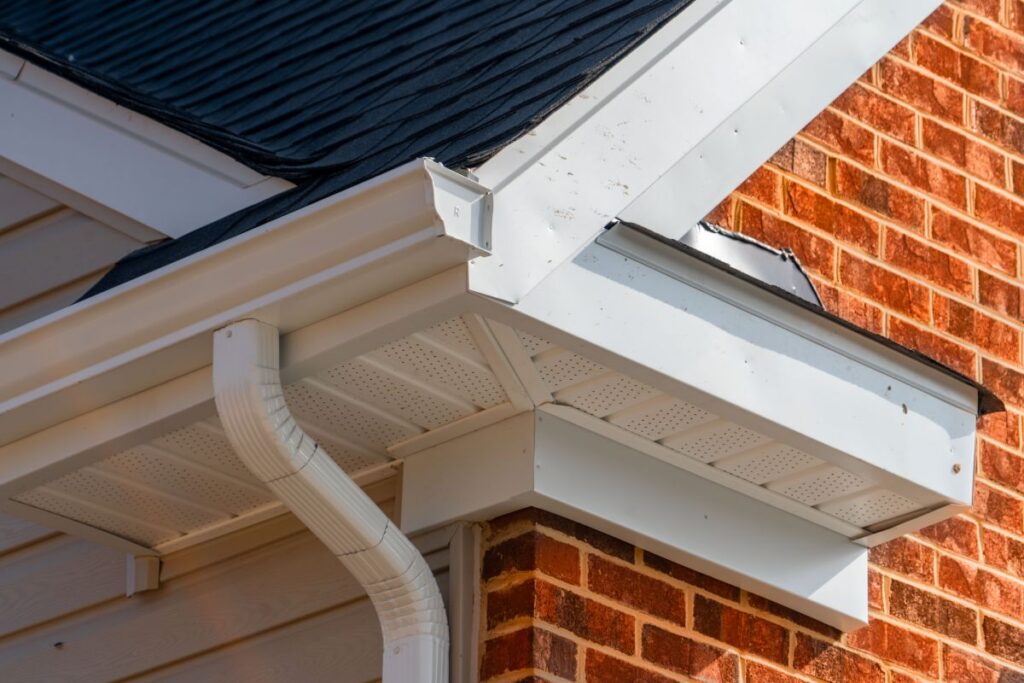
Profile shape determines real-world performance because the shape of the trough affects how water flows, how debris behaves, and how the gutter holds up under weight and weather stress. K style gutters have a flat bottom, vertical back, and decorative front that resembles crown molding, giving them a rectangular cross-section that maximizes water volume for a given face width. Half round gutters have a semicircular cross-section shaped like a tube cut in half, giving them a smoother interior with less capacity but easier debris flow. These fundamental shape differences ripple through every performance category: capacity, cleaning, hangers required, and even the sound of water flowing during a storm. Understanding the shape is the foundation for understanding all five of the key differences that follow.
- K style cross-section: Rectangular; maximizes water volume.
- Half round cross-section: Semicircular; smoother interior flow.
- Capacity difference: Directly tied to shape.
- Debris behavior: Corners trap material; curves shed it.
5 Key Differences Between K Style and Half Round Gutters
Five specific differences separate K style and half round gutters, and each one affects how the finished system performs, looks, and costs. Working through all five helps homeowners make an informed choice rather than picking based on appearance alone.
1. Water Capacity and Flow
Water capacity and flow is the most consequential functional difference between the two profiles. A K style gutter of a given nominal width holds significantly more water than a half round gutter of the same width because the rectangular cross-section provides more volume than a semicircle. A standard 5 inch K style gutter typically holds around 40 percent more water than a 5 inch half round, and a 6 inch K style holds even more. For homes with steep roofs, large drainage areas, or in regions with intense storms, this capacity difference can be the deciding factor. Half round systems are not inferior; they just often need to be stepped up one nominal size (from 5 inch to 6 inch, or from 6 inch to 7 inch) to match the drainage capacity of a K style system. In Sugarcreek and surrounding areas, where 60 mph thunderstorm winds and heavy rain are common, capacity matters.
- 40 percent more capacity: Typical advantage of K style at the same width.
- 6 inch K style: Common upgrade for large or steep roofs.
- Step up half round: From 5 inch to 6 inch to match K style capacity.
- Regional storm intensity: Ohio storms favor higher-capacity profiles.
2. Cost and Installation Complexity
Cost and installation complexity favor K style gutters by a significant margin. A typical seamless aluminum K style installation runs $6 to $12 per linear foot installed in the Sugarcreek and surrounding areas market, while comparable half round installations typically run $12 to $30 per linear foot due to more expensive hardware, more complex hangers, and higher labor requirements. Copper half round systems (a common upscale choice) can push costs to $30 to $50+ per linear foot. On an average residential home with 150 to 200 linear feet of gutters, this translates to a total cost of $900 to $2,400 for aluminum K style versus $1,800 to $6,000 for half round systems. Half round systems also often require external brackets that are more visible and take longer to install, adding labor time. The cost difference is one of the main reasons K style dominates modern residential installations.
- K style: $6 to $12 per linear foot installed.
- Half round aluminum: $12 to $30 per linear foot installed.
- Half round copper: $30 to $50+ per linear foot installed.
- 150 to 200 feet typical: For an average residential home.
3. Debris and Self-Cleaning Behavior

Debris and self-cleaning behavior is one area where half round gutters have a clear advantage. The smooth curved interior of half round gutters lets water sweep debris through more easily, with fewer corners or sharp angles where leaves, pine needles, and seed pods can get trapped. K style gutters have interior corners at the joint between the flat bottom and the vertical walls, and these corners tend to accumulate debris that resists being flushed by normal water flow. Homeowners with half round systems often report needing to clean less frequently than those with K style, especially in wooded areas. That said, both profiles still require regular cleaning (twice a year minimum) and both can be paired with gutter guards to reduce cleaning frequency. The debris advantage of half round is real but not so overwhelming that it eliminates maintenance requirements entirely.
- Smooth curved interior: Half round sheds debris more easily.
- K style corners: Trap leaves and sediment.
- Twice yearly cleaning: Still required for both profiles.
- Gutter guards: Reduce cleaning frequency for both types.
4. Appearance and Architectural Fit
Appearance and architectural fit is often the deciding factor when performance considerations don’t strongly favor one option. K style gutters have a decorative front profile that resembles crown molding, giving them a formal, trim-like appearance that fits well against the flat fascia boards common on modern homes, colonials, and standard tract housing. Half round gutters have a softer, more traditional look that pairs beautifully with historic architecture, Victorian and Colonial Revival homes, and any exterior with heavy texture like slate, tile, or wood shake roofing. Copper half round systems in particular develop an attractive patina over time and are often specified on high-end custom homes. For most homes in Sugarcreek and surrounding areas built in the last 50 years, K style is the natural fit. For pre-1950s homes or restoration projects, half round is often the historically accurate choice.
- K style: Formal crown-molding look; fits modern and colonial architecture.
- Half round: Traditional, softer profile; fits historic homes.
- Copper half round: Develops attractive patina; common on high-end homes.
- Post-1950s vs pre-1950s: Rough guideline for the right profile.
5. Hangers, Support, and Longevity
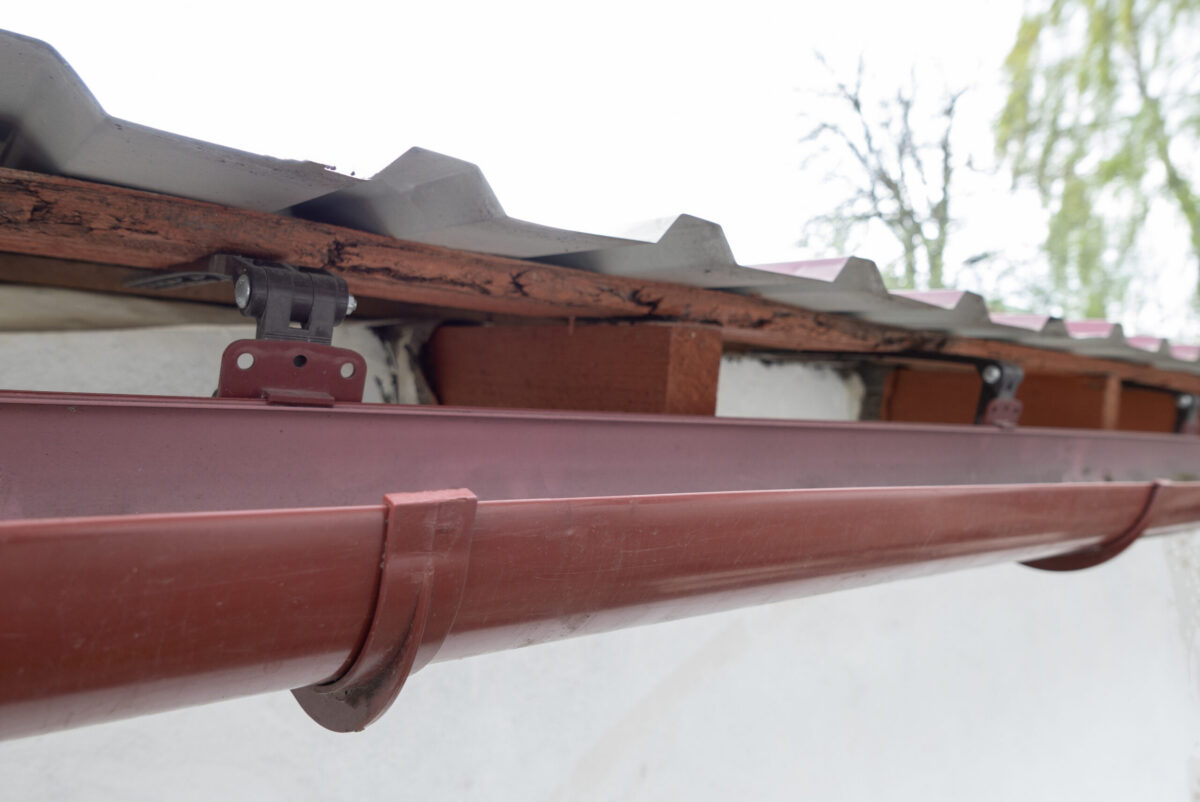
Hangers, support, and longevity differ between the two profiles in ways that affect long-term durability. K style gutters typically use hidden hangers spaced 24 to 36 inches apart on center, which install cleanly and support the flat bottom of the gutter effectively. Half round gutters typically use external brackets that cradle the curved trough, and these brackets are usually more visible from the ground (which some homeowners prefer for the traditional look). Half round hangers often need to be more closely spaced (18 to 24 inches on center) because the round profile lacks the rigidity of the K style rectangular cross-section, especially in areas with heavy snow load. When properly sized and supported, both profiles can last 20+ years in aluminum, and 50+ years in copper. Steel gutters in either profile last 15 to 25 years depending on maintenance.
- K style hangers: Hidden; 24 to 36 inch spacing.
- Half round brackets: External; often visible for aesthetic effect.
- Closer spacing: Half round needs 18 to 24 inch hanger spacing.
- 20+ years: Typical aluminum lifespan for both profiles.
How to Decide Which Profile Fits Your Home
How to decide which profile fits your home involves weighing capacity needs, budget, architectural style, and maintenance preferences. A structured approach helps make the decision confidently.
When K Style Is Usually the Right Choice
K style is usually the right choice for modern homes with flat fascia boards, homeowners with heavy roof drainage areas, homeowners on a moderate budget, and installations where seamless aluminum construction offers the best value. K style dominates modern residential work for good reasons: strong capacity, easy installation, wide material availability, hidden hangers that look clean, and lower cost per foot. For most homeowners in Sugarcreek and surrounding areas, seamless aluminum K style gutters are the practical default. Larger homes or those with steep roofs should consider 6 inch K style rather than the standard 5 inch to maximize capacity during heavy Ohio thunderstorms.
- Modern architecture: K style fits standard fascia boards well.
- Large drainage areas: Higher capacity favors K style.
- Moderate budget: Lower cost per foot than half round.
- Seamless installation: Widely available in aluminum.
When Half Round Is Worth the Extra Cost
Half round is worth the extra cost for historic homes (especially those built before 1950), Victorian and Colonial Revival architecture, homes with slate or tile roofs, upscale custom homes, and homeowners who specifically want the softer traditional look. Half round systems also make sense for homeowners in wooded areas who prioritize self-cleaning behavior and are willing to size up to compensate for the lower capacity. Copper half round is often the choice for high-end architectural restorations because it lasts 50+ years, develops a beautiful patina, and complements historic architecture in ways that no other material matches. Budget accordingly: expect to pay roughly twice as much per foot as aluminum K style.
- Historic homes: Half round is period-correct for pre-1950s builds.
- High-end architecture: Complements slate, tile, and heavy textures.
- Copper option: 50+ year lifespan with attractive patina.
- Budget preparation: Roughly 2x the cost of K style aluminum.
Frequently Asked Questions
Which Gutter Style Is More Common in Ohio?
K style gutters are more common in Ohio, making up around 80 percent of residential installations in the Sugarcreek and surrounding areas market. This reflects both the newer housing stock in the region (most homes were built after 1950 when K style became standard) and the practical advantages of K style capacity for heavy thunderstorm rainfall. Half round gutters remain popular for pre-1950s homes, historic restorations, and upscale custom builds.
Can I Switch From One Profile to the Other?
Yes, you can switch from K style to half round (or vice versa) when replacing your gutters, though it involves more than just swapping the trough. Half round installations require different hangers and brackets, and the transition may reveal fascia damage or paint fading that needs addressing. Switching to a completely different profile is easiest to do as part of a full gutter replacement rather than a partial repair.
Do Half Round Gutters Really Clog Less?
Yes, half round gutters generally clog less than K style gutters because the smooth curved interior lets debris flow through more easily. However, “less” is not “never,” and half round gutters still require regular cleaning at least twice a year, or more often in heavily wooded areas. Gutter guards can substantially reduce cleaning frequency for both profiles.
How Long Do Aluminum Gutters Last?
Aluminum gutters (either K style or half round) typically last 20 to 30 years with proper installation and regular maintenance, longer in mild climates and shorter in areas with frequent freeze-thaw cycles. Copper gutters last 50+ years and often 75 to 100 years, while steel gutters last 15 to 25 years. Vinyl gutters last 10 to 20 years and are the shortest-lived mainstream option.
Are Half Round Gutters Better in Snowy Climates?
Half round gutters are sometimes preferred in snowy climates because their curved shape sheds snow and ice more easily than the flat bottom of K style, but the difference is not decisive. What matters more in snowy climates is gutter size (larger capacity handles snowmelt better), hanger spacing (closer spacing supports the weight of snow), and whether heated gutter cable is installed. Both profiles can perform well in snow when properly sized and supported.
What Size K Style or Half Round Do I Need?
For most homes in Sugarcreek and surrounding areas, a 5 inch K style or 6 inch half round is sufficient. Larger homes with steep roofs or homes in heavy-rain areas may need 6 inch K style or 7 inch half round for adequate capacity. A professional installer will calculate your specific drainage area using the SMACNA method to recommend the correct size for your roof.
Why Sugarcreek Homeowners Trust Johnson Restoration for Gutter Installation
Choosing between K style and half round gutters comes down to matching the profile to your home’s architecture, drainage needs, and long-term maintenance preferences, and the right choice can protect your home from foundation damage, siding rot, and basement flooding for decades to come. Johnson Restoration brings over a decade of industry experience to gutter installation and replacement in Sugarcreek and surrounding areas, with workmanship warranties, financing options, and the expertise to size, install, and support both K style and half round systems for maximum performance in Ohio’s freeze-thaw climate. Whether you are replacing aging gutters, upgrading to a higher-capacity system, or planning a full exterior renovation, contact Johnson Restoration today for a free estimate and let our team help you choose the profile that fits your home best.