
Best gutters for heavy rain matter more in Ohio than in many other parts of the country because the state has experienced a documented rise in intense precipitation events over the past several decades, and standard 5-inch gutters that were the norm when many homes were built simply don’t have enough capacity to keep up with the 1 to 3 inches of rain per hour that Ohio thunderstorms increasingly deliver. Undersized gutters overflow during heavy downpours, sending water cascading down siding, saturating the ground next to the foundation, backing up under roof edges, and eventually causing foundation cracks, basement leaks, siding rot, and interior water damage. Upgrading to higher-capacity gutters is one of the highest-value exterior improvements a homeowner can make, and the good news is that three specific gutter options handle heavy rain dramatically better than standard 5-inch systems while working for most home styles. Homeowners in Kettering and surrounding areas benefit from understanding all three options before signing a contract, since the right choice depends on the home’s architecture, roof size, and how extreme local rainfall tends to be.
- Why heavy rain gutters matter in Ohio: Increasing 2+ inch rain events overwhelm standard 5-inch gutters.
- What each option delivers: Higher capacity, better flow, and stronger downspout drainage.
- What you will learn: 3 gutter options for heavy rain, cost ranges, and answers to common questions.
Why Ohio Homes Increasingly Need Heavy-Rain Gutters
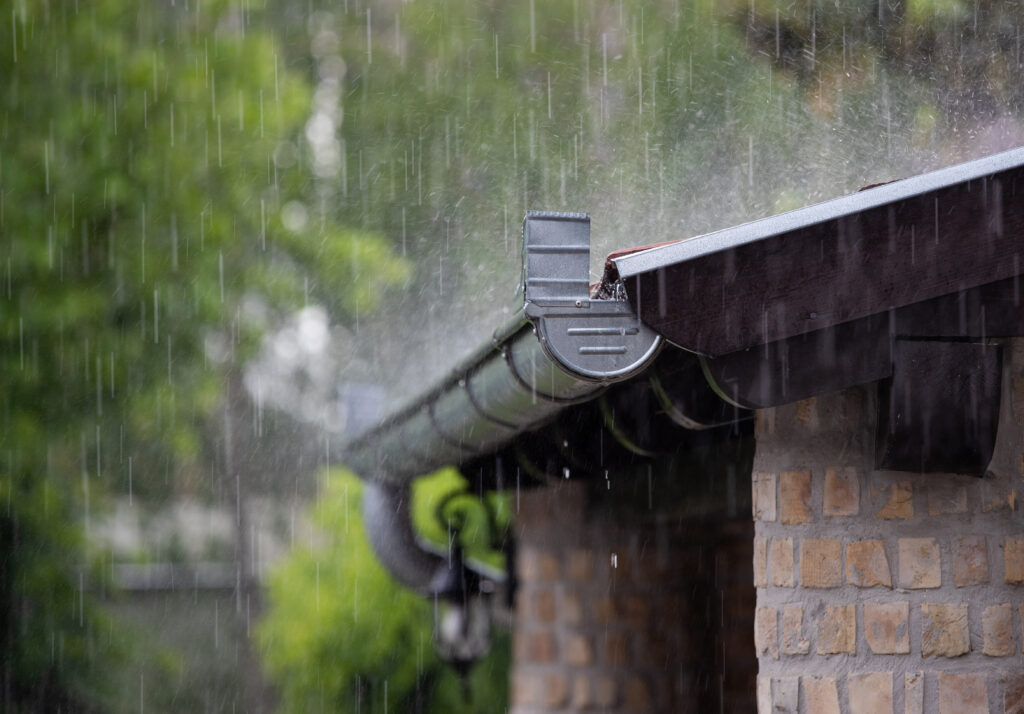
Why Ohio homes increasingly need heavy-rain gutters comes down to two converging trends: Ohio’s documented rise in extreme precipitation events, and the reality that most standard 5-inch gutter installations were sized for rainfall patterns that no longer represent typical Ohio storms. Understanding both trends helps homeowners make the case for gutter upgrades that will protect the home for decades.
How Ohio Rainfall Patterns Have Changed
Ohio rainfall patterns have changed in ways that directly stress residential gutter systems. According to the NOAA National Centers for Environmental Information Ohio State Climate Summary, Ohio has experienced a significant increase in the number of 2-inch extreme precipitation events since the mid-1990s, and the past 26 years have seen some of the highest levels of heavy rain events on record since the historic peak from 1910 to 1914. The state now averages 40+ inches of annual precipitation in the southern regions (including Kettering and surrounding areas), and severe thunderstorms increasingly deliver that rain in short intense bursts rather than steady soaking storms. A 5-inch K-style gutter installed on a 2,000 square foot roof can be overwhelmed by rainfall rates above 1.5 inches per hour, which is well within the range of typical Ohio summer thunderstorms.
- 2-inch extreme events: Significant increase since mid-1990s per NOAA.
- 26-year trend: Highest heavy rain levels on record since 1910-1914.
- 40+ inches annual: Total precipitation in southern Ohio.
- 1.5 inches per hour: Overwhelms standard 5-inch gutters.
What Happens When Gutters Overflow
When gutters overflow, water finds paths it was never intended to travel: down siding (causing paint failure and eventual rot), into soffits and fascia (causing hidden interior rot), against foundation walls (causing basement seepage and eventual cracks), and even backwards under roof edges (causing shingle damage and attic leaks). Every one of these failure modes is expensive to fix and often develops slowly enough that homeowners don’t notice until major damage is visible. Foundation repairs from chronic overflow can run $5,000 to $30,000 or more, and the cost is essentially always higher than the difference between installing standard 5-inch gutters and heavy-rain options in the first place. The math strongly favors sizing gutters for the actual precipitation the home will experience over its lifetime, not the historic averages from decades ago.
- Siding damage: Paint failure, rot, and staining.
- Soffit and fascia rot: Hidden interior damage.
- Foundation issues: $5,000 to $30,000 repair costs.
- Shingle damage: Water backup at roof edges.
3 Best Gutter Options for Heavy Rain
Three specific gutter options handle heavy rain dramatically better than standard 5-inch K-style systems, and each has a distinct set of trade-offs in terms of cost, appearance, and best-use scenario. Working through all three helps homeowners find the option that fits their specific situation.
1. 6-Inch K-Style Seamless Aluminum Gutters
Six-inch K-style seamless aluminum gutters are the most common upgrade from standard 5-inch systems and typically deliver 40 to 50 percent more capacity while looking essentially identical from the ground. The additional inch of gutter width dramatically increases the cross-sectional area for water flow, and pairing 6-inch gutters with upgraded 3×4-inch rectangular downspouts (instead of standard 2×3-inch) roughly doubles the drainage capacity of the entire system. Seamless installation (custom-formed on site from a single roll of aluminum) eliminates joint failures that plague sectional gutters. Cost typically runs $8 to $14 per linear foot installed in the Kettering and surrounding areas market, or about $1,600 to $2,800 for a typical 2,000 square foot home with 200 linear feet of gutter. This is the default recommendation for most Ohio homes upgrading for heavy rain because it delivers strong capacity gains without changing the visual character of the home.
- Capacity: 40 to 50 percent more than standard 5-inch.
- Downspouts: 3×4-inch rectangular for maximum flow.
- Cost: $8 to $14 per linear foot installed.
- Best for: Most homes upgrading from standard 5-inch systems.
2. Half-Round Gutters with Oversized Downspouts
Half-round gutters with oversized downspouts offer both a traditional aesthetic and strong heavy-rain performance when properly sized. The rounded interior of half-round gutters flows water more efficiently than rectangular K-style profiles, and half-round systems can be paired with 4-inch round or 3×4-inch rectangular downspouts for high drainage capacity. Half-round gutters in a 6-inch size deliver capacity roughly equivalent to a 5-inch K-style, while 7-inch half-round approaches the capacity of 6-inch K-style. Aluminum half-round runs $12 to $30 per linear foot installed, and copper half-round (the premium choice for historic homes and high-end architecture) runs $30 to $50+ per linear foot. Total cost for a 2,000 square foot home ranges from $2,400 to $10,000+ depending on material. Half-round works especially well for pre-1950s architectural styles, homes with slate or tile roofs, and homeowners who prioritize the traditional look.
- Capacity: Strong in 6-inch or 7-inch sizes.
- Downspouts: 4-inch round or 3×4-inch rectangular.
- Cost: $12 to $30 per foot (aluminum); $30 to $50+ (copper).
- Best for: Historic homes, upscale architecture, traditional aesthetic.
3. 7-Inch Box or Oversized Gutters
Seven-inch box or oversized gutters are the highest-capacity residential gutter option, delivering roughly double the water-handling of standard 5-inch systems and about 30 to 40 percent more than 6-inch K-style. Box gutters have a rectangular cross-section with taller sidewalls than K-style, giving them dramatically more capacity in the same face width. Seven-inch systems are typically installed on very large homes, homes with steep roofs, homes in the highest-rainfall parts of Ohio, or homes that have had chronic overflow problems with smaller gutters. Cost runs $14 to $22 per linear foot installed, or $2,800 to $4,400 for a typical 2,000 square foot home. Some 7-inch systems require reinforced hangers and structural attention because the additional water weight (up to 5 pounds per foot when full) exceeds what standard hangers can support. This option is overkill for most homes but is the right choice when heavy rain has already caused foundation, basement, or siding damage.
- Capacity: Double the standard 5-inch capacity.
- Downspouts: 3×4-inch or larger.
- Cost: $14 to $22 per linear foot installed.
- Best for: Large homes, steep roofs, or homes with chronic overflow.
How to Choose the Right Heavy-Rain Gutter for Your Home
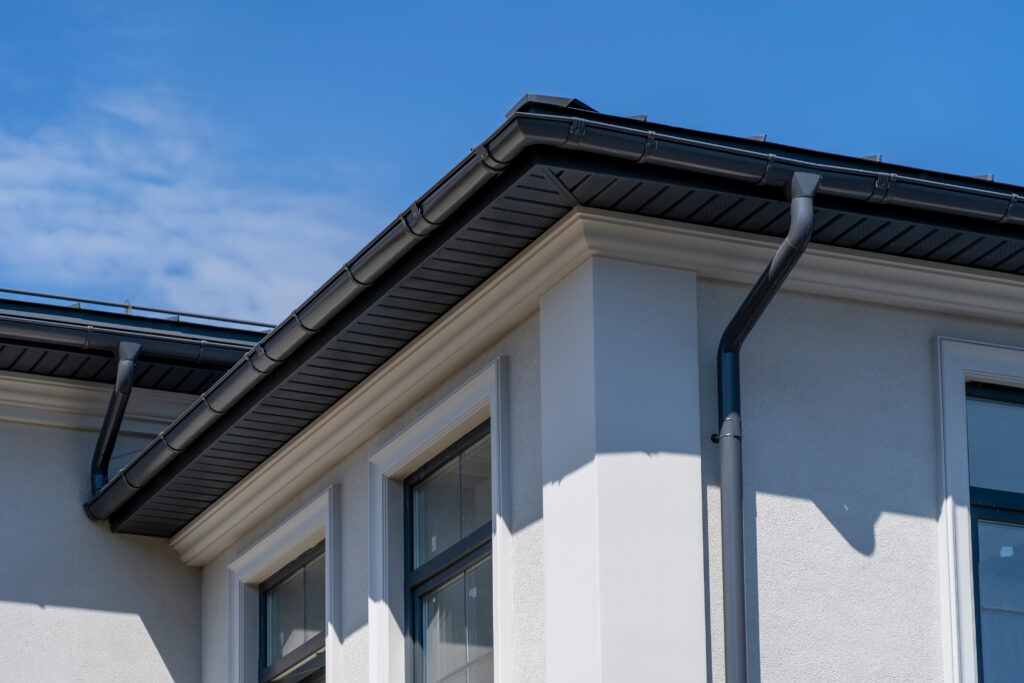
How to choose the right heavy-rain gutter for your home depends on your budget, home architecture, and how severe your current or expected rainfall problems are. A structured approach helps homeowners make the right specification decision.
What Factors Should Guide the Decision
Factors that should guide the decision include: total roof drainage area (larger roofs need higher capacity), local rainfall intensity (some parts of Ohio see more extreme storms than others), home architectural style (K-style fits modern homes; half-round fits traditional), current overflow problems (if you already have overflow, upgrade one size larger than calculated), budget for materials and installation, and long-term ownership plans (longer ownership justifies premium materials like copper). For most homes in Kettering and surrounding areas, 6-inch K-style seamless aluminum with 3×4-inch downspouts is the practical default. Larger homes or homes with existing overflow problems should consider 7-inch or half-round systems. High-end custom homes and historic restorations often justify copper half-round.
- Roof area: Larger drainage area needs higher capacity.
- Rainfall intensity: Local storm patterns matter.
- Architectural fit: K-style vs. half-round based on home style.
- Existing problems: Size up if overflow has already occurred.
What Questions to Ask a Gutter Contractor
Questions to ask a gutter contractor include: What size gutter and downspout do you recommend for my specific roof (calculated using the SMACNA method or similar)? How many downspouts will you install and where? What material (aluminum, copper, or steel) do you recommend and why? What hanger system will you use and at what spacing? Do you offer seamless installation? What warranty do you provide on materials and workmanship? A qualified gutter contractor will provide specific written answers to all these questions and be able to explain the calculation behind their sizing recommendation. Contractors who quote a one-size-fits-all system without asking about your specific roof are red flags.
- Sizing calculation: Based on your specific roof area.
- Number of downspouts: More downspouts reduce overflow risk.
- Material: Aluminum, copper, or steel with reasoning.
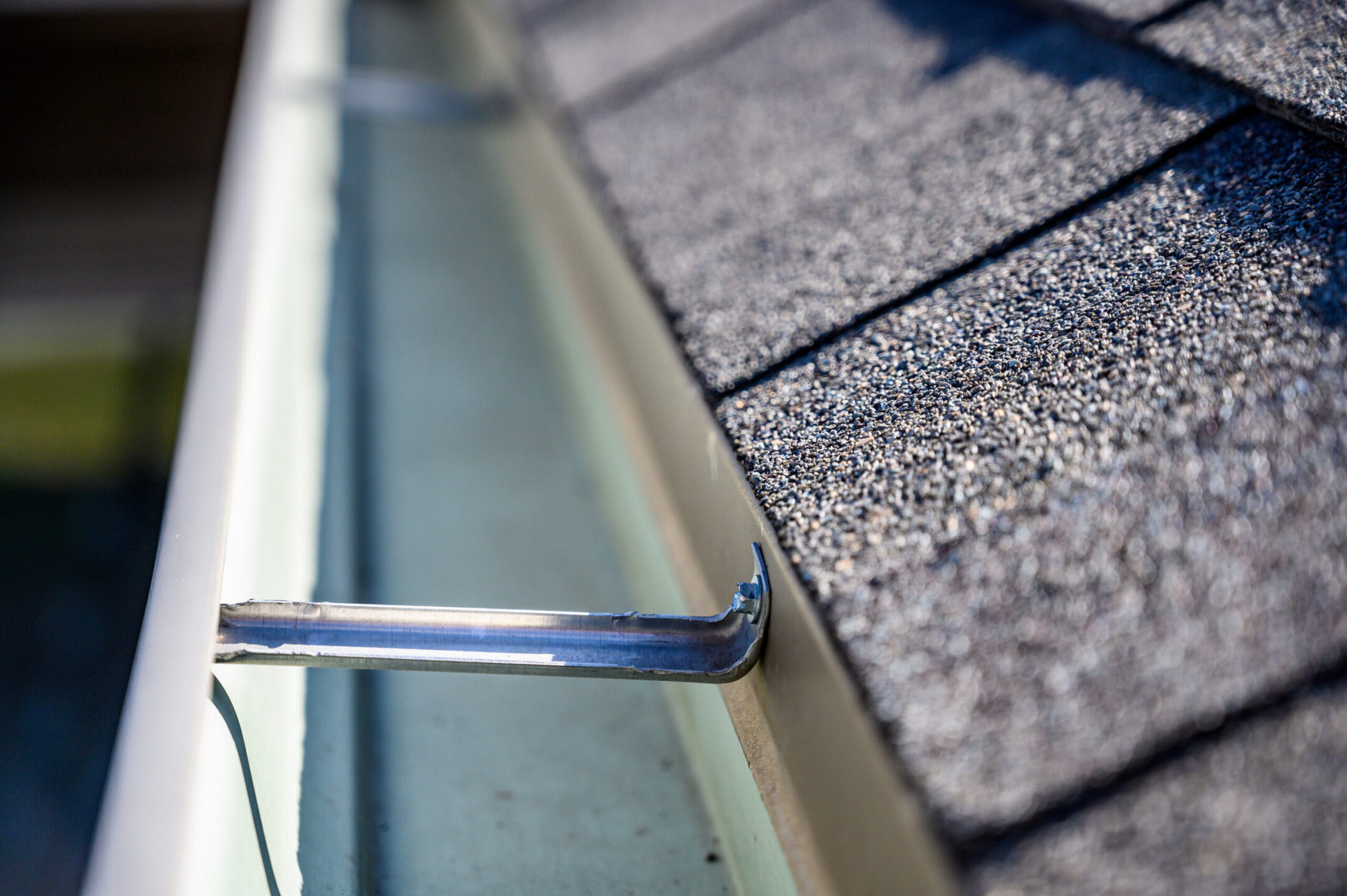
- Hanger spacing: Typically 24 to 36 inches for K-style.
Frequently Asked Questions
How Do I Know If My Current Gutters Are Too Small for Heavy Rain?
You can tell your current gutters are too small for heavy rain if you observe water pouring over the gutter edge during moderate to heavy storms, water splash damage on siding or landscaping below the gutter line, foundation water infiltration or basement seepage after storms, ice dams forming in winter (which can indicate summer overflow issues too), or visible wear on fascia and soffit boards below the gutters. Any of these signs suggests undersizing and warrants a professional inspection and gutter sizing calculation.
Are Gutter Guards Worth It for Heavy Rain?
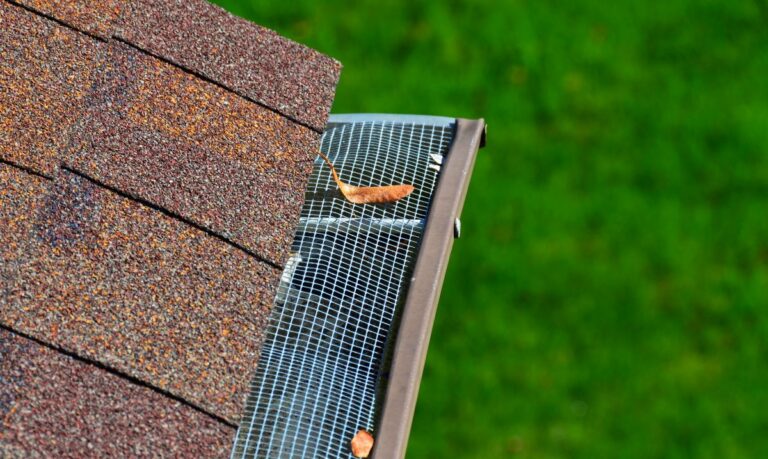
Gutter guards can help by reducing debris that would otherwise clog the gutter and cause overflow during heavy rain, but they don’t increase the gutter’s water-handling capacity. If your gutters are undersized, gutter guards won’t solve the problem; you still need larger gutters. If your gutters are properly sized, gutter guards help maintain that capacity by preventing debris blockage. Quality gutter guards typically cost $8 to $15 per linear foot installed.
What Is the Difference Between 5-Inch and 6-Inch K-Style Capacity?
The difference between 5-inch and 6-inch K-style gutter capacity is significant: 6-inch K-style has roughly 40 to 50 percent more cross-sectional area than 5-inch, which translates directly to higher water-handling capacity. When paired with larger downspouts (3×4-inch instead of standard 2×3-inch), the total system drainage capacity roughly doubles. For homes in Kettering and surrounding areas, this upgrade often solves overflow problems that have persisted for years with standard 5-inch systems.
Can I Just Add More Downspouts to My Existing Gutters?
Adding more downspouts to existing gutters can help in some cases, particularly if the current spacing between downspouts is too wide (more than 40 feet). Downspouts remove water from the gutter, so more of them reduce the water height in the gutter and reduce overflow risk. However, if the gutters themselves are undersized, additional downspouts alone won’t solve the overflow problem. A professional assessment can determine whether additional downspouts, larger gutters, or both are needed.
How Long Do Heavy-Rain Gutter Systems Last?
Heavy-rain gutter systems typically last 20 to 40 years for seamless aluminum, 50+ years for copper, and 15 to 25 years for steel, all with proper installation and regular maintenance. Larger gutters actually tend to last longer than standard 5-inch systems because they experience less stress from overflow and are less likely to develop the wear patterns that shorten gutter life. Regular cleaning (twice a year minimum) and prompt repair of any damage extend service life significantly.
Does Adding Larger Gutters Affect Home Value?
Adding larger gutters can positively affect home value in most cases because heavy-rain gutters signal a well-maintained home to buyers and can prevent the foundation and siding damage that often shows up in home inspections. The improvement is not typically as visible as a kitchen or bathroom remodel, but it protects the home’s structural integrity in ways that matter to informed buyers. Copper and premium half-round systems can be an actual selling point on higher-end homes.
Why Kettering Homeowners Trust Johnson Restoration for Heavy-Rain Gutter Installation
Choosing the right gutters for heavy rain protects your home’s foundation, siding, and interior from years of gradual water damage that undersized gutters allow, and the right upgrade can pay back many times over through avoided repairs during severe Ohio storm seasons. Johnson Restoration brings over a decade of industry experience to gutter installation and replacement projects in Kettering and surrounding areas, with workmanship warranties, financing options, and the expertise to properly size, install, and support 6-inch K-style, half-round, and 7-inch box gutter systems for the specific rainfall patterns and roof configurations Ohio homes face. Whether you are replacing aging gutters, addressing chronic overflow problems, or planning a full exterior upgrade, contact Johnson Restoration today for a free estimate and let our team help you protect your home from the increasing frequency of heavy rain events.