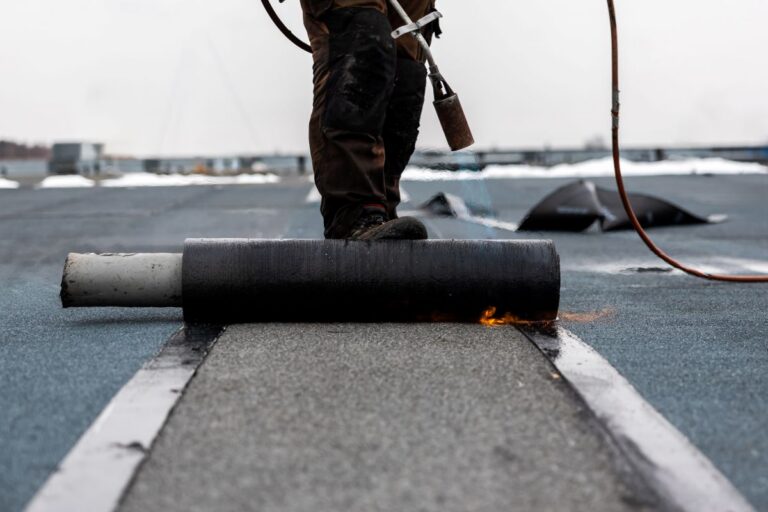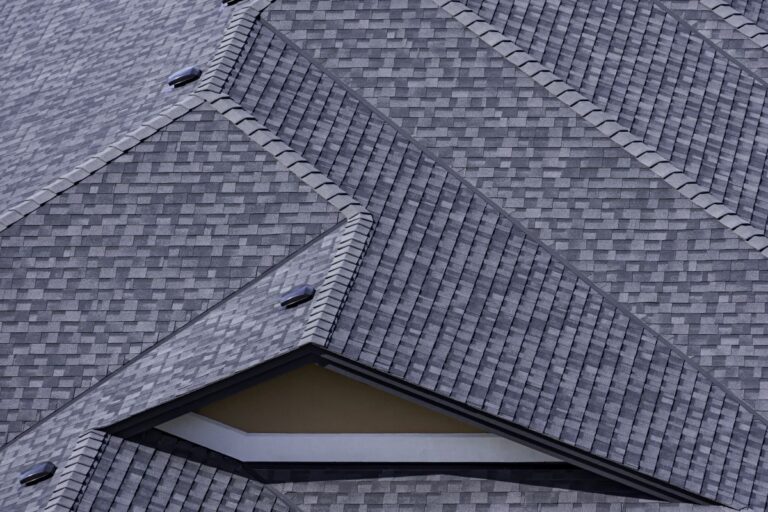
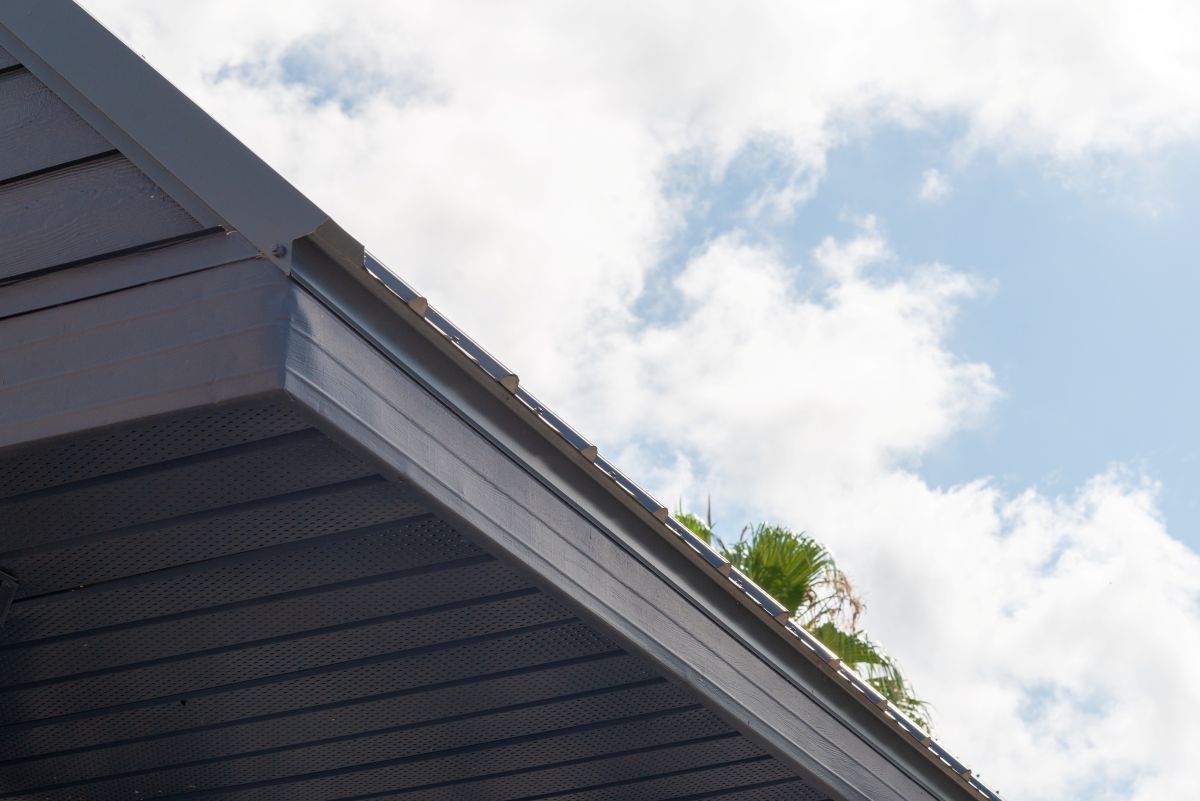

A roof starter strip is one of the most important yet least understood components of an asphalt shingle roof, and understanding what it does can help homeowners spot quality installations, avoid contractor shortcuts, and protect their roof from the wind and water damage that starter strips are specifically designed to prevent. In simple terms, a starter strip is the first row of shingles installed along the roof’s edges (specifically the eaves and rake edges) before the visible field shingles are applied on top. Even though the starter strip is completely hidden once the roof is finished, it plays a critical role in preventing wind uplift, water intrusion, and shingle blow-offs during storms. Homeowners in Miamisburg and surrounding areas who understand these fundamentals can have more informed conversations with their roofing contractor and make sure the details that matter most are actually being done correctly.
- What a starter strip is: The first row of asphalt shingles installed at eaves and rakes, hidden by the field shingles above.
- What it does: Seals the roof edge against wind uplift and prevents water infiltration at the most vulnerable points.
- What you will learn: 4 key facts about starter strips, cost impact, installation quality signs, and answers to common questions.
Why the Roof Edge Is So Important
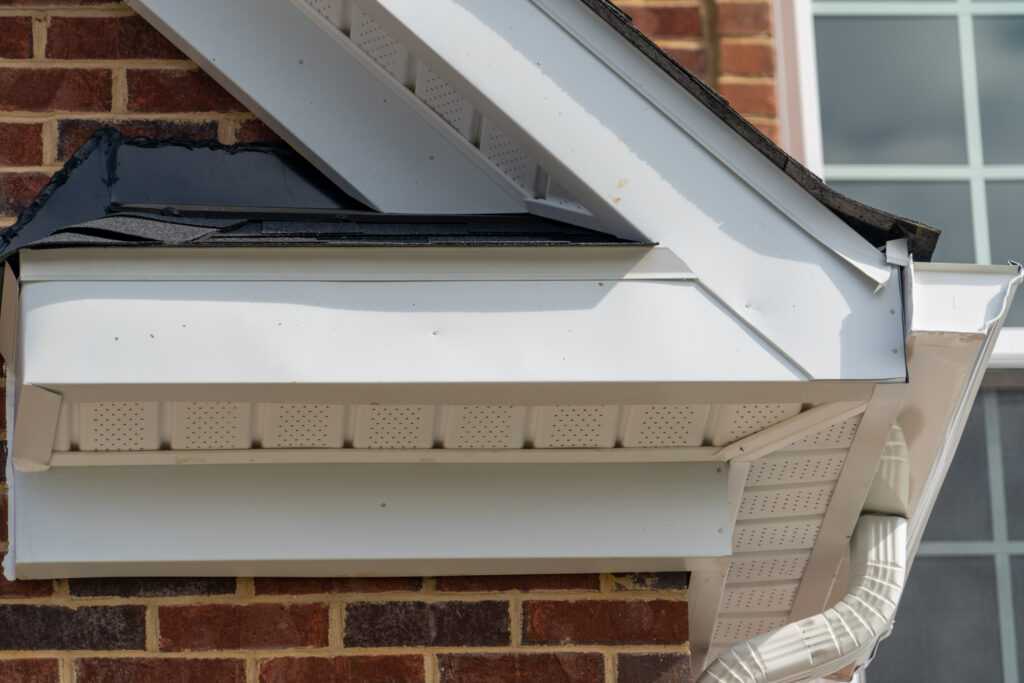
Why the roof edge is so important comes down to physics: wind hits the edges of a roof harder than any other part of the surface, and any weakness at the edge cascades quickly into system-wide damage. Understanding this helps explain why starter strips exist and why installation quality at the edges matters so much.
How Wind Damage Starts at Roof Edges
Wind damage starts at roof edges because wind flowing over a roof creates uplift pressure that is strongest at the perimeter, where the wind can catch under a lifted shingle edge and peel it back. Once one shingle lifts, the wind can access the next shingle up, and a domino effect begins that can strip a large area of roof in minutes during a severe storm. Insurance industry data consistently identifies edge failures (blown-off starter courses and unsealed edges) as one of the leading causes of shingle loss in wind events. Even in moderate storms (50 to 60 mph winds), improperly installed edges can result in blown-off shingles that expose the underlying deck to water damage. In Miamisburg and surrounding areas, where severe thunderstorm winds regularly exceed 60 mph, the edge details are especially important.
- Uplift pressure is strongest at edges: Physics of wind flow over a roof surface.
- Domino effect: One lifted shingle exposes the next one up.
- Leading cause of shingle loss: Edge failures identified by insurance data.
- 50 to 60 mph is enough: Moderate storms can strip poorly installed edges.
Why Sealed Edges Matter More Than Field Sealing
Sealed edges matter more than field sealing because the manufacturer’s sealant that bonds shingles together in the field of the roof cannot reach the very first course of shingles at the edge. Field shingles have adhesive strips on the underside that activate under sun and heat, bonding each shingle to the one below it. But the bottom-most shingle in the first course has nothing below it to bond to, which is exactly the problem starter strips solve. The starter strip provides the bonding surface the first course needs to seal down, closing the loop on wind resistance for the entire roof. Without a proper starter strip, the first course sits unbonded and vulnerable, creating a weak point at the very edge where wind pressure is highest.
- Field sealing works between shingles: Not at the bottom-most course.
- Starter strip provides bonding surface: For the first course of visible shingles.
- Closes the loop: Wind resistance depends on continuous sealing.
- Weak point without one: First course sits unbonded and lifts easily.
4 Key Facts About Roof Starter Strips
Four essential facts about roof starter strips help homeowners understand what they are, why they matter, and how to verify quality installation. Each of these is worth knowing before agreeing to a roofing contract or evaluating an existing installation.
1. Starter Strips Are Installed at Both the Eaves and the Rakes
Starter strips are installed at both the eaves (the horizontal lower edge where water drains into gutters) and the rakes (the sloped edges along the gable ends), and quality installations always include both. According to the Insurance Institute for Business & Home Safety, starter strips are installed at the eaves and the rake edges of a roof and typically have a single strip or dashed line of sealant for the first course of shingles to adhere to the roof, and this detail helps prevent water intrusion and protects against uplift from wind that can occur at the roof edges. Some contractors skip the rake starter strips to save time and material, but this is a shortcut that leaves the gable ends vulnerable to side-entry wind, which is often the wind direction that causes the most damage. When comparing roofing quotes, ask specifically whether the estimate includes starter strips at both the eaves and the rakes.
- Eaves: Horizontal lower edge where water drains into gutters.
- Rakes: Sloped edges along the gable ends.
- Both are required: For full wind resistance and water protection.
- Common shortcut: Skipping rakes to save time and material.
2. Starter Strips Have a Sealant Strip That Bonds the First Course of Shingles
Starter strips have a sealant strip (a factory-applied adhesive line) that bonds the first course of visible shingles to the roof, and the sealant must be positioned correctly to actually work. At the eaves, the sealant strip on the starter goes at the lower edge, where it seals to the underside of the first course of field shingles. At the rakes, the sealant goes at the outer edge, where it seals the ends of every shingle course to the rake edge. Once the roof warms in the sun, the sealant activates and creates a permanent bond that resists wind uplift. Some contractors try to cut corners by flipping standard 3-tab shingles upside down to use as starters, but this places the sealant strip in the wrong location (too far up on the roof) and fails to seal the first course properly. Pre-manufactured starter strips are designed specifically for this application and offer consistent adhesive placement.
- Factory-applied adhesive line: Bonds first course to starter.
- Eave placement: Sealant at lower edge.
- Rake placement: Sealant at outer edge.
- Purpose-made vs. flipped standard shingles: Pre-made products seal correctly.
3. Missing or Improperly Installed Starter Strips Can Void Your Warranty
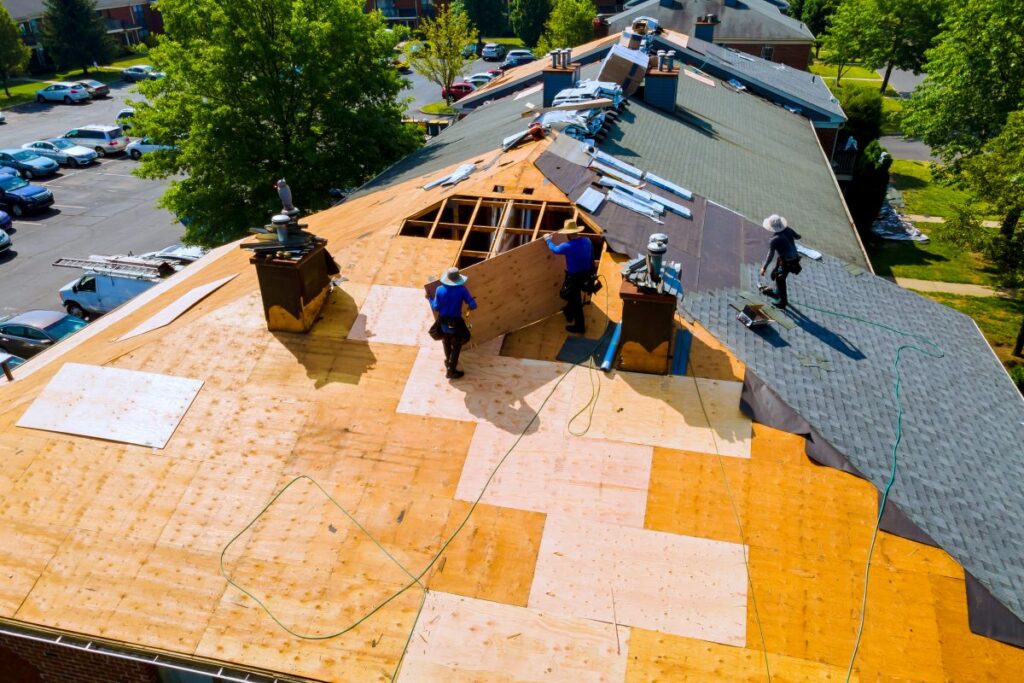
Missing or improperly installed starter strips can void your manufacturer warranty because most major shingle manufacturers (including GAF, Owens Corning, CertainTeed, Atlas, and Malarkey) require the use of matching starter strip products as part of their complete roofing system warranty. If a homeowner files a warranty claim after a wind event, the manufacturer will inspect the installation to verify all system components were used correctly. Discovering that the starter strips were missing, flipped standard shingles were used instead, or the sealant was oriented incorrectly can result in the entire warranty claim being denied. Manufacturer warranties on shingles are one of the biggest financial protections in a roofing investment, sometimes running 25 to 50 years, so preserving them by insisting on proper starter strips is well worth the small material cost. Ask your contractor to specify in the contract which starter strip product will be used and how it will be installed.
- Warranty voided: For non-compliant installation on most brands.
- Post-storm inspection: Manufacturer verifies system components.
- 25 to 50 year warranties: At stake with proper installation.
- Written contract spec: Ask for starter strip product name and installation method.
4. Starter Strips Are a Small Cost With Outsized Value
Starter strips are a small cost with outsized value because the material is inexpensive compared to the wind resistance and warranty protection they provide. A typical bundle of pre-made starter strip shingles covers 100 to 120 linear feet and costs $30 to $60, meaning the total starter strip material cost for an average residential roof runs $150 to $400 depending on the number of eaves and rakes. This is a tiny fraction of the total roof cost (usually less than 3 percent) yet provides some of the highest-value protection on the entire roof. Skipping starter strips or using flipped standard shingles saves maybe $100 to $250 on a job, but exposes the homeowner to thousands of dollars in wind damage risk and potentially a voided warranty. In the roofing industry, starter strips are one of the clearest examples of a small line item that should never be cut from a bid.
- Material cost: $150 to $400 for a typical residential roof.
- Percent of total cost: Less than 3 percent of a full roof replacement.
- Value proposition: Some of the highest-value protection on the roof.
- Never accept a bid without them: Red flag for corner-cutting contractor.
How to Verify Quality Starter Strip Installation
How to verify quality starter strip installation involves a handful of simple checks that homeowners can perform (or ask their contractor to demonstrate) before or during the roofing project.
What to Ask Your Contractor Before Work Starts
Before work starts, ask your contractor which specific starter strip product will be used (by manufacturer name and product name, such as GAF Pro-Start, Owens Corning Starter Shingle Roll, or CertainTeed SwiftStart), and confirm that starter strips will be installed at both eaves and rakes. Ask whether the starter strips will match the field shingles by manufacturer (this is often a requirement for warranty compliance). Confirm in writing that pre-manufactured starter strips will be used (not flipped standard shingles). Request that the installation crew leave a small section visible during the tear-off and re-roof process so you can see the starter strip in place before the field shingles cover it. A quality contractor will welcome all of these questions and provide clear, written answers.
- Product name: Manufacturer and specific product line.
- Eaves and rakes: Confirm both are included.
- Matching manufacturer: Often required for warranty.
- Visible verification: Ask to see it during installation.
What to Look For During and After Installation
During and after installation, look for a straight, continuous starter strip line at the eaves (visible before field shingles are applied) with a slight overhang past the drip edge (typically 1/4 to 3/4 inch, per manufacturer instructions). At the rakes, verify that starter strips are installed continuously up the gable edge, not just at the eaves. After the roof is complete, walk around the perimeter and look for uniform, straight shingle edges without gaps, waves, or exposed underlayment. Ask your contractor for photographs of the starter strip installation taken during the roofing process, and keep these photos in your records for future warranty or insurance purposes. Any hesitation from the contractor about providing documentation is a warning sign.
- Straight continuous line: Visible before field shingles installed.
- 1/4 to 3/4 inch overhang: Past the drip edge per manufacturer specs.
- Rakes covered: Continuous starter up both gable edges.
- Photo documentation: Ask for installation photos for your records.
Frequently Asked Questions
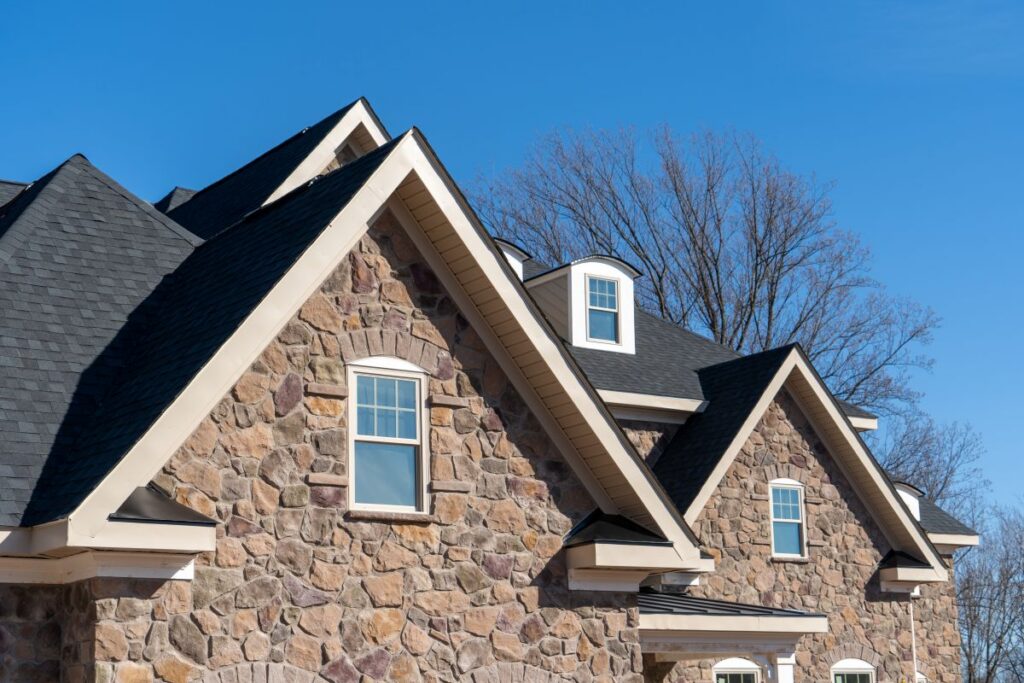
Do All Shingle Roofs Need Starter Strips?
Yes, all shingle roofs need starter strips at the eaves and rakes to comply with modern building codes, manufacturer installation instructions, and warranty terms. Older roofs (pre-1990s) sometimes used flipped 3-tab shingles as starters, but this is no longer considered acceptable practice for most modern shingle systems. Manufacturers now specifically require dedicated starter strip products for warranty coverage.
How Do I Know If My Existing Roof Has Starter Strips?
You can check whether your existing roof has starter strips by carefully lifting the bottom edge of the first course of shingles at the eave or rake and looking for a distinct, narrower strip of asphalt shingle beneath. If there is nothing under the first course, or if you see an upside-down 3-tab shingle rather than a purpose-built starter, the installation may not have proper wind protection. A professional roof inspection can confirm the installation quality.
Can I Add Starter Strips to an Existing Roof?
You cannot easily add starter strips to an existing roof without partial or full tear-off, because starter strips need to be installed underneath the first course of field shingles. If a professional inspection reveals missing or improper starter strips, the practical solution is usually to plan for a proper installation at the next roof replacement rather than attempting a retrofit. Some spot repairs are possible if the concern is localized to one area.
How Much Do Starter Strips Cost on a Roof Replacement?
Starter strips typically cost $150 to $400 in materials for a typical residential roof replacement in Miamisburg and surrounding areas, which is usually less than 3 percent of the total roof cost. Labor to install starter strips is included in the standard roof installation labor cost. Any contractor who tries to charge extra for starter strips beyond the base bid is likely padding, since they are standard practice.
Are Starter Strips Different From Drip Edge?
Yes, starter strips are different from drip edge. Drip edge is a metal flashing (usually aluminum or galvanized steel) installed at the perimeter of the roof to direct water off the roof and into the gutter, protecting the fascia. Starter strips are the first course of asphalt shingles installed after the drip edge. Both are required for a proper roof installation, and they perform different functions.
Do Starter Strips Need to Match My Field Shingles?
Starter strips should match your field shingles by manufacturer for warranty compliance in most cases. Many shingle manufacturers require that all system components (including starter strips, field shingles, and ridge cap shingles) come from the same brand for warranty coverage. Color matching is not required since the starter strips are hidden from view once the roof is finished.
Why Miamisburg Homeowners Trust Johnson Restoration for Quality Roofing
A roof starter strip is one of the smallest components of an asphalt shingle roof, but it is also one of the clearest signals of installation quality: contractors who install starter strips correctly at both eaves and rakes are the same contractors who pay attention to every other detail that determines how long a roof lasts. Johnson Restoration brings over a decade of industry experience to roofing projects in Miamisburg and surrounding areas, with workmanship warranties, financing options, and GAF Master Elite certification that requires strict adherence to manufacturer installation specifications, including proper starter strip use at every edge. Whether you are planning a new roof, evaluating a recent installation, or asking questions before signing a contract, contact Johnson Restoration today for a free estimate and let our team show you the small details that add up to decades of protection.