
A pitched roof is any sloped roof design where the surface rises from the eaves to the ridge at an angle steep enough to shed water and snow, and it remains the dominant residential roof style across North America for one simple reason: it works. The pitch (or slope) of the roof affects water drainage, snow shedding, wind resistance, attic space, and overall lifespan, and the specific shape (gable, hip, gambrel, mansard, and others) determines how the roof performs against storms, how much usable space it creates inside the home, and how much it costs to build or replace. Homeowners in Dayton and surrounding areas typically choose between a handful of common pitched designs, each with its own strengths and trade-offs.
- Why pitched roofs dominate: They shed water and snow better than flat roofs and offer longer lifespans.
- What changes by type: Wind resistance, attic space, cost, and aesthetic style.
- What you will learn: The 4 most popular pitched roof types, design tips, real cost ranges, and answers to common questions.
What Defines a Pitched Roof?
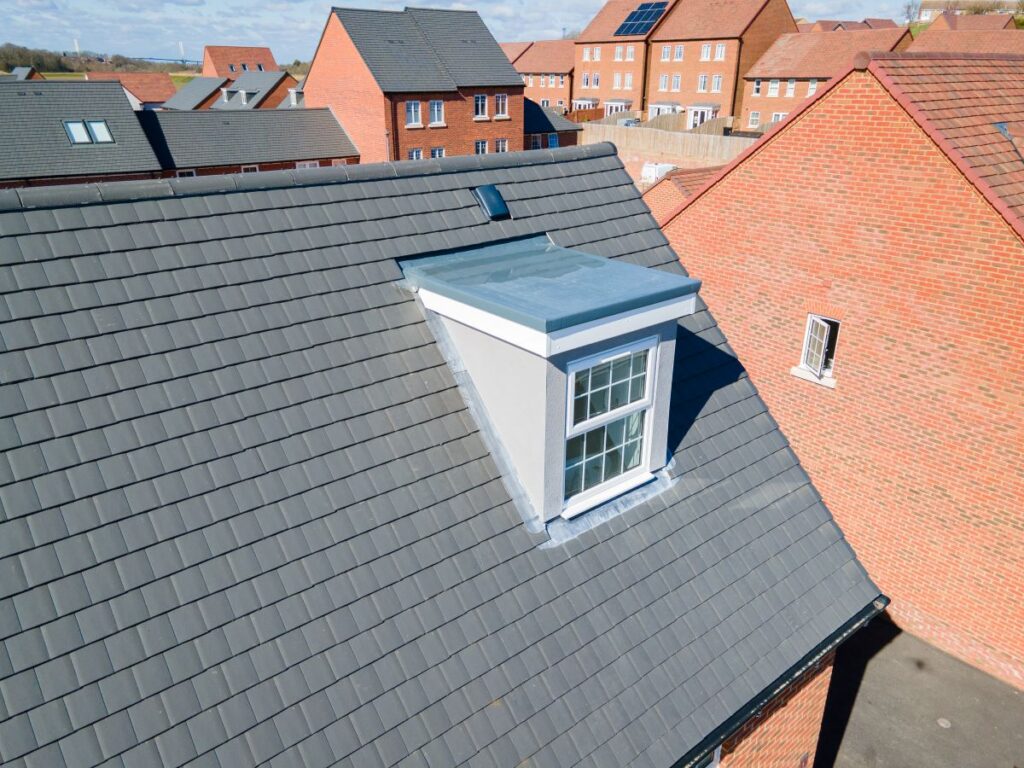
A pitched roof is defined by its slope, expressed as the ratio of vertical rise to horizontal run, with most residential roofs falling between 4/12 (a low slope) and 12/12 (a 45 degree angle). Understanding pitch is the foundation for evaluating roof performance, since slope directly affects everything from water drainage to material choice.
How Is Roof Pitch Measured?
Roof pitch is measured as the number of inches of vertical rise per 12 inches of horizontal run, so a 6/12 pitch means the roof rises 6 inches for every 12 inches of horizontal distance. Pitches below 2/12 are considered low slope and generally require flat roofing systems (TPO, EPDM, modified bitumen) rather than shingles. Pitches between 4/12 and 9/12 are the most common residential range and accept the widest variety of materials, including asphalt shingles, metal panels, and tile. Pitches above 9/12 are steep slopes that require extra labor, safety equipment, and sometimes specialty fasteners, but they also offer the strongest water shedding performance. Homeowners in Dayton and surrounding areas typically have roofs in the 5/12 to 8/12 range, well suited to standard architectural asphalt shingles.
- Low slope (1/12 to 2/12): Requires flat roofing materials, not shingles.
- Conventional slope (4/12 to 8/12): Most common range; accepts most materials.
- Steep slope (9/12 and above): Strongest water shedding; higher labor costs.
- Maximum residential: 12/12 (45 degrees) is common; steeper roofs are rare.
Why Does Pitch Matter for Roof Performance?
Pitch matters for roof performance because it directly affects water drainage speed, snow load capacity, wind resistance, material choice, and ultimately roof lifespan. Steeper pitches shed water and snow faster, which reduces standing water and the freeze-thaw cycling that wears out shingles. They also provide more usable attic space and stronger ventilation airflow. Lower pitches are cheaper to build and easier to install, but they tend to wear out faster in wet climates because water lingers longer on the surface. Wind performance is more complex: very steep pitches can create high suction forces in storms, while moderate pitches (4/12 to 6/12) often perform best in hurricane and high wind regions when paired with the right roof shape.
- Water drainage: Steeper pitches drain faster, reducing wear.
- Snow shedding: Pitches above 6/12 prevent snow accumulation in most climates.
- Material choice: Asphalt shingles need at least 2/12; standing seam metal works at 1/12 or higher.
- Wind resistance: 4/12 to 6/12 pitch with hip shape is the wind sweet spot.
Pitched Roof vs Flat Roof: Which Is Better?
A pitched roof vs flat roof comparison comes down to drainage, lifespan, and cost. Each works well in the right situation, but pitched roofs are the standard choice for most homes.
What Are the Differences Between Pitched and Flat Roofs?
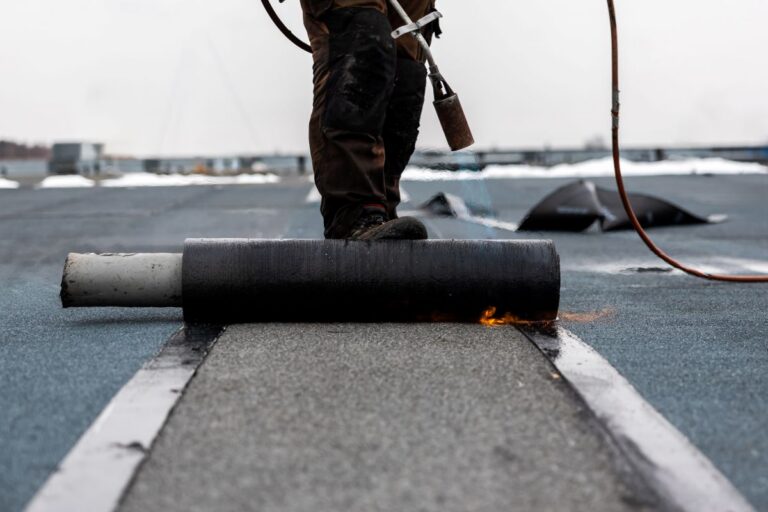
Pitched roofs slope above 2/12, shed water by gravity, and typically last 25 to 50 years. Flat roofs are nearly level, drain through internal drains or scuppers, and typically last 15 to 25 years. Pitched roofs accept asphalt shingles, metal, and tile, while flat roofs require specialty membranes like TPO, EPDM, or modified bitumen. Cost wise, pitched roofs run $5 to $20 per square foot installed, while flat roofs run $4 to $13 per square foot.
- Slope: Pitched above 2/12; flat at or below 2/12.
- Drainage: Gravity for pitched; internal drains for flat.
- Lifespan: 25 to 50 years pitched; 15 to 25 years flat.
- Materials: Pitched accepts most materials; flat requires membranes.
When Is Each Roof the Right Choice?
Pitched roofs are the better choice for most homes in Dayton and surrounding areas because they shed snow and water faster, last longer, and create usable attic space. Flat roofs make more sense for modern architecture, garages, commercial buildings, and homes with rooftop decks or solar arrays. The freeze-thaw cycle common in Ohio winters is particularly hard on flat roofs, while pitched roofs let water drain off before it can pool and freeze.
- Choose pitched for: Most homes, snow-prone climates, longer lifespan.
- Choose flat for: Modern styles, garages, rooftop access needs.
- Ohio consideration: Freeze-thaw cycles favor pitched designs.
- Aesthetic fit: Pitched matches most residential neighborhoods.
4 Best Pitched Roof Types for Residential Homes
Of the dozens of pitched roof shapes seen on homes across the country, four cover the vast majority of residential properties in Dayton and surrounding areas and represent the best balance of performance, aesthetics, and cost. Each has its own strengths, and the right choice depends on the home’s architecture, climate, and budget.
1. Gable Roof
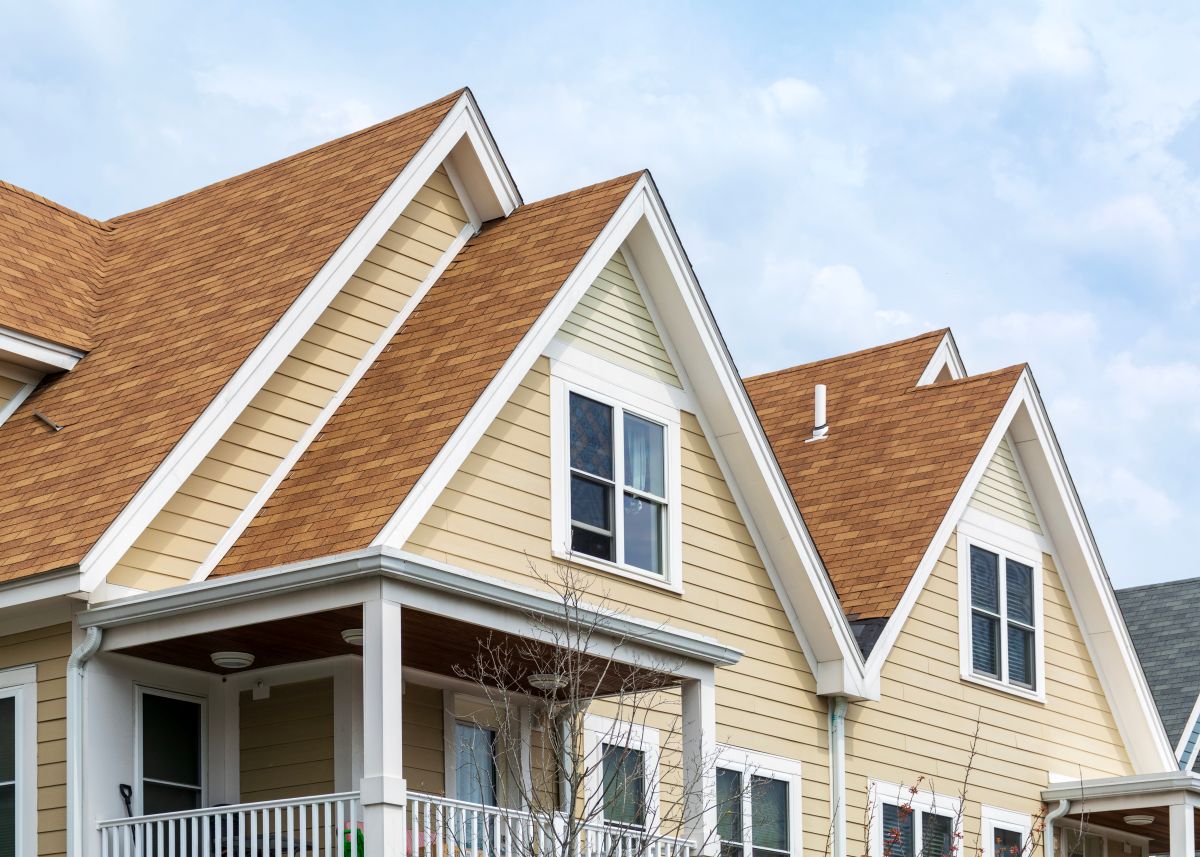
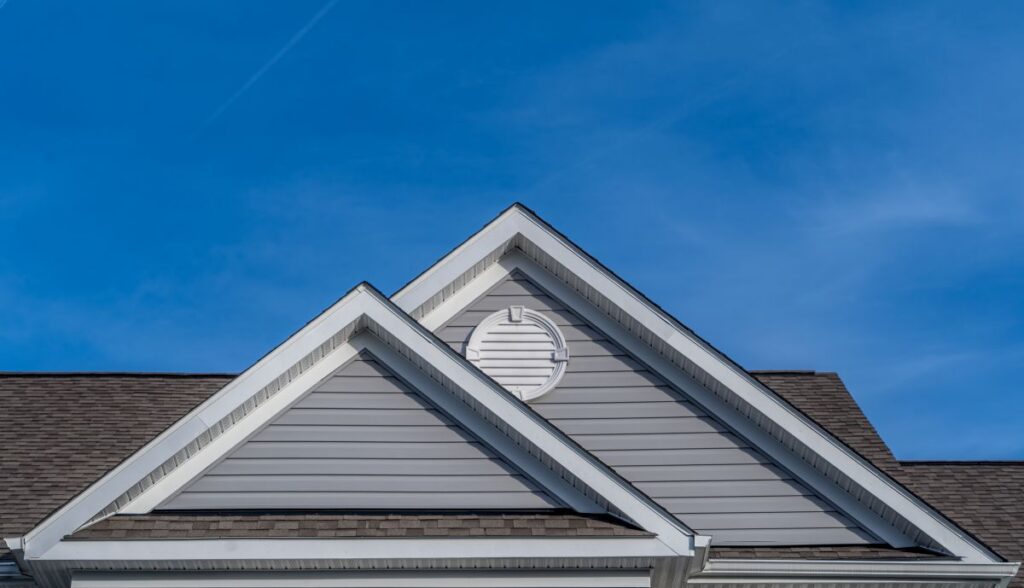
A gable roof is the simplest and most popular pitched roof design, featuring two sloped sides that meet at a central ridge to form a triangular profile when viewed from the end of the house. Gable roofs are inexpensive to build, easy to ventilate, and well suited to almost any roofing material from asphalt shingles to standing seam metal. They also create significant attic space that can be used for storage or, with the right framing, converted to additional living space. The main drawback is wind resistance: the flat gable end walls act like a sail in high winds, catching gusts that can stress or pull off the roof if the connections are not properly braced. Gable roofs typically cost $5 to $12 per square foot installed, making them the most affordable mainstream choice.
- Two sloped sides: Meet at a central ridge.
- Lowest cost: $5 to $12 per square foot installed.
- Wind weakness: Gable end walls catch wind and require bracing.
- Best for: Moderate climates, traditional homes, budget conscious projects.
2. Hip Roof
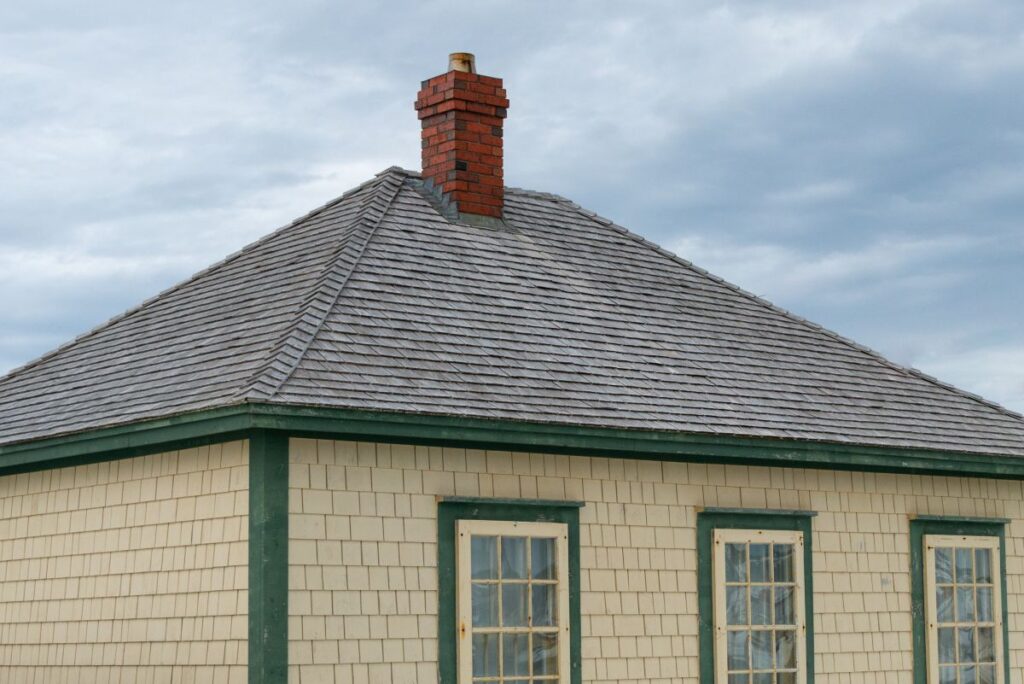
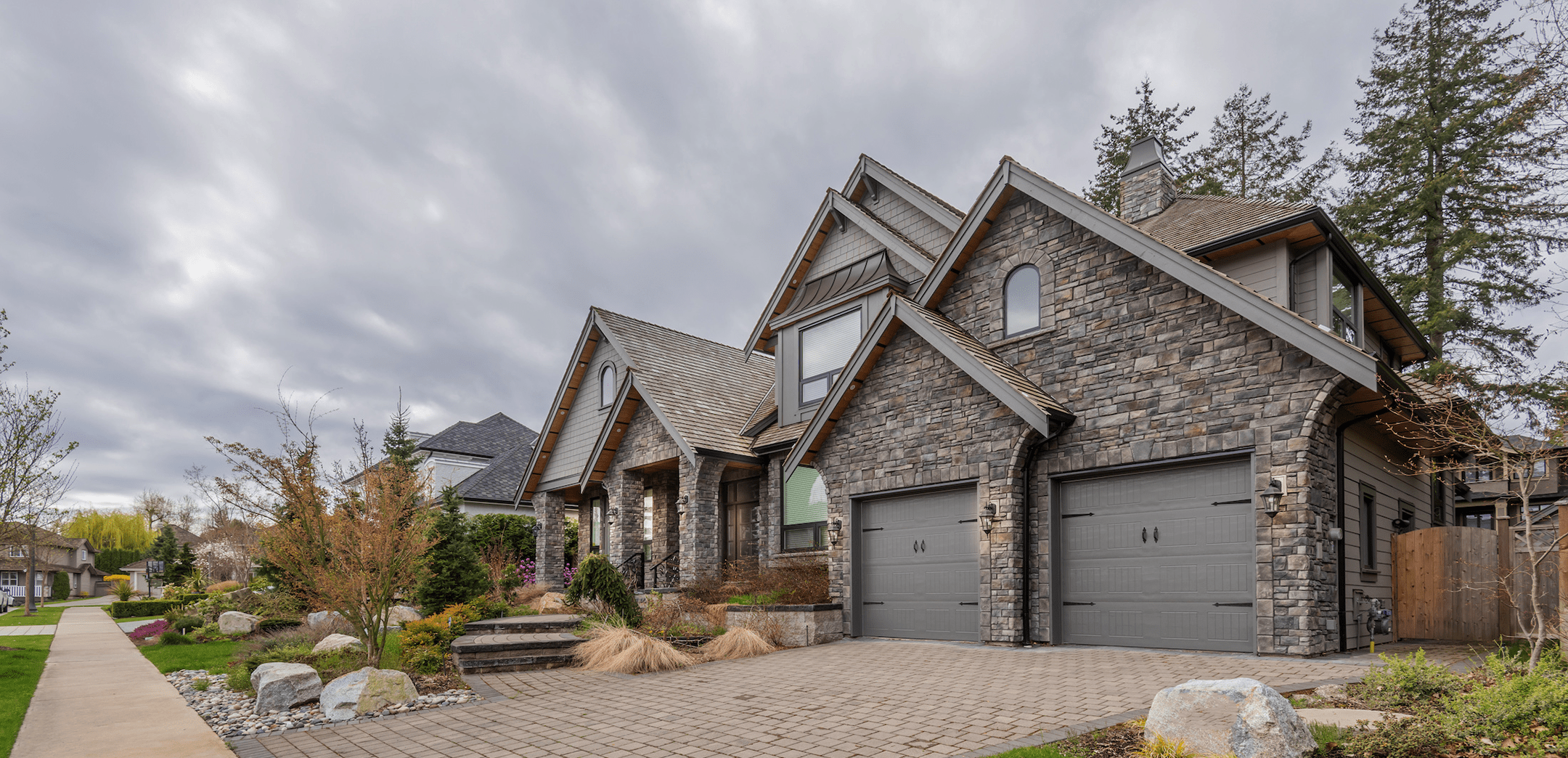
A hip roof features sloped sides on all four sides of the house that meet at a central ridge or single peak, eliminating the vertical gable end walls entirely and creating a more aerodynamic profile. According to the U.S. Department of Energy’s Building America Solution Center, wind tunnel testing has found that peak wind-induced pressures can be as much as 50 percent lower in a hip roof versus a gable roof, making hip roofs the preferred choice in hurricane and high wind regions. Hip roofs also offer continuous eaves and gutters on all four sides, which improves drainage and reduces siding exposure to weather. The trade offs are higher construction costs ($7 to $15 per square foot installed) and less usable attic space because all four sides slope inward.
- Slopes on all four sides: No gable end walls.
- 50 percent lower peak wind pressures: Per DOE wind tunnel data.
- Insurance discounts: Available from many carriers for qualifying hip roofs.
- Best for: High wind regions, coastal homes, and homeowners prioritizing durability.
3. Gambrel Roof
A gambrel roof has two sloped sides with two different angles per side, creating a barn-like profile that is steep at the lower portion and shallow at the upper portion. The double-slope design maximizes usable space under the roof, making gambrel roofs popular for Dutch Colonial homes, barns, and houses where the attic doubles as a second story living area. Gambrel roofs are relatively simple to construct because they use just two roof beams per side, and they typically cost $8 to $14 per square foot installed. The main weakness is wind and snow performance: the steep lower slope catches wind, while the shallow upper slope can accumulate snow that adds excessive weight to the structure. They are best suited to mild climate regions without heavy snowfall or recurring high wind events.
- Two slopes per side: Steep lower, shallow upper.
- Maximum interior space: Common in barns and Dutch Colonial homes.
- Moderate cost: $8 to $14 per square foot installed.
- Weakness: Not ideal for heavy snow or high wind regions.
4. Mansard Roof
A mansard roof is a four-sided roof with two slopes on each side, where the lower slope is steep (almost vertical) and the upper slope is so shallow it is barely visible from the ground. Originally developed in 17th century France, mansard roofs are popular today on Victorian, Second Empire, and luxury homes where the homeowner wants to maximize usable upper-floor space without adding a full story. The steep lower slopes can accommodate full-height dormer windows, effectively turning the attic into an additional floor of living space. Mansard roofs are the most expensive of the common pitched roof types ($12 to $20 per square foot installed) due to the complex framing and detail work. They also struggle in heavy snow regions because the shallow upper portion does not shed snow well.
- Two slopes per side, four sides: Steep lower, nearly flat upper.
- Maximum living space: Adds a full usable floor without a full second story.
- Highest cost: $12 to $20 per square foot installed.
- Best for: Luxury homes, urban additions, French/Second Empire architecture.
Pitched Roof Design Tips for Homeowners
Choosing the right pitched roof type involves more than just picking a shape, since the surrounding details (ventilation, material, slope, and overhang) all affect how the roof performs over decades. These tips apply to new construction and to homeowners planning a major replacement.
Why Roof Ventilation Matters More Than Pitch Type
Roof ventilation matters more than pitch type because even the best designed pitched roof will fail prematurely if the attic underneath cannot manage moisture and heat. Balanced attic ventilation uses soffit vents at the eaves (intake) and ridge or gable vents at the top (exhaust) to continuously move air through the attic, removing heat in summer and moisture in winter. Inadequate ventilation can shorten asphalt shingle life by 25 to 40 percent, void manufacturer warranties, and cause condensation that stains ceilings and rots framing. Hip roofs use ridge vents along all four sloped intersections, while gable roofs commonly pair soffit and ridge vents with gable end vents. In Dayton and surrounding areas, the freeze-thaw cycle makes proper ventilation especially critical.
- Balanced intake and exhaust: Required regardless of roof shape.
- Code minimum: 1 sq ft of vent area per 150 sq ft of attic floor.
- Lifespan impact: Poor ventilation can shorten shingle life by 25 to 40 percent.
- Warranty requirement: Most manufacturers require balanced ventilation.
What Materials Work Best on Different Pitched Roof Types?
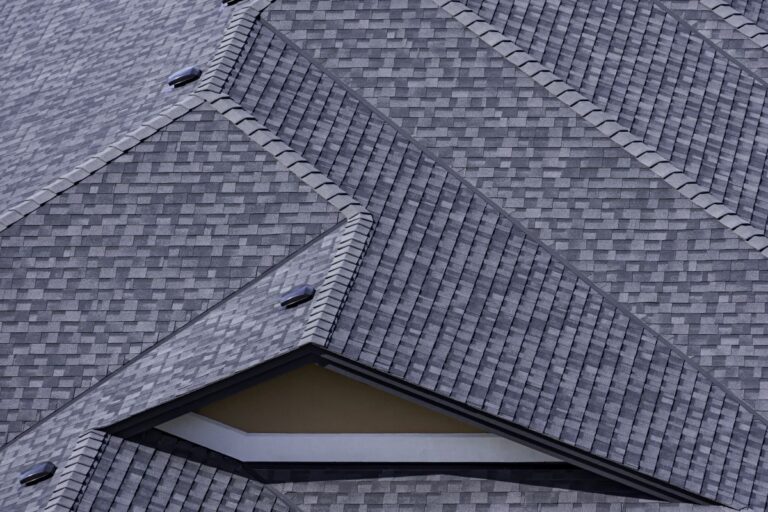
Materials work best on different pitched roof types when matched to slope, regional climate, and architectural style. Asphalt shingles are the standard choice for gable and hip roofs in moderate climates because they offer excellent value and broad compatibility with pitches from 2/12 up to 21/12. Metal roofing (standing seam or stamped panels) performs well on all pitched roof types and is particularly effective on hip roofs in high wind regions. Clay or concrete tile suits Spanish, Mediterranean, and Mission style homes and works best on pitches of 4/12 or steeper. Synthetic slate or composite shingles offer the look of premium materials at a lower price point, and they work on most pitched roof shapes with proper installation.
- Asphalt shingles: Standard on gable and hip roofs; pitches 2/12 to 21/12.
- Metal panels: Excellent on hip roofs; high wind performance.
- Clay or concrete tile: Best for Spanish/Mediterranean; pitches 4/12+.
- Synthetic slate: Premium look at moderate cost; works on most pitches.
Frequently Asked Questions
Which Pitched Roof Type Is Best for High Wind Areas?
Hip roofs are the best pitched roof type for high wind areas because their four sloped sides distribute wind pressure evenly and eliminate the vulnerable flat gable end walls. The U.S. Department of Energy reports that hip roofs can experience up to 50 percent lower peak wind pressures than gable roofs. Many insurance companies offer discounts of $100 to $800 annually for homes with qualifying hip roofs.
What Is the Cheapest Pitched Roof Type to Build?
The cheapest pitched roof type to build is a gable roof, with installed costs of $5 to $12 per square foot. Gable roofs use simpler framing, less material, and faster labor than hip, gambrel, or mansard designs. The savings can be significant on larger homes, with a 2,000 square foot roof costing $4,000 to $6,000 less than the equivalent hip roof.
What Pitched Roof Lasts the Longest?
The longest lasting pitched roof depends more on material choice and installation quality than on roof shape, but hip roofs tend to outlast gable roofs by 5 to 10 years on average because they suffer less wind related wear. A well-installed architectural asphalt shingle roof on a hip frame in Dayton and surrounding areas typically reaches 25 to 30 years of service life, while the same shingle on a gable can wear out 5 to 7 years sooner if the gable ends face prevailing winds.
Can I Change My Roof Pitch During a Replacement?
Changing your roof pitch during a replacement is technically possible but is one of the most expensive home improvement projects, often costing $15,000 to $50,000 or more depending on the change. The work requires structural engineering, new framing, possible attic and ceiling modifications, and a building permit. Most homeowners change pitch only as part of a major addition or whole-home renovation rather than a standard roof replacement.
Do Pitched Roofs Need Different Maintenance Than Flat Roofs?
Pitched roofs need different maintenance than flat roofs because the failure points are different. Pitched roofs need annual shingle inspections, flashing checks, gutter cleaning, and attic ventilation verification, while flat roofs need membrane inspections, drain cleaning, and seam re-sealing. Pitched roofs generally require less frequent professional maintenance but are more dangerous to inspect personally due to slope.
Is a Hip Roof Worth the Extra Cost?
A hip roof is typically worth the extra cost in regions with regular high winds, heavy snow, or hurricane exposure, where the wind resistance and insurance discounts often offset the 20 to 30 percent higher upfront construction cost. In moderate climates without significant wind exposure, a well-built gable roof offers similar performance at lower cost. The decision usually comes down to climate, home style, and long-term ownership plans.
Why Dayton Homeowners Trust Johnson Restoration for Pitched Roof Installation
Choosing the right pitched roof type is one of the most consequential decisions a homeowner makes during new construction or a major replacement, because the shape of the roof shapes everything from energy efficiency to insurance premiums for decades to come. Johnson Restoration brings over a decade of industry experience to pitched roof installation in Dayton and surrounding areas, with workmanship warranties, financing options, and the design experience needed to match the right pitch and shape to your home’s architecture and climate. Whether you are planning a new home, considering a major roof replacement, or weighing the trade offs between gable, hip, gambrel, or mansard designs, contact Johnson Restoration today for a free estimate and let our team help you choose a pitched roof that will protect your home for the long term.