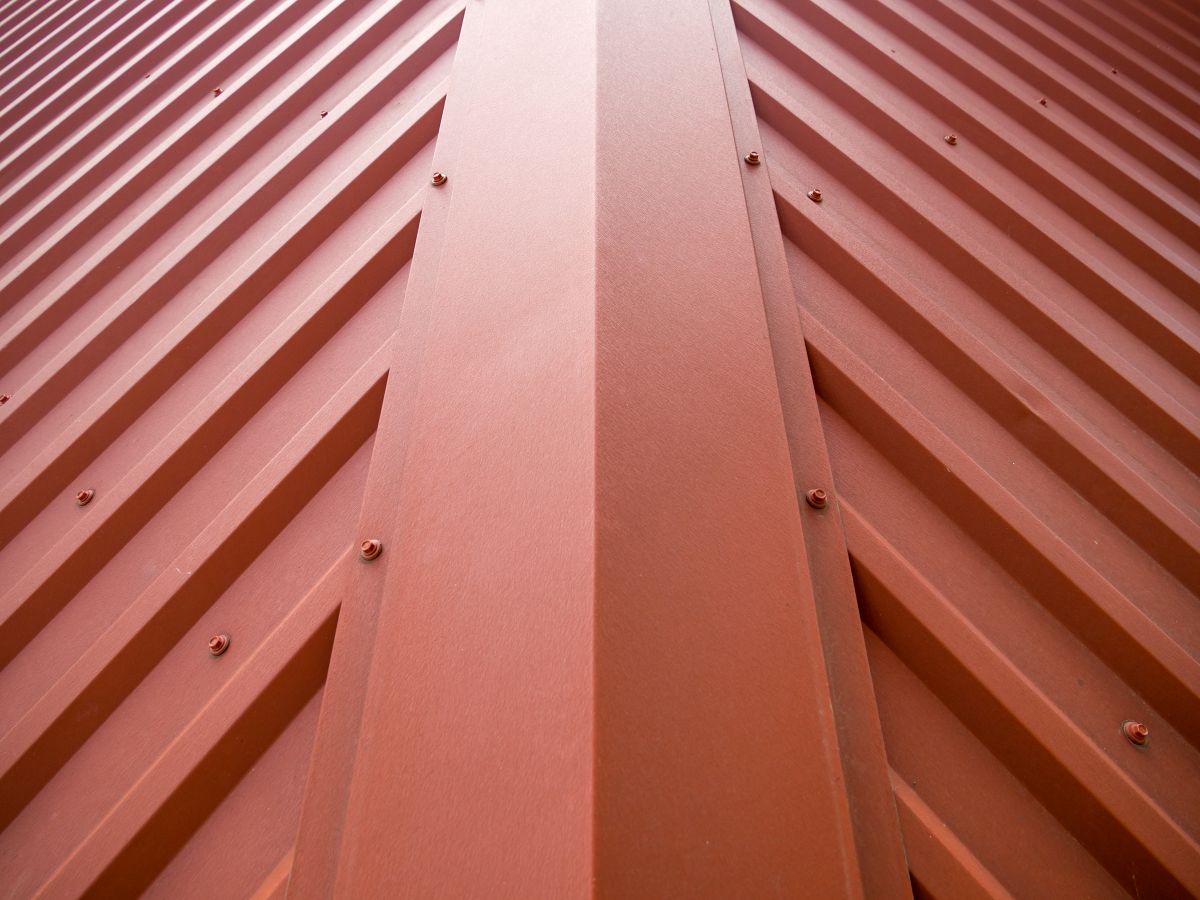

Metal roof fasteners are the screws, clips, and rivets that hold a metal roofing system together, and they are arguably the most important part of the entire roof because they are often the first component to fail. The wrong fastener type, the wrong material, or improper installation can shorten a 60 year metal roof to 20 years or less. With the right combination, a metal roof becomes one of the longest lasting and most weather resistant roofing systems available. Homeowners in Miamisburg and surrounding areas considering a metal roof, or trying to maintain one they already have, benefit from knowing the four main fastener categories and where each one belongs.
- Why fasteners matter: They are typically the first component to fail and often determine the roof’s actual lifespan.
- What changes by type: Visibility, weather resistance, thermal performance, and installation cost.
- What you will learn: The 4 main metal roof fastener types, what to look for in quality fasteners, real cost differences, and answers to common questions.
Why Metal Roof Fasteners Are the Most Important Component
Metal roof fasteners are the most important component of any metal roofing system because they are the weak link in an otherwise long lasting product. Understanding why they matter is the foundation for choosing the right type and getting the longest possible life out of a metal roof.
How Fasteners Determine Metal Roof Lifespan
Fasteners determine metal roof lifespan because the panels themselves often outlast the screws, clips, and washers that hold them in place by decades. According to a Metal Construction Association service life assessment study of standing seam metal roofs with up to 35 years of service across the United States, properly installed metal roof systems can be expected to last in excess of 60 years, with the 300 series stainless steel fasteners showing little signs of corrosion while 400 series stainless steel fasteners showed varying degrees of corrosion requiring replacement before the end of roof service life. For exposed fastener systems, the neoprene or EPDM washers typically deteriorate from UV exposure and thermal cycling within 10 to 15 years, well before the panels themselves show meaningful wear. This is why fastener selection is one of the most consequential decisions a homeowner makes during a metal roof installation in Miamisburg and surrounding areas.
- 60+ year panel life: Possible with correct fastener selection and installation.
- 300 series stainless fasteners: Show little corrosion after 35 years per MCA study.
- Washer lifespan: Neoprene and EPDM washers typically wear out in 10 to 15 years.
- Manufacturer warranty: Most warranties require approved fastener types.
Why Galvanic Corrosion Destroys Metal Roofs
Galvanic corrosion destroys metal roofs when dissimilar metals are paired in contact with moisture, creating a low voltage electrical reaction that eats away at the less noble metal over time. A copper roof with galvanized steel fasteners, for example, will see the fasteners rust out within 3 to 5 years in humid climates, leaving the panels unsecured and prone to leaks. The same problem applies to aluminum panels with steel fasteners, or steel panels with copper components. Compatible fastener selection (matching the panel material and avoiding mixed metal contact) prevents this entire failure mode. Stainless steel fasteners, particularly the 300 series referenced in the MCA study, are broadly compatible with most roofing metals and are often specified for that reason.
- Dissimilar metals plus moisture: Triggers galvanic corrosion.
- 3 to 5 year failure window: Common when wrong fasteners are used.
- Stainless steel is broadly compatible: Particularly the 300 series.
- Butyl tape barrier: Isolates dissimilar metals when contact is unavoidable.
4 Main Types of Metal Roof Fasteners
The four main fastener types used on residential metal roofs cover the spectrum from highly visible to fully hidden, with each category suited to a different style of metal roofing system. Knowing the difference is essential for choosing the right roof for your home.
1. Exposed Gasket Head Fasteners (Screws With Washers)
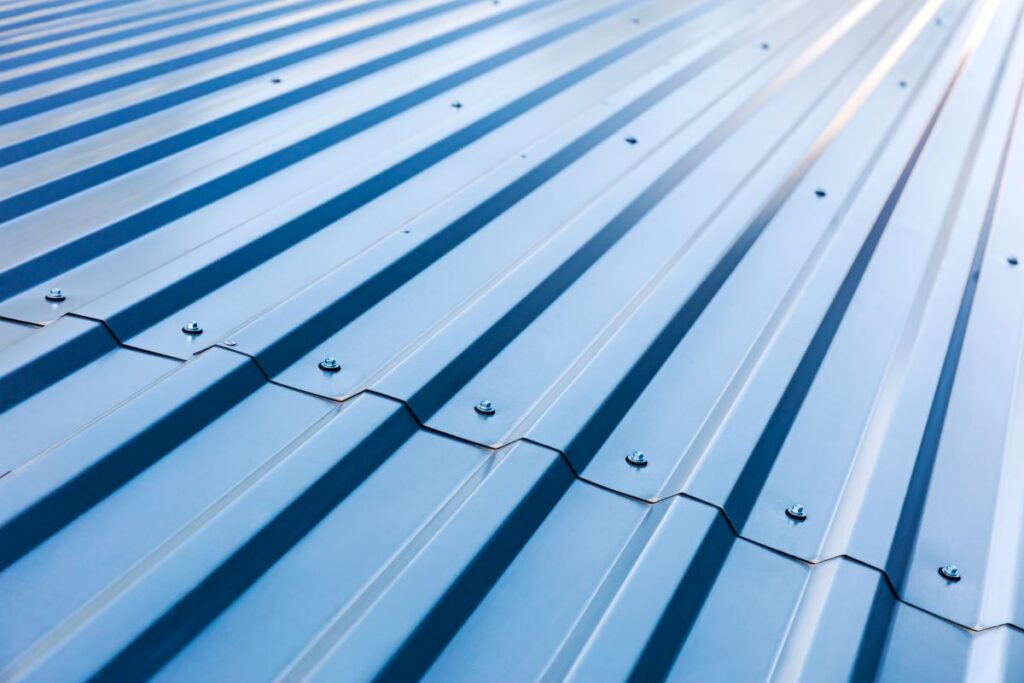
Exposed gasket head fasteners are the most common metal roof fasteners, used on through-fastened systems like corrugated panels, R-panels, and 5V crimp roofs. These screws drive directly through the metal panel into the roof deck or purlin below, with a rubber EPDM or neoprene washer compressed against the panel surface to create a weathertight seal. The fastener head is visible after installation and is typically painted to match the panel color. Exposed gasket head fasteners are the most affordable option, but they have the shortest service life because UV exposure and thermal cycling degrade the rubber washer over 10 to 15 years, after which the fastener will need to be re-tightened or replaced. They are best suited to agricultural buildings, garages, and budget-conscious residential projects.
- Visible after installation: Heads are exposed to the elements.
- EPDM or neoprene washer: Compresses to create a watertight seal.
- 10 to 15 year washer life: Limiting factor for service life.
- Lowest cost: Most affordable fastener type for metal roofs.
2. Pancake Head Fasteners (For Standing Seam Clips)
Pancake head fasteners are low profile screws used to secure the clips that hold standing seam metal panels in place. The clips themselves are hidden under the seamed panel edges, with the panel locked over the top so the fastener is completely concealed from the weather. Pancake heads have a low, flat profile so they do not interfere with the underside of the metal panel, and they typically use carbon steel coated in galvanized steel or stainless steel for the highest grade applications. Because the fasteners are protected from UV exposure, water, and thermal cycling, pancake head fasteners can match or exceed the panel’s 60 year service life. They are the standard for snap lock and mechanical lock standing seam systems.
- Low profile head: Avoids contact with the underside of the panel.
- Fully concealed: Hidden under the seamed panel edge.
- 60+ year service life: Often matches the panel itself.
- Used for: Snap lock and mechanical lock standing seam systems.
3. Hex Head Fasteners (For Metal Purlin Attachment)
Hex head fasteners are heavy duty screws used when a metal roof is being installed over open framing with metal purlins instead of a solid wood deck. The hex head provides extra grip for power driver bits, allowing the screw to penetrate steel purlins (sometimes up to 1/4 inch thick) without stripping. Hex head fasteners are commonly used on commercial and agricultural metal roofs but appear on some residential applications when the home has steel framing or when retrofitting over existing structural steel. They are available in carbon steel, galvanized steel, and stainless steel, with stainless options recommended for coastal or high humidity environments where corrosion is a concern.
- Designed for steel purlins: Heavy duty drive head for metal substrate.
- Up to 1/4 inch steel penetration: Common spec for commercial buildings.
- Stainless options available: Recommended for coastal or high humidity.
- Less common residential: Mostly found on steel framed homes or commercial.
4. Pop Rivets (For Flashing and Trim Connections)
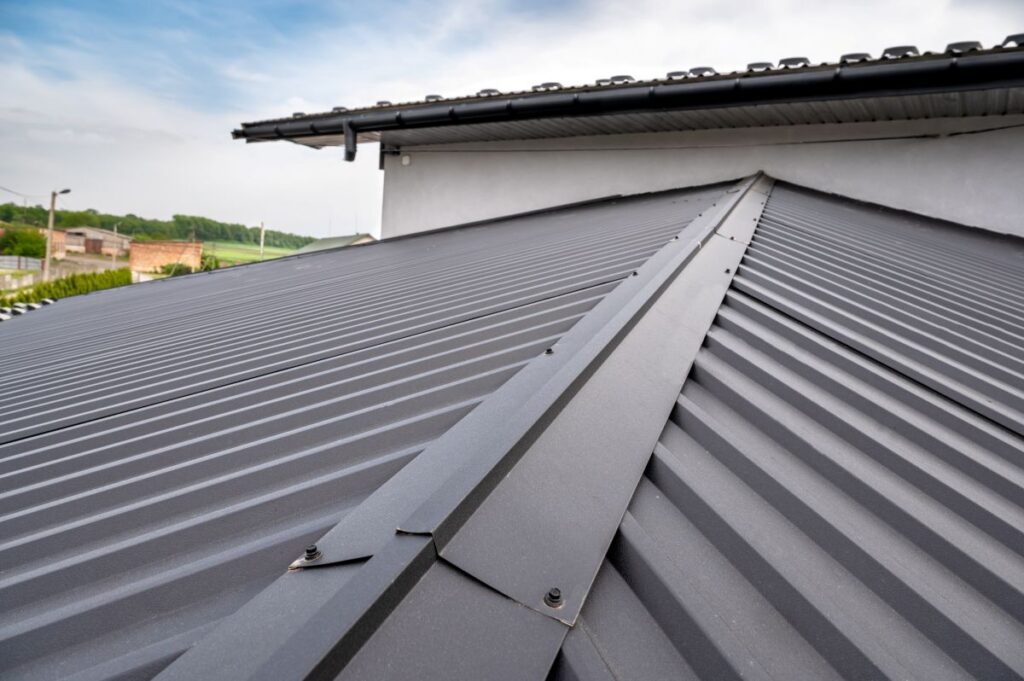
Pop rivets are not used to attach metal panels to the roof deck, but they are essential for the trim, ridge cap, and flashing connections that complete a metal roof system. A pop rivet is set with a special tool that pulls a mandrel through the rivet body, expanding it on the back side to lock two pieces of metal together with no need for a threaded fastener or washer. Aluminum and stainless steel pop rivets are both commonly used on residential metal roofs, with the choice driven by panel material compatibility. Pop rivets are typically paired with butyl tape sealant between the two metal layers to provide a watertight seal independent of the rivet itself. They are inexpensive but require careful selection to avoid galvanic corrosion at flashing details.
- Used at flashings and trim: Not at panel to deck connections.
- Set with a rivet tool: No threads or washers required.
- Aluminum or stainless options: Match the surrounding panel material.
- Always paired with butyl tape: Provides the watertight seal.
What to Look For in Quality Metal Roof Fasteners
A homeowner does not typically buy fasteners separately from the metal roofing system, but knowing what to look for helps in evaluating contractor proposals and verifying the work that is being done. A few key details separate a long lasting installation from one that will need re-fastening within a decade.
Why Material Matters for Fastener Selection
Material matters for fastener selection because the wrong metal will corrode, leak, or pull away from the deck long before the panel itself wears out. Stainless steel is the gold standard, particularly the 300 series (304 and 316), which the MCA service life study found showed little corrosion after 35 years on real roofs. Carbon steel coated in galvanized zinc is the most common budget option and works well in most inland climates, though salt air or industrial environments can accelerate corrosion. Aluminum fasteners are used with aluminum panels for matched compatibility but are not strong enough for steel-framed applications. The fastener material must always be compatible with the panel material, the flashing material, and any nearby metal components to prevent galvanic corrosion.
- 300 series stainless steel: Best long term corrosion resistance.
- Galvanized carbon steel: Most common budget option.
- Match the panel material: Prevents galvanic corrosion.
- Avoid 400 series stainless near salt or industrial environments: Showed varying corrosion in MCA study.
How Proper Installation Determines Fastener Performance
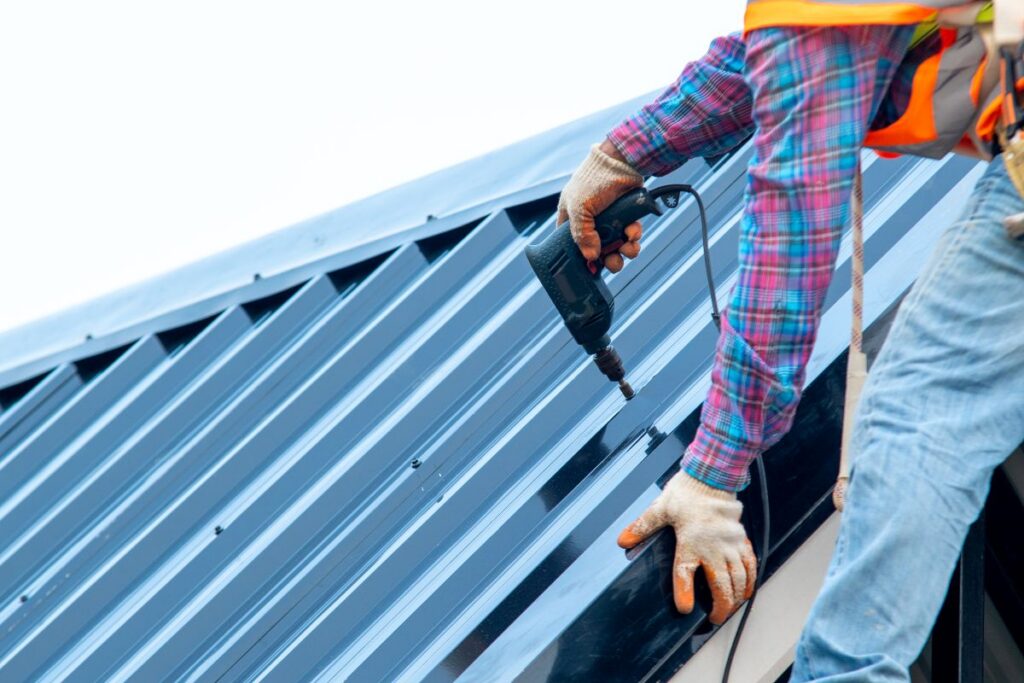
Proper installation determines fastener performance because even the best fasteners will fail if they are over driven, under driven, installed at the wrong angle, or placed in the wrong location on the panel. Over driving an exposed fastener crushes the EPDM washer and either deforms the panel or creates a leak path immediately. Under driving leaves a gap between the washer and panel, allowing water entry. Driving at an angle (rather than perpendicular to the panel surface) creates an oval hole that the washer cannot seal. Fastener placement also matters: exposed fasteners on R-panels and corrugated roofs should go through the flat of the panel (not the high rib), where the panel is in contact with the deck and the washer can compress fully. Most professional installers use depth-set drivers or torque limited tools to ensure consistent fastener seating.
- Perpendicular installation: Critical for proper washer seal.
- Correct torque: Compresses washer without crushing it.
- Fastener placement: Through the panel flat, not the rib (on most exposed systems).
- Depth set drivers: Used by professionals to standardize seating.
Frequently Asked Questions
How Long Do Metal Roof Fasteners Last?
Metal roof fasteners last 10 to 60+ years depending on type and installation. Exposed fastener washers typically wear out in 10 to 15 years and require re-tightening or replacement, while concealed fasteners on standing seam systems can match the 60 year service life of the panels themselves. Stainless steel 300 series fasteners have the longest documented service life with little measurable corrosion after 35 years.
Can I Replace Metal Roof Fasteners Myself?
Replacing metal roof fasteners yourself is possible for a small number of exposed fasteners on accessible roof areas, but full re-fastening jobs should be handled by a professional. Improper torque, wrong fastener size, or stripped screw holes can create leak paths that are worse than the original problem. Standing seam fastener work almost always requires partial panel removal and should not be a DIY job.
How Much Do Metal Roof Fasteners Cost?
Metal roof fasteners themselves cost $0.10 to $0.50 each at the consumer level, with a typical 2,000 square foot metal roof requiring 4,000 to 8,000 fasteners depending on the system. The fastener cost is small relative to the total roof installation, but choosing higher grade stainless steel fasteners over galvanized can add $300 to $800 to the total cost and significantly extend service life.
What Happens When Metal Roof Fasteners Fail?
When metal roof fasteners fail, the most common signs are visible water stains on the ceiling, rust streaks on the roof surface, panel lifting in high winds, and visible gaps between the panel and the washer. Failed fasteners are a leading cause of leaks on exposed fastener metal roofs and should be replaced or re-tightened promptly to prevent water damage to the deck below.
Are Stainless Steel Fasteners Worth the Extra Cost?
Stainless steel fasteners are worth the extra cost for most homeowners planning to keep their home long term, particularly in humid climates or near salt air. The MCA service life study found 300 series stainless steel fasteners showed little corrosion after 35 years, while galvanized fasteners often need replacement after 15 to 25 years. The added cost (typically $300 to $800 on a residential roof) is small compared to the cost of premature re-fastening or panel replacement.
How Often Should Metal Roof Fasteners Be Inspected?
Metal roof fasteners should be inspected at least once a year, plus after major storms, hail, or high wind events. Look for backed out screws, missing or deteriorated washers, rust streaks, and any visible gap between the fastener head and the panel surface. Catching fastener issues early (before they cause leaks) is the most cost effective form of metal roof maintenance.
Why Miamisburg Homeowners Trust Johnson Restoration for Metal Roof Installation
The fasteners on a metal roof are easy to overlook during the buying decision, but they often determine whether the roof reaches its 60 year potential or fails decades early. Johnson Restoration brings over a decade of industry experience to metal roof installation in Miamisburg and surrounding areas, with workmanship warranties, financing options, and the manufacturer relationships needed to specify the right fastener type, material, and installation method for your home. Whether you are planning a new metal roof, evaluating an aging exposed fastener system, or comparing standing seam options, contact Johnson Restoration today for a free estimate and let our team help you build a metal roof that will outlast everything else on your home.