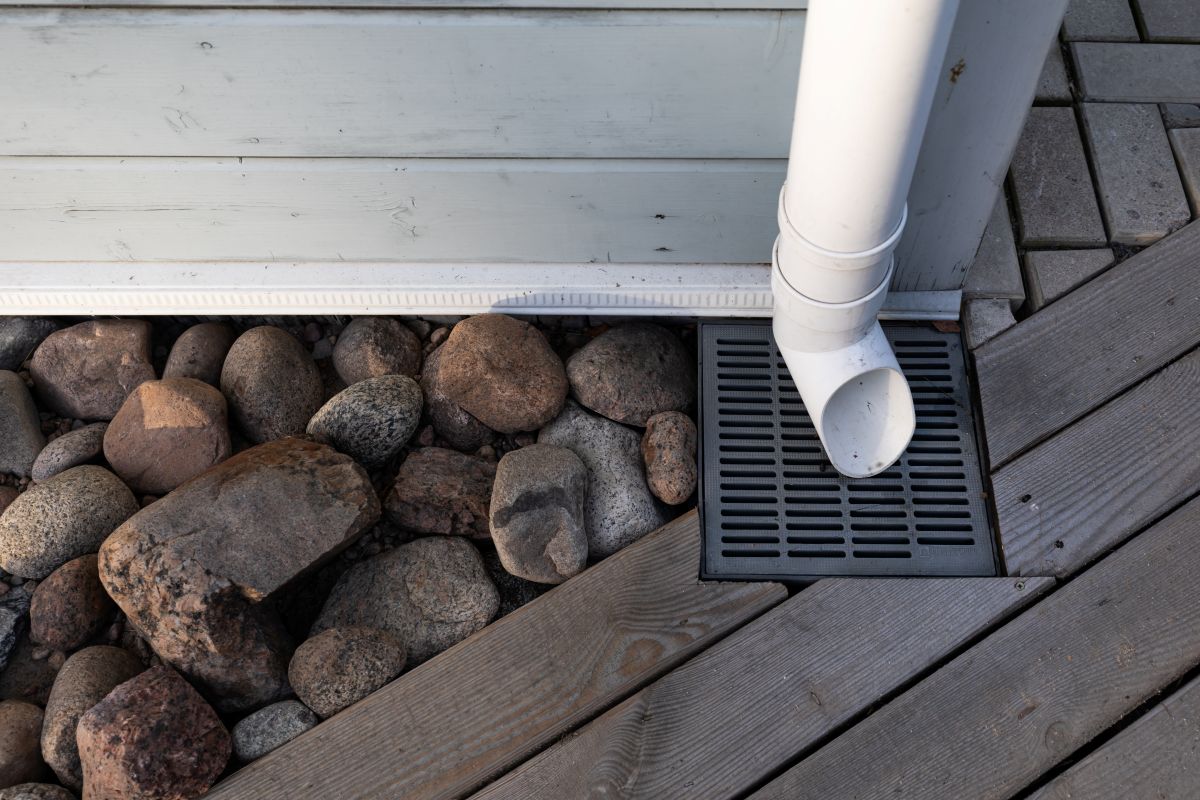

Heavy rain and melting snow put constant pressure on a home’s foundation, and standard downspouts often dump roof water right where it can cause the most damage. Underground gutter drainage solves this by routing rainwater safely away from the house through buried piping instead of letting it pool at the base of the wall. Homeowners exploring ways to protect their foundation often find this upgrade is one of the most effective long-term solutions available.
A quick look at what this post covers:
- Why routing water away from the foundation matters so much
- The main advantages of taking gutter drainage underground
- How the system works and what installation involves
- Answers to common homeowner questions
Why This Upgrade Protects Your Home
Water is one of the most persistent threats to a home’s foundation, and where it lands after leaving the gutter makes a bigger difference than most homeowners realize. Standard downspouts often release surface water just a few feet from the house, which means it frequently ends up right back against the foundation wall. Understanding the specific advantages of moving that water further away helps homeowners see why this upgrade is worth considering.
- Foundation protection: Directing water several feet away from the house reduces hydrostatic pressure against basement and crawl space walls.
- Erosion control: Buried drainage prevents the washouts and bare patches in grass or mulch that above-ground extensions often create in the yard.
- Cleaner landscaping: Without visible extensions running across the lawn, mowing and yard maintenance become much easier.
- Basement dryness: Keeping water away from the foundation lowers the risk of seepage, dampness, and mold growth indoors.
Properly routed downspout drainage helps prevent basement flooding, foundation cracks, and soil erosion that can otherwise develop over time. Homes in Springboro and surrounding areas see a wide range of soil types, mature trees, and seasonal rainfall, which makes managing roof runoff especially valuable. Taking water further from the house also protects sidewalks, patios, and driveways from the freeze and thaw damage that pooling water tends to cause.
5 Benefits of Underground Gutter Drainage
Moving water away from a home through buried piping offers several distinct advantages over relying on standard downspouts alone, particularly for homes throughout Springboro and surrounding areas where seasonal rainfall can vary widely. Each of the following benefits addresses a specific concern that homeowners commonly run into with surface-level drainage.
1. Stronger Foundation Protection
Stronger foundation protection is the primary reason most homeowners consider this upgrade in the first place. When water repeatedly pools near the foundation, it can seep through small cracks, soften the soil beneath footings, and eventually lead to costly structural repairs. Routing that runoff ten feet or more away through underground piping removes much of this risk entirely, and a properly sized 4-inch pipe can typically handle the roof water from a home with up to 4,000 square feet of roof area.
- Reduces hydrostatic pressure against basement walls
- Helps prevent small foundation cracks from widening over time
- Protects footings from soil softening caused by standing water
2. Reduced Basement Moisture and Mold Risk
Reduced basement moisture and mold risk go hand in hand with keeping water further from the house. Even a well-built basement can develop damp walls or musty odors when water consistently collects nearby. Underground drainage addresses the source of the problem rather than just managing symptoms after they appear, though homeowners in cold weather climates should note that water trapped in a poorly sloped line can freeze and block flow until it thaws.
- Lowers humidity levels in basements and crawl spaces
- Reduces conditions that allow mold and mildew to develop
- Protects stored belongings and finished basement spaces
3. A Cleaner, More Usable Yard
A cleaner, more usable yard is one of the most noticeable everyday benefits of taking gutter downspouts underground. Above-ground extensions often sit directly in the path of lawn mowers, landscaping beds, or walkways, creating a constant hassle. Once the piping is buried, the entire yard becomes easier to maintain and enjoy, since there are no surface splash blocks, hoses, or extensions left sitting on the grass.
- No more moving extensions before mowing
- Cleaner sightlines across patios and garden beds
- More flexibility when planning landscaping projects
4. Long-Term Erosion Prevention
Long-term erosion prevention becomes possible once water is carried to a proper discharge point instead of being released in one concentrated spot. Repeated water flow in the same location can wash away topsoil, damage mulch beds, and create unsightly bare patches or gullies. A buried system spreads the impact to a location designed to handle it.
- Prevents washouts near foundation plantings
- Reduces soil movement along walkways and driveways
- Protects sloped areas that are especially prone to erosion
5. Increased Home Value and Curb Appeal
Increased home value and curb appeal round out the list of benefits homeowners gain from this upgrade. A well-maintained drainage system signals to future buyers that the property has been cared for and protected against water damage. Removing visible downspout extensions from the yard also gives the entire exterior a cleaner, more polished appearance.
- Appeals to buyers concerned about foundation and moisture issues
- Improves the overall visual appeal of the yard
- Demonstrates proactive home maintenance during inspections
Taken together, these five benefits show why underground gutter drainage has become such a popular upgrade among Ohio homeowners. Addressing water management proactively tends to save significant money and stress compared to repairing damage after the fact.
How the System Works Behind the Scenes
Understanding what actually happens underground helps homeowners appreciate why proper installation matters so much. While the system is invisible once complete, each component plays a specific role in moving water efficiently and reliably away from the home.
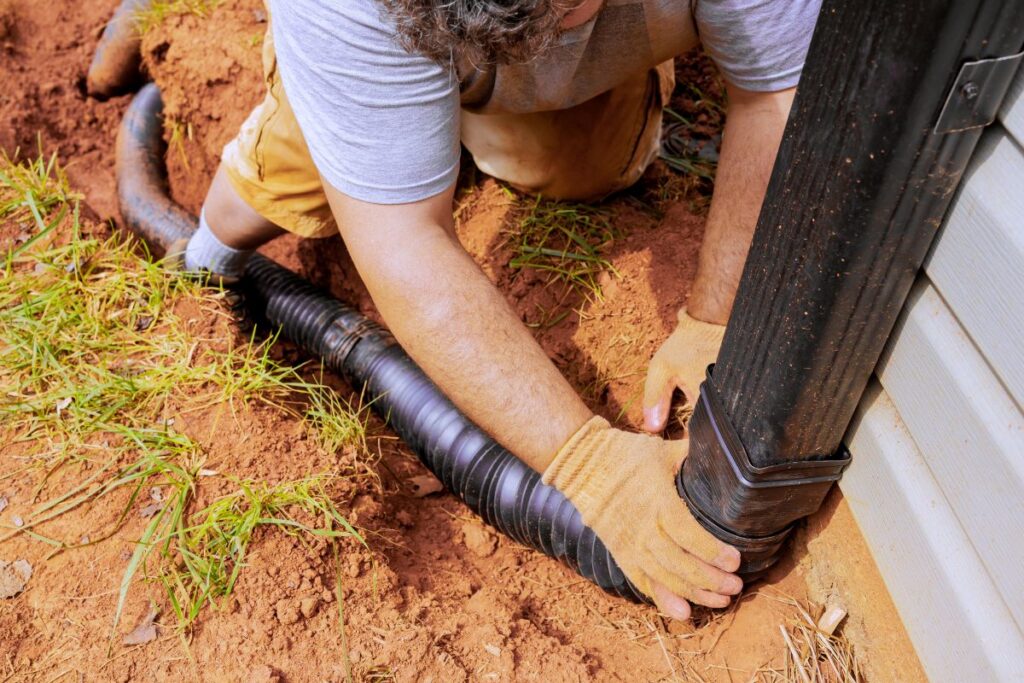
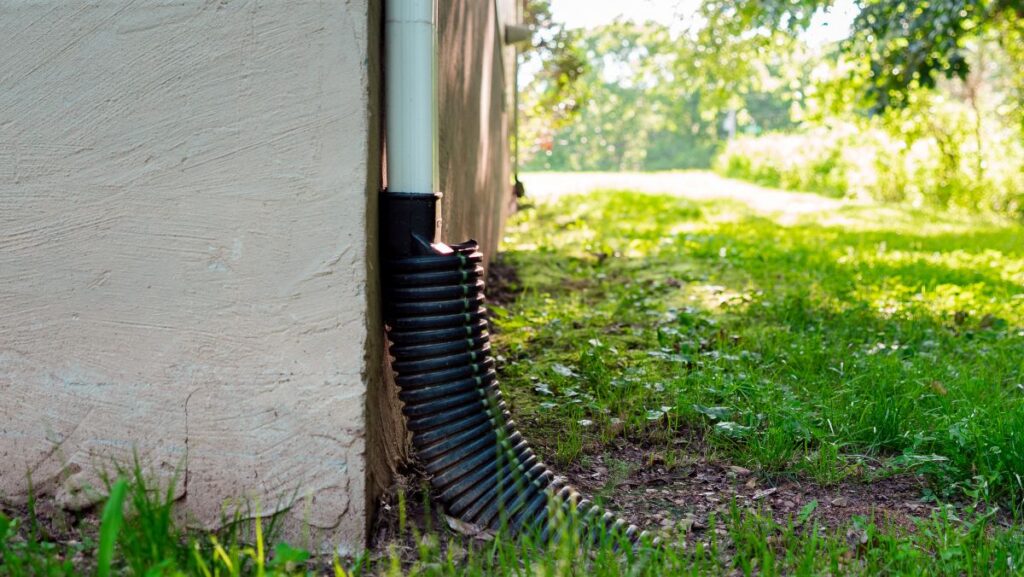
- Downspout adapter: Connects the existing rectangular downspout to the round underground pipe, whether the home has one downspout or several tied into a shared trunk line.
- Debris filter or leaf filter: Sits at the top of the line and works alongside leaf guards to keep leaves and twigs from entering the pipe, though it needs regular cleaning to maintain flow.
- Solid, smooth walled pipe: Carries roof water through the yard without letting it seep into the surrounding soil along the way. This differs from the perforated pipe used in french drains, which is designed to release surface water gradually rather than transport it to a discharge point.
- Proper slope: A gradual downward pitch, typically a minimum of 1/8 inch per foot, keeps water moving steadily toward the discharge point without pooling in the line.
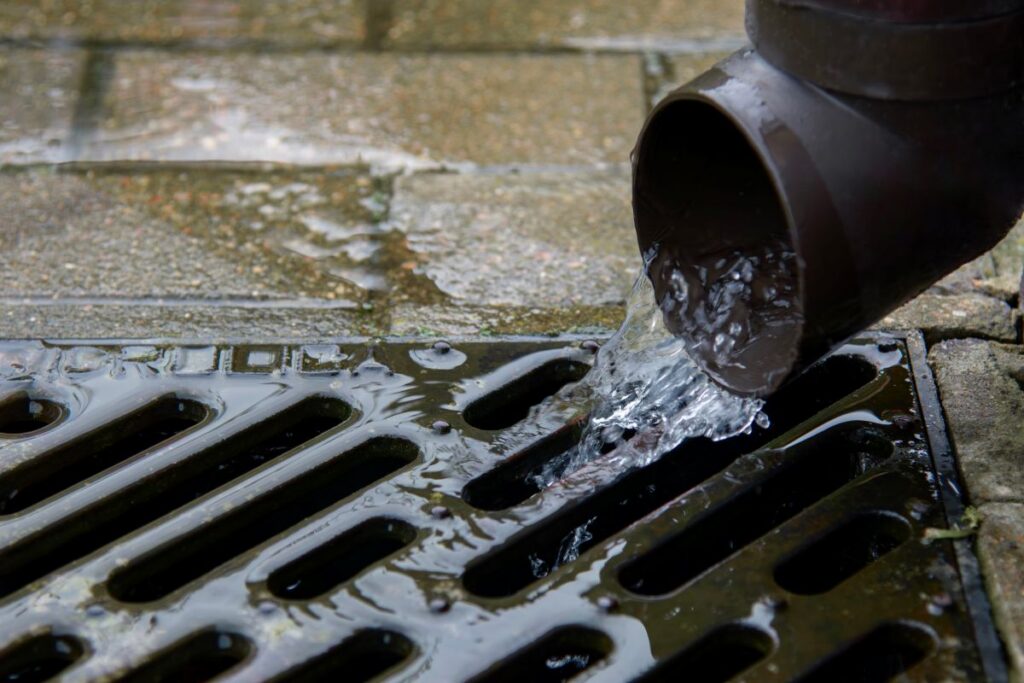
- Discharge point: A pop-up emitter, catch basin, or gravel filled trench releases the water at ground level, safely away from the home.
Installation typically involves digging a narrow trench from each downspout to the chosen discharge point, working around landscaping, trees, and any concrete walkways along the way. Many drainage professionals can complete this process in about an hour per downspout on a straightforward lot, though rocky soil or a longer run can add time. Once the pipe is connected and buried, it is worth running a hose to test the system before backfilling the trench with dirt. Underground downspout kits are also available for smaller DIY projects, though professional installation still offers the most reliable results. Every component needs to work together for the system to function properly year after year, and buried downspouts still benefit from a yearly inspection to catch clogs early. A pipe that is undersized, poorly sloped, or connected incorrectly can cause the system to back up during heavy storms.
Underground vs. Above-Ground Downspout Extensions
Many homeowners weigh underground drainage against simpler above-ground extensions before deciding which option fits their property. Both approaches move water away from the foundation, but they differ significantly in appearance, durability, and long-term performance.
| Factor | Underground Drainage | Above-Ground Extensions |
| Appearance | Hidden from view | Visible across the yard |
| Yard maintenance | No obstacles to mow around | Must be moved for mowing |
| Durability | Long-lasting, protected from damage | Prone to cracking or being knocked loose |
| Installation effort | More involved, requires trenching | Quick and simple to attach |
| Best for | Long-term, permanent solutions | Temporary or budget-friendly fixes |
Choosing between these two options often comes down to how long a homeowner plans to stay in the home and how much they value a finished, maintenance-free yard. Above-ground extensions can serve as a reasonable short-term fix, but they rarely match the durability or appearance of a properly installed underground system. Buried downspouts can also clog more easily since debris is harder to spot, and installation costs tend to run higher than standard extensions given the digging and materials involved. For homeowners planning to stay put for years to come, the buried option tends to be the more worthwhile long-term investment.
Frequently Asked Questions About Underground Gutter Drainage
Homeowners considering this upgrade often have similar questions before moving forward. Here are answers to some of the most common ones.
How deep does underground gutter drainage need to be buried?
Most systems are buried at least 10 to 12 inches deep, though colder climates may require deeper placement to reduce the risk of the line freezing during winter months.
Will underground drainage work with my existing gutters?
Yes, in most cases the existing gutters and downspouts can be connected to a new underground system using a downspout adapter, so a full gutter replacement usually is not necessary.
How far away from the house should the water be discharged?
Water should typically be released at least 10 feet from the foundation, and further in areas with heavy clay soil or limited natural drainage.
Can underground gutter drainage clog over time?
Yes, though properly installed systems paired with gutter guards significantly reduce this risk by keeping leaves and debris from entering the pipes in the first place.
Is professional installation necessary for this type of project?
While some homeowners attempt this as a DIY project using an underground extension kit, getting professional help ensures the drain line has proper slope, secure connections, and a discharge point that meets local drainage requirements, especially when the route crosses concrete walkways or driveways.
Every property has different soil conditions and drainage needs, so it is worth having a professional assess the specific situation before beginning work. A properly designed system pays for itself many times over by preventing costly water damage down the road.
Protect Your Home With a Trusted Drainage Solution
Underground gutter drainage offers one of the most effective ways to protect a home’s foundation, basement, and landscaping from the damage that standing water can cause over time. Homeowners throughout Springboro and surrounding areas trust Johnson Restoration to design and install drainage systems that fit their property’s specific layout and soil conditions. Whether you are dealing with a persistently damp basement or simply want to prevent future problems, our experienced team can help you find the right solution.
If you are ready to take the next step, contact us today for a free estimate and start protecting your home for years to come.