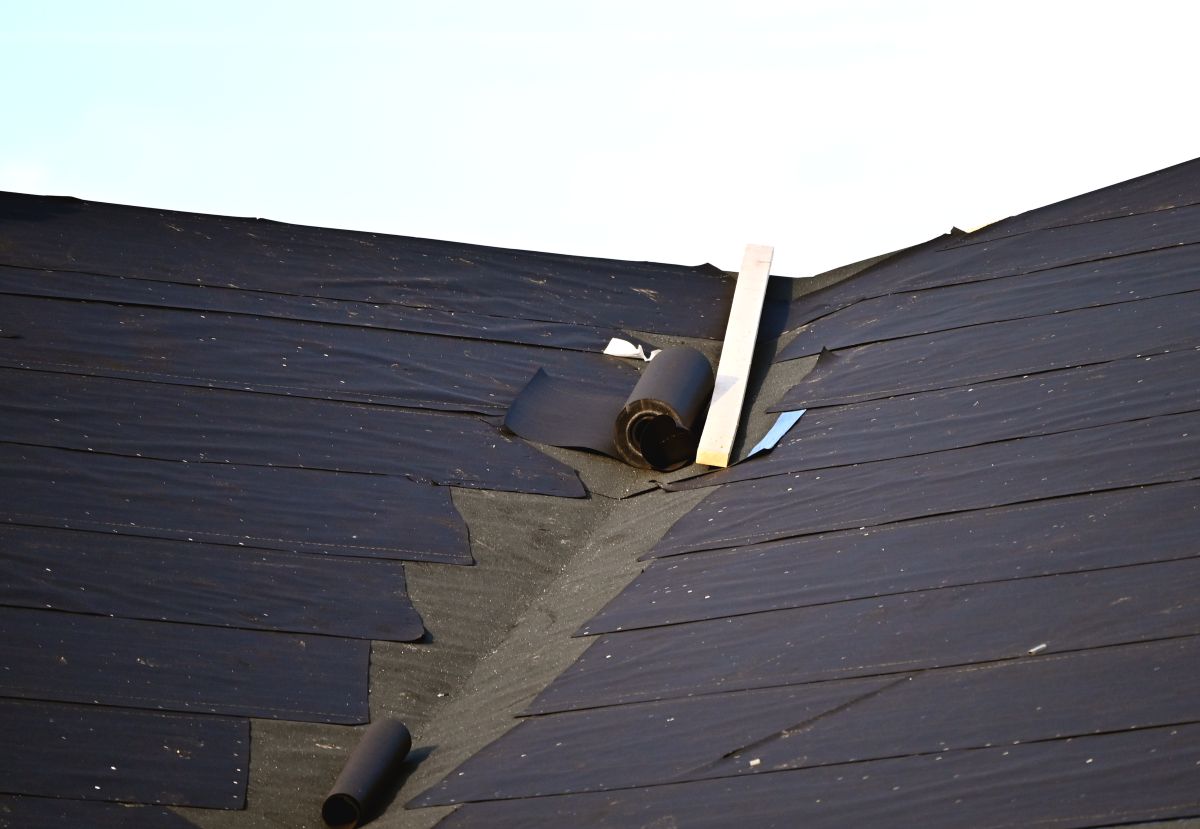

Roof underlayment types are the water resistant layers installed directly on the roof deck beneath the shingles or metal panels, providing a critical secondary barrier against wind driven rain, ice dams, and moisture that finds its way past the primary roofing material. Choosing the right underlayment is one of the most consequential roof decisions a homeowner can make, because the underlayment is what protects the roof deck (and everything below it) when the shingles get blown off, damaged, or simply reach the end of their service life. The five main underlayment types vary widely in price, performance, weight, and lifespan, and the right choice depends on your roof slope, climate, and shingle selection. Homeowners in Lebanon and surrounding areas typically benefit most from upgraded synthetic or self-adhering underlayments that hold up to freeze-thaw cycles and humid summers.
- What underlayment does: Provides a secondary water barrier, fire resistance, deck protection, and code compliance.
- What changes by type: Weight, water resistance, lifespan, cost, and installation method.
- What you will learn: The 5 main underlayment types, where each works best, real cost ranges, and answers to common questions.
What Is Roof Underlayment and Why Does It Matter?
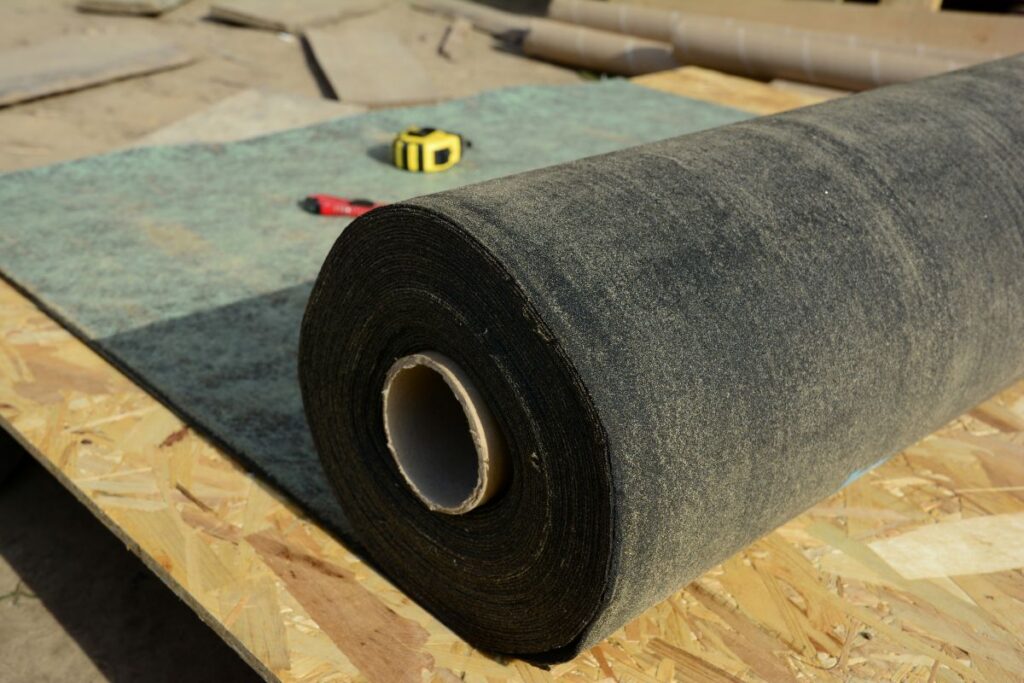
Roof underlayment is the water resistant material installed on the roof deck between the wood sheathing and the primary roofing material (shingles, metal, or tile). Understanding why underlayment matters is the foundation for choosing the right type for your home.
What Are the Main Benefits of Quality Underlayment?
The main benefits of quality underlayment include secondary water resistance, deck protection during installation, fire classification compliance, and reduced “picture framing” on the finished roof. A high-quality underlayment keeps the deck dry between when shingles are removed and when new shingles are applied, which prevents moisture damage to the sheathing during a multi-day installation. It also protects the shingles themselves from resins that can bleed up from wood sheathing and degrade the asphalt over time. Without underlayment, even small shingle damage from wind or hail can lead to immediate water infiltration. With it, the deck stays protected even if multiple shingles are missing for weeks or months.
- Secondary moisture barrier: Protects deck if shingles fail.
- Installation deck protection: Keeps wood dry between tear-off and shingling.
- Resin barrier: Stops sheathing resins from damaging shingles.
- Fire classification: Required for Class A, B, or C ratings.
5 Main Roof Underlayment Types Compared
The five main underlayment types cover the spectrum from budget basic to premium specialty applications. Each has a specific role, with the best choice depending on the home’s roof slope, climate, primary roofing material, and budget.
1. No. 15 Asphalt-Saturated Felt
No. 15 asphalt-saturated felt is the traditional, lowest cost underlayment option, made from organic paper or fiberglass mat saturated with asphalt and weighing approximately 15 pounds per 100 square feet. It has been the industry standard for decades and is referenced in ASTM D226 as Type I underlayment. No. 15 felt is widely available, accepted by most building codes for standard sloped roofs, and costs $0.05 to $0.10 per square foot installed, making it the cheapest underlayment available. However, it tears easily during installation, absorbs water if it gets wet before shingles are applied, and provides relatively short term protection. Most contractors and manufacturers now recommend upgrading from No. 15 felt unless budget is the deciding factor. It is best suited to garage roofs, sheds, and budget conscious residential installations on shorter term roofs.
- Weight: 15 pounds per 100 square feet.
- ASTM standard: D226 Type I.
- Cost: $0.05 to $0.10 per square foot installed.
- Best for: Budget projects, sheds, garages, low-cost residential.
2. No. 30 Asphalt-Saturated Felt
No. 30 asphalt-saturated felt is the heavier weight version of traditional felt, weighing approximately 30 pounds per 100 square feet and offering better tear resistance, moisture protection, and durability than No. 15. It is referenced in ASTM D226 as Type II and is the upgraded version most often required when local building codes call for enhanced underlayment in cold or wet climates. No. 30 felt costs $0.10 to $0.18 per square foot installed (roughly twice the cost of No. 15) and provides longer protection if the underlayment is exposed during a multi-day installation. It still has the same fundamental weakness as No. 15 felt because it absorbs water over time, but it stands up to wind, foot traffic, and minor weather exposure much better. It is a sound choice for traditional asphalt shingle installations where homeowners want better protection than No. 15 but do not need the premium performance of synthetic.
- Weight: 30 pounds per 100 square feet.
- ASTM standard: D226 Type II.
- Cost: $0.10 to $0.18 per square foot installed.
- Best for: Standard residential, mid range budgets, traditional shingle installs.

3. Non-Bitumen Synthetic Underlayment
Non-bitumen synthetic underlayment is the modern industry standard, made from polypropylene or polyethylene polymers and engineered for superior tear resistance, water shedding, UV stability, and longer exposure tolerance. Synthetic underlayments fall under ASTM D8257, are 4 to 5 times lighter than felt (allowing larger rolls and faster installation), and resist wrinkling, tearing, and water absorption that plague traditional felt products. Most premium synthetics offer 30 to 180 days of UV exposure before they need to be covered, which is a major advantage on multi-week installations. Costs run $0.15 to $0.30 per square foot installed, and warranties from major manufacturers extend up to 50 years. For most homeowners in Lebanon and surrounding areas, synthetic underlayment is the best balance of performance, cost, and durability.
- Material: Polypropylene or polyethylene polymers.
- ASTM standard: D8257.
- Cost: $0.15 to $0.30 per square foot installed.
- Best for: Most residential homes, longer installations, premium shingle systems.
4. Self-Adhering Polymer-Modified Bituminous (Ice and Water Shield)
Self-adhering polymer-modified bituminous underlayment, commonly called ice and water shield, is a premium peel-and-stick membrane made of rubberized asphalt with a protective film backing. It bonds directly to the roof deck and seals around every nail penetration, creating a fully waterproof barrier rather than just water resistant. Ice and water shield is referenced in ASTM D1970 and is required by most building codes at roof eaves and valleys in cold climates to protect against ice dam back-up, plus around penetrations like chimneys, skylights, and vent pipes. Coverage typically extends 3 to 6 feet up from the eave (above the interior wall line) and along the full length of valleys. Costs run $0.50 to $1.25 per square foot installed, and many homeowners use it strategically at vulnerable areas rather than across the entire roof. In cold climates with freeze-thaw cycling, it is one of the most valuable upgrades a homeowner can make.
- Material: Polymer modified asphalt with adhesive backing.
- ASTM standard: D1970.
- Cost: $0.50 to $1.25 per square foot installed.
- Best for: Eaves, valleys, penetrations, and cold climate ice dam protection.
5. Inorganic Fiber Underlayment (Glass-Base)
Inorganic fiber underlayment is a hybrid option that looks like traditional asphalt-saturated felt but uses fiberglass or other inorganic fibers as the reinforcement instead of organic paper. Referenced in ASTM D6757, this product provides better dimensional stability (less wrinkling and shrinking) than organic felt and resists tearing under stress. The inorganic fiber base allows for reduced asphalt content while maintaining performance, making it a middle ground between traditional felt and modern synthetics. Costs run $0.12 to $0.22 per square foot installed, similar to No. 30 felt but with better dimensional stability. It is used most often as a manufacturer-specified underlayment for certain asphalt shingle product lines that require ASTM D6757 compliance for warranty coverage.
- Material: Asphalt-coated glass or inorganic fiber base.
- ASTM standard: D6757.
- Cost: $0.12 to $0.22 per square foot installed.
- Best for: Manufacturer-specified installations requiring D6757 compliance.
How to Choose the Right Underlayment for Your Home
Choosing the right underlayment for your home involves balancing roof slope, climate, primary roofing material, budget, and the shingle manufacturer’s warranty requirements. The wrong choice can void a warranty or shorten the roof’s service life, so the decision deserves real consideration.
Why Roof Slope Affects Underlayment Choice
Roof slope affects underlayment choice because water moves differently over different slopes, and code requirements change based on pitch. On steep slopes (4/12 and above), a single layer of mechanically fastened underlayment is typically allowed by code. On low slopes (2/12 to less than 4/12), most codes require either a double layer of mechanically fastened underlayment or a full single layer of self-adhering underlayment to prevent water from working back under the shingles. Roofs below 2/12 are considered too low for asphalt shingles at all and require a flat roofing system. Always confirm the slope-based code requirement with the local building department before specifying underlayment, since regional code amendments are common.
- Steep slope (4/12+): Single layer of mechanically fastened underlayment.
- Low slope (2/12 to less than 4/12): Double layer or self-adhering required.
- Below 2/12: Asphalt shingles not allowed; flat roofing required.
- Confirm locally: Regional code amendments are common.
What Climate Factors Should I Consider?
Climate factors that affect underlayment choice include freeze-thaw cycles, snowfall, summer heat, humidity, and storm frequency. Cold climates with significant snowfall (including Lebanon and surrounding areas) benefit most from self-adhering ice and water shield at eaves and valleys, where ice dam back-up is a common failure mode. Hot climates benefit from synthetic underlayments that resist UV degradation and the high attic temperatures common in southern states. Humid climates benefit from underlayments with better water absorption resistance, which favors synthetics over traditional felt. Storm prone regions (including the Midwest tornado belt) benefit from synthetic underlayments with high wind ratings (often 130+ mph), which provide better backup protection if shingles are blown off during a storm.
- Cold and snowy climates: Self-adhering ice and water shield at eaves and valleys.
- Hot climates: UV resistant synthetic underlayment.
- Humid climates: Synthetic over felt to resist water absorption.
- High wind regions: Synthetic with 130+ mph wind ratings.
Frequently Asked Questions
How Much Does Roof Underlayment Cost?
Roof underlayment costs $0.05 to $1.25 per square foot installed depending on the type. No. 15 felt is the cheapest ($0.05 to $0.10 per square foot), synthetic underlayment runs $0.15 to $0.30, and ice and water shield is the most expensive ($0.50 to $1.25). For a typical 2,000 square foot roof, underlayment adds $200 to $2,500 to the total project cost.
Do I Need Ice and Water Shield on My Whole Roof?
You do not need ice and water shield on your whole roof in most cases; building code typically requires it only at eaves (extending 24 inches inside the warm wall line), in valleys, and around penetrations like chimneys and skylights. Full roof coverage is sometimes used on low slope roofs (2/12 to less than 4/12) or in extreme cold climates, but it requires careful attention to attic ventilation because the membrane acts as a vapor barrier.
Can I Install Roof Underlayment Myself?
You can technically install roof underlayment yourself if you are doing a full DIY roof replacement, but the work requires roof safety equipment, proper fastener placement, and knowledge of code requirements for your slope and climate. Most professional installers recommend leaving underlayment work to qualified roofing contractors because incorrect installation is a leading cause of warranty voids and post-installation leaks.
How Long Does Roof Underlayment Last?
Roof underlayment typically lasts as long as the roof it sits beneath, which is 20 to 50 years depending on type. No. 15 felt may degrade after 20 to 25 years, synthetic underlayments are warrantied for up to 50 years, and self-adhering ice and water shield typically lasts 25 to 40 years. Underlayment is normally replaced when the primary roofing material is replaced.
Will My Shingle Warranty Require a Specific Underlayment?
Yes, most shingle warranties require a specific underlayment that meets either ASTM D226, D4869, D6757, D1970, or D8257 standards depending on the manufacturer. Some premium warranty tiers (like GAF’s enhanced warranty programs) require specific brand name underlayment products from the same manufacturer. Always verify warranty requirements before specifying underlayment to avoid voiding coverage.
Is Synthetic Underlayment Worth the Extra Cost?
Synthetic underlayment is worth the extra cost for most homeowners because the $400 to $800 upgrade over traditional felt on a typical 2,000 square foot roof delivers significantly better tear resistance, longer UV exposure tolerance, better water shedding, and longer warranty coverage. The cost difference is small compared to the increased protection over a 25 to 50 year roof life.
Why Lebanon Homeowners Trust Johnson Restoration for Underlayment Selection
Choosing the right underlayment is one of the most overlooked decisions in a roof replacement, but it has a major impact on how long your roof lasts and how well it protects your home. Johnson Restoration brings over a decade of industry experience to underlayment selection and installation in Lebanon and surrounding areas, with workmanship warranties, financing options, and the manufacturer relationships needed to specify the right underlayment for your slope, climate, and shingle system. Whether you are planning a new roof, comparing contractor proposals, or trying to understand the difference between felt, synthetic, and self-adhering underlayments, contact Johnson Restoration today for a free estimate and let our team help you build a roof system that protects your home from the deck up.