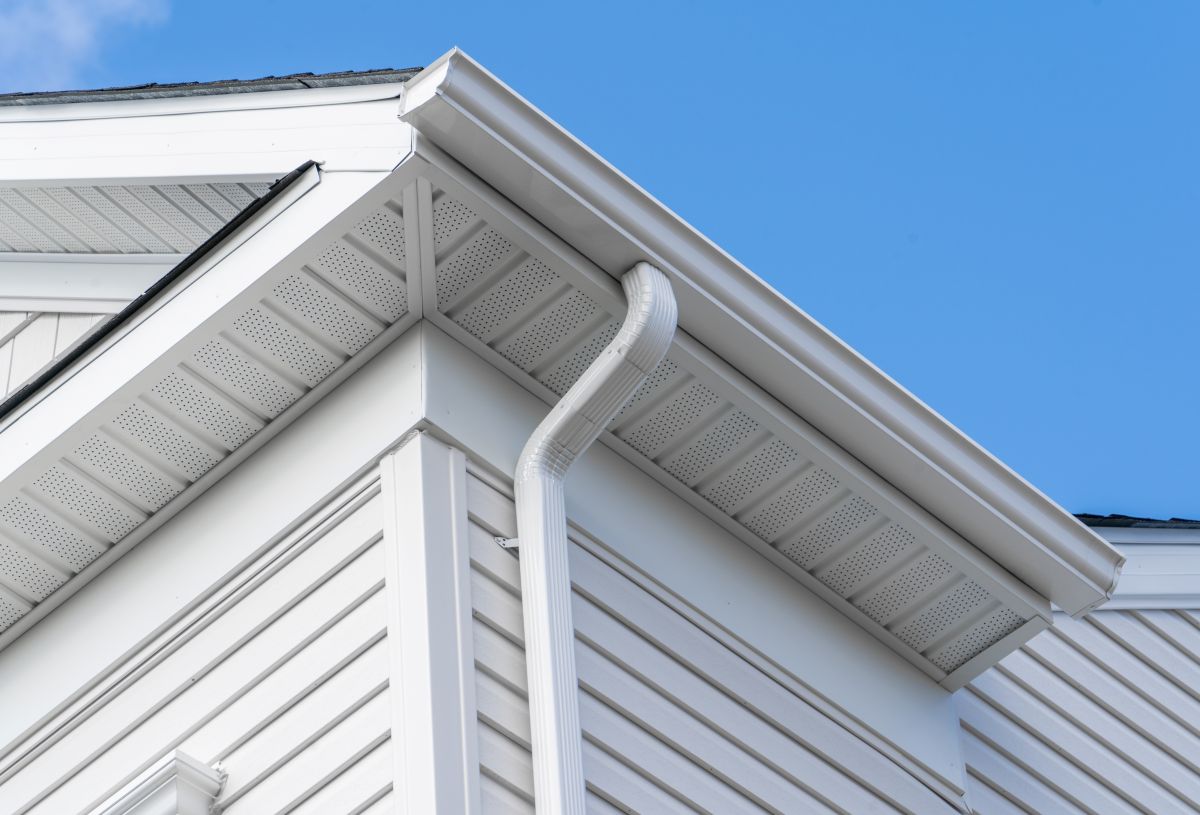

Rain gutter repair is one of the most overlooked home maintenance tasks, but it is also one of the most consequential because gutters are the primary line of defense between rainwater and your home’s foundation, siding, fascia, and landscaping. When gutters fail (whether through clogs, sagging, cracks, separations, or improper drainage) the damage is rarely confined to the gutters themselves; it spreads to nearly every part of the home that comes in contact with the water they should have carried away. A few inches of rain falling on a typical roof produces several thousand gallons of runoff, and even a small gutter problem can quickly translate into thousands of dollars in foundation, basement, or siding damage. Homeowners in Kettering and surrounding areas benefit from learning the warning signs early, because most gutter problems are far cheaper to repair than to ignore.
- Why gutters matter: They channel thousands of gallons of rainwater away from the foundation, preventing structural damage and basement flooding.
- What this guide covers: The 8 most common warning signs, the underlying causes, real cost ranges, and answers to frequent homeowner questions.
- Why early action saves money: A $200 repair can prevent a $20,000 foundation problem.
Why Functioning Gutters Are Essential
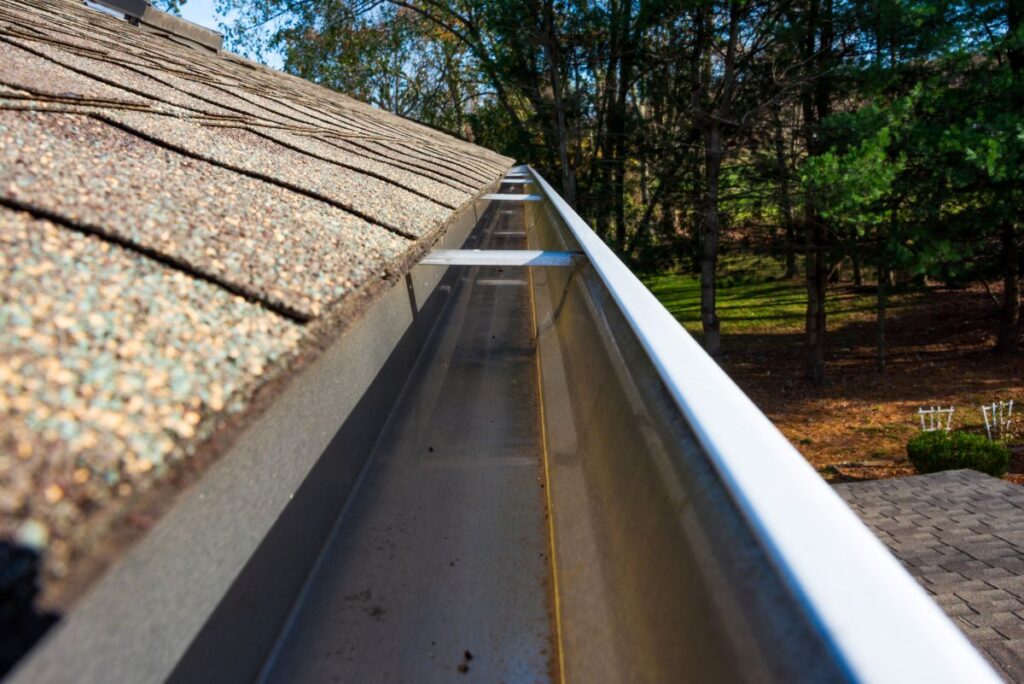
Functioning gutters are essential because the volume of water coming off a typical roof during even a moderate storm is enough to flood landscaping, erode foundations, and saturate basement walls. Understanding why gutters matter is the foundation for taking the warning signs seriously.
Why Gutter Damage Cascades Into Foundation Damage
Gutter damage cascades into foundation damage because water that should be flowing through the gutters instead pools at the base of the home, saturating the soil and slowly compromising the foundation. Saturated soil exerts hydrostatic pressure on basement walls, eventually causing cracks that allow water inside. Expansive clay soils swell when wet, putting even more pressure on foundations and sometimes causing structural cracking. In freeze-thaw climates like Kettering and surrounding areas, water that pools around the foundation in fall freezes in winter, expanding cracks every year until they become serious structural problems. Even just one inch of water entering a typical home can cause significant damage to flooring, drywall, insulation, and personal belongings, with FEMA reporting that home flood damage often costs tens of thousands of dollars.
- Hydrostatic pressure: Saturated soil pushes against foundation walls.
- Expansive soils: Swell when wet, increasing foundation stress.
- Freeze-thaw damage: Pooled water expands and cracks foundations.
- High repair costs: Foundation damage runs $5,000 to $50,000+ per FEMA estimates.
8 Warning Signs Your Gutters Need Repair
Eight specific warning signs indicate that gutters are no longer functioning properly and need professional attention. Recognizing them early is the difference between a $200 to $500 repair and a five-figure foundation or interior damage bill.
1. Visible Sagging or Pulling Away From the Roofline
Visible sagging or pulling away from the roofline is one of the clearest signs that the hangers or fasteners holding the gutter to the fascia have failed. Gutters should follow a straight line along the roof edge with a barely perceptible slope toward the downspouts. When sections sag or droop, it usually means accumulated weight from debris, standing water, or ice has overstressed the hangers, or the hangers have rusted and lost their grip on the fascia board. A sagging gutter no longer drains correctly because water pools in the low spots rather than flowing to the downspout. Left uncorrected, the sagging accelerates because more standing water adds more weight. Re-securing or replacing hangers typically costs $75 to $300 per gutter run if caught early.
- Visible droop or dip: Compare to the level roof edge.
- Failed hangers: Most common cause of sagging.
- Standing water adds weight: Accelerates the problem.
- Early repair: $75 to $300 per gutter run.
2. Water Overflowing the Sides During Rain
Water overflowing the sides during rain indicates either a clog inside the gutter, an undersized gutter or downspout system, or a slope problem that prevents water from reaching the downspouts. The simplest test is to step outside during a moderate rainstorm and watch the gutters: water should flow smoothly into the downspouts, not spill over the front or back edge of the gutter. Overflow is most often caused by accumulated leaves and debris, which is why twice yearly cleaning (spring and fall) is the standard recommendation. If the gutters are clean and water still overflows, the system may be too small for the roof area, with industry guidance calling for 1 square inch of downspout cross-section for every 100 square feet of roof area. Persistent overflow demands immediate attention because that water is going directly to the foundation.
- Test during moderate rain: Watch gutters flow into downspouts.
- Clogs: Most common cause of overflow.
- Undersized systems: 1 sq inch of downspout per 100 sq ft of roof.
- Foundation risk: Overflow dumps water directly at the home.
3. Cracks, Holes, or Rust Spots
Cracks, holes, or rust spots in the gutter material indicate that the gutter is past its useful life or has been damaged by impact, weather, or galvanic corrosion. Aluminum and steel gutters can develop small holes from acidic debris (leaves, pine needles) sitting in the trough for years, while vinyl gutters can crack from UV exposure and freeze-thaw cycling. Rust spots on steel gutters are a clear sign that the protective coating has failed and replacement is approaching. Small holes (under 1/4 inch) can sometimes be patched with gutter sealant for $20 to $50, but multiple cracks, large holes, or widespread rust signal that the entire gutter run needs replacement. The fix is far cheaper than the foundation damage that results from continued leakage.
- Small holes: Under 1/4 inch can be patched with sealant.
- Multiple holes or cracks: Signal full replacement.
- Rust on steel gutters: Coating has failed.
- UV cracks on vinyl: Common after 10 to 15 years.
4. Separated Seams or Joints
Separated seams or joints are common on sectional gutter systems where multiple pieces are joined to span the length of the home. The seams use either rivets, screws, or sealant to bond the pieces together, and over time the connections fatigue from thermal expansion and contraction. A separated seam leaks water continuously during rain, with the water often running down the side of the house rather than reaching the ground a safe distance away. Re-sealing a separated seam costs $50 to $150 per seam when caught early, but multiple failing seams typically point to either an old gutter system at the end of its life or improper installation. Seamless aluminum gutters (formed on-site from one continuous piece) largely eliminate this failure mode and are increasingly the standard choice for new installations.
- Sectional gutters: Most prone to seam failure.
- Thermal cycling: Fatigues the seals over time.
- Repair cost: $50 to $150 per seam.
- Seamless option: Eliminates most seam failures.
5. Water Pooling Near the Foundation
Water pooling near the foundation after rain is one of the most dangerous warning signs because it indicates the gutters are failing in their primary purpose. Downspouts should discharge water at least 5 feet from the foundation onto a sloped grade, or to an underground catchment system at least 10 feet from the foundation according to DOE Building America guidance. When you see standing water within 3 to 5 feet of the foundation, the system is either clogged, leaking, or has downspouts that terminate too close to the house. The remedy is typically a combination of clearing the clog, repairing the leak, and adding downspout extensions ($10 to $50 each) to push the discharge point further from the foundation. Persistent pooling is one of the leading causes of basement flooding in the Midwest.
- 5 foot minimum discharge: Standard recommendation per DOE.
- 10 feet for catchment systems: When underground drainage is used.
- Downspout extensions: $10 to $50 to fix discharge distance.
- Major basement flooding cause: Pooling water finds foundation cracks.
6. Peeling Paint or Staining on Exterior Siding
Peeling paint or staining on exterior siding directly below the gutters is a sign that water is leaking out of the gutters and running down the side of the home rather than draining away properly. The leak might be from a small crack, a separated seam, an overflowing gutter, or a downspout joint failure. Over time, the constant moisture exposure causes paint to peel, wood siding to rot, and stucco to discolor. Vinyl siding tends to develop streaks of mineral deposits and algae growth. The visible damage on the siding is often only the surface evidence of a much larger problem inside the wall cavity, where moisture can be soaking insulation and rotting framing. Address the gutter leak first, then evaluate the siding damage for repair or replacement.
- Paint peeling: Indicates persistent moisture exposure.
- Wood siding rot: Often starts at the top edge.
- Stucco discoloration: Mineral staining from leaks above.
- Wall cavity damage: Often present even when not visible from outside.
7. Mildew or Mold Growth on or Near the House
Mildew or mold growth on or near the house, particularly along the foundation, lower siding, or basement walls, signals chronic moisture exposure that is almost always traceable to gutter problems. Mold needs only sustained moisture, organic material, and moderate temperatures to grow, and a failing gutter provides all three by repeatedly soaking the surrounding wall and ground. Black, green, or fuzzy patches on the foundation wall, lower siding, or in basement corners are warning signs that should not be ignored. The visible mold on the outside is often accompanied by hidden mold growth inside the wall cavity, which can affect indoor air quality and trigger allergies or asthma symptoms. Address the gutter issue first, then have a professional evaluate the affected areas for remediation.
- Foundation mold: Indicates ground-level water exposure.
- Lower siding mold: Points to splash or runoff damage.
- Basement corners: Often the first interior location to show mold.
- Indoor air quality: Mold spreads through wall cavities.
8. Loose, Detached, or Misaligned Downspouts
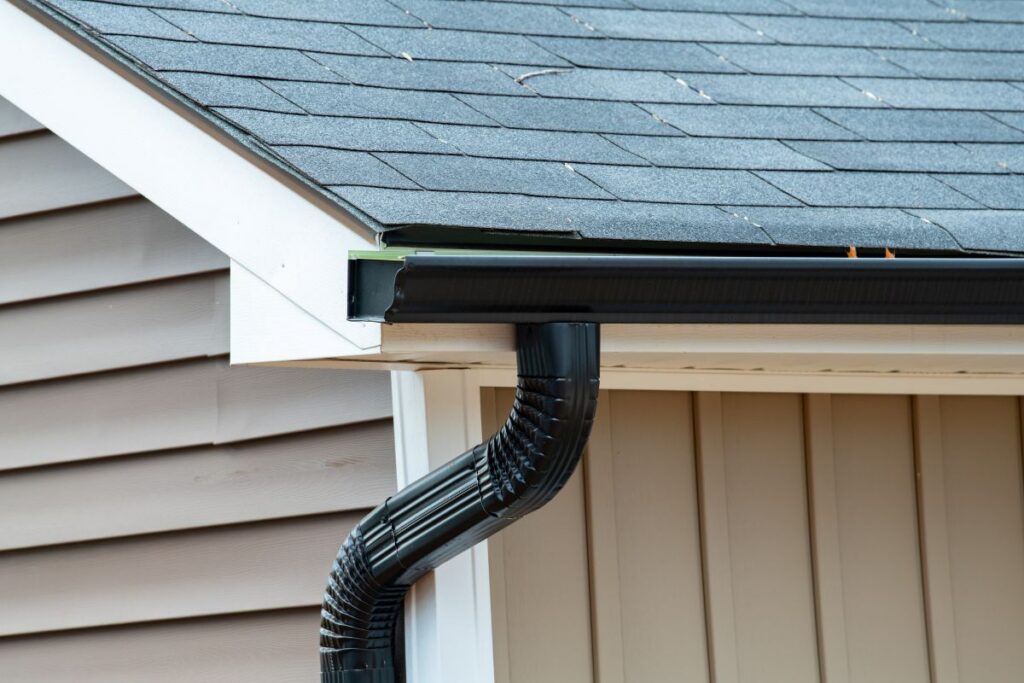
Loose, detached, or misaligned downspouts mean water is no longer being directed where it should go, with several feet of vertical drop reaching the ground in unexpected locations. A downspout that has come loose from the side of the house can swing in storms, eventually pulling away completely. A misaligned downspout (one that points back toward the house or ends just at ground level) directs water exactly where it should not go. Industry guidance calls for downspouts to be installed every 20 to 50 feet along the gutter, with each downspout extending the water at least 5 feet from the foundation. Re-securing a loose downspout takes 30 minutes and $10 to $30 in brackets, while replacing a detached one costs $50 to $150 per run.
- Downspout brackets: Should be installed every 6 to 8 feet vertically.
- 20 to 50 feet spacing: Standard horizontal placement.
- 5 foot discharge minimum: Distance from foundation.
- Quick fix: $10 to $30 in brackets for re-securing.
Frequently Asked Questions
How Much Does Rain Gutter Repair Cost?
Rain gutter repair typically costs $150 to $700 for most common repairs, with simple fixes like re-sealing seams or re-securing hangers running $75 to $300 and more involved repairs like replacing damaged sections or fixing downspouts costing $300 to $700. Full gutter replacement on a typical home runs $2,000 to $5,000 in the Kettering and surrounding areas market. Most homeowners can resolve smaller issues for under $500 if caught early.
How Often Should I Clean My Gutters?
You should clean your gutters at least twice a year (spring and fall), plus after any major storm that drops significant debris on the roof. Homes with overhanging trees may need cleaning every 3 to 4 months. Regular cleaning is the single most effective gutter maintenance practice because most gutter problems begin with clogs that prevent water from flowing to the downspouts.
When Should I Replace Versus Repair?
Replace your gutters rather than repair them when you see widespread sagging, multiple leaks, heavy rust, separation across multiple sections, or the system is more than 20 years old. Spot repairs make sense for isolated issues on a relatively new system, but ongoing repair costs that exceed 30 percent of replacement cost typically signal it is time for full replacement. Aluminum seamless gutters typically last 15 to 25 years.
Can I Repair My Gutters Myself?
You can repair your gutters yourself for simple tasks like cleaning out debris, re-sealing small seams, replacing a single section, or tightening loose hangers if you have ladder safety experience and basic tools. More complex repairs involving sagging sections, downspout reconfiguration, or full replacement should be handled by professionals due to fall risk, the precision required for proper slope, and the potential for damage to fascia, soffit, or roofing components.
What Are Signs of Hidden Water Damage From Failing Gutters?
Signs of hidden water damage from failing gutters include musty basement odors, efflorescence (white mineral deposits) on basement walls, soft or rotting fascia boards, mold or mildew on lower exterior walls, foundation cracks, and water stains on ceilings or upper walls of the house. Hidden damage often progresses for months or years before showing visible symptoms, which is why addressing gutter issues early is so important.
Are Gutter Guards Worth Installing?
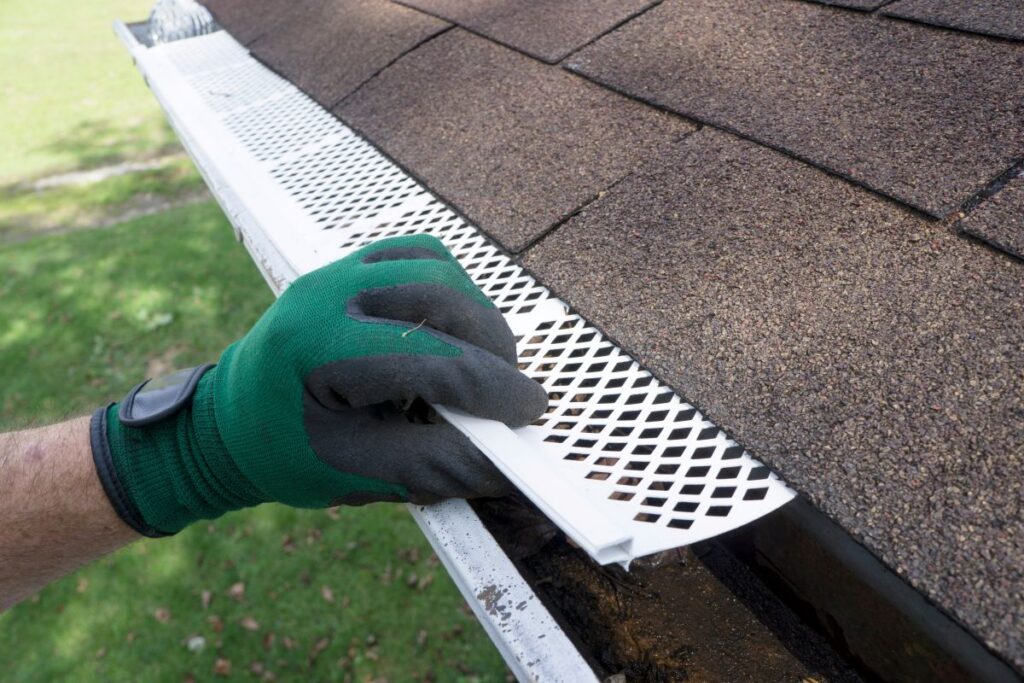
Gutter guards are worth installing for homeowners with significant tree coverage who clean gutters more than twice a year, or who have difficulty accessing the roof safely. Quality gutter guards reduce cleaning frequency by 75 to 90 percent and typically cost $5 to $15 per linear foot installed. They do not eliminate maintenance entirely (fine debris like pine needles and seeds can still accumulate) but significantly reduce the labor required.
Why Kettering Homeowners Trust Johnson Restoration for Gutter Repair
Rain gutter problems are one of the most common but most overlooked threats to a home’s structural integrity, and the warning signs almost always show up well before catastrophic damage occurs. Johnson Restoration brings over a decade of industry experience to gutter repair and replacement in Kettering and surrounding areas, with workmanship warranties, financing options, and the expertise to fix the root cause of gutter issues rather than just the visible symptom. If you have noticed sagging, overflow, leaks, or any of the other warning signs covered in this guide, contact Johnson Restoration today for a free estimate and let our team protect your home from the cascade of damage that failing gutters can cause.