
EPDM roofing thickness is one of the most consequential specification decisions a commercial property owner or facility manager can make during a new roof or re-roof project, because the choice between 45-mil, 60-mil, and 90-mil membrane thickness affects everything from service life and puncture resistance to warranty coverage, wind uplift performance, cost per square foot, and long-term operating expenses on a low-slope commercial building. EPDM (ethylene propylene diene terpolymer) is a synthetic rubber single-ply roofing membrane that has been the dominant low-slope commercial roofing material for over 40 years, with a well-documented performance record that few other materials can match. All three standard thicknesses meet the same core ASTM D4637 industry requirements and can deliver decades of reliable service, but they differ significantly in real-world durability, warranty terms, and best-use scenarios. For commercial property owners in Beavercreek and surrounding areas, understanding the six key facts about EPDM thickness helps ensure the specification decision protects the building for the full service life of the roof.
- Why thickness matters: Directly affects durability, warranty, and cost of the entire roof system.
- What all three thicknesses deliver: ASTM D4637 compliance and proven low-slope performance.
- What you will learn: 6 facts about EPDM thickness plus specific guidance for commercial specification.
Why EPDM Thickness Specification Deserves Careful Attention
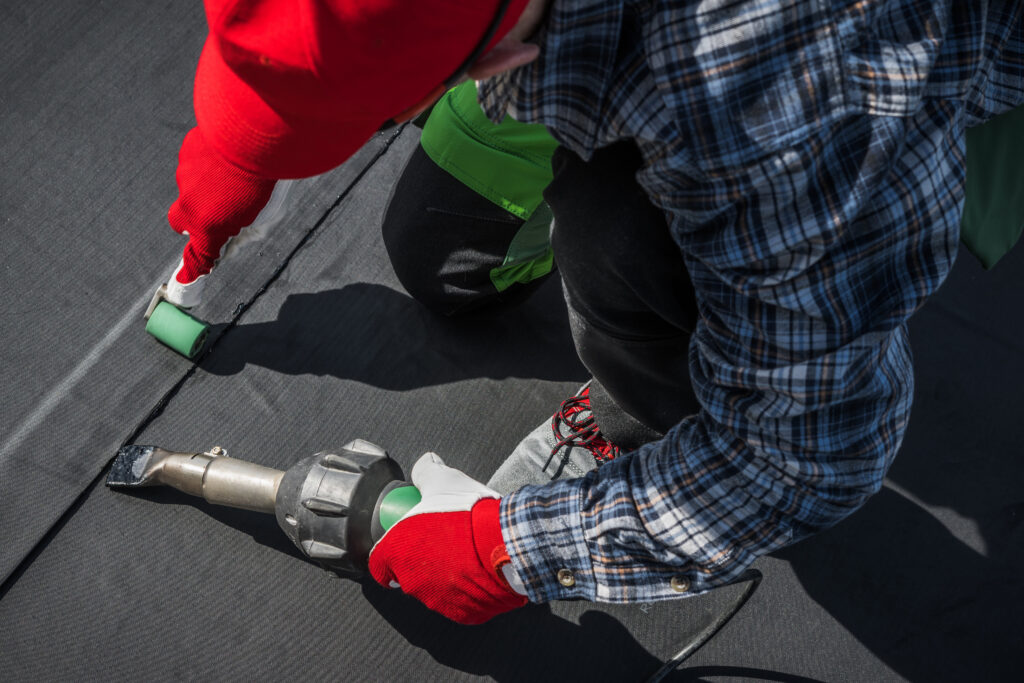
Why EPDM thickness specification deserves careful attention comes down to the fact that a commercial roof is a 25 to 40+ year investment, and small differences in thickness translate to substantial differences in total cost of ownership over the life of the building. Understanding what actually differentiates the thickness options helps property owners make informed capital planning decisions.
How EPDM Service Life Is Actually Documented
EPDM service life is actually documented by decades of field data and independent laboratory studies rather than manufacturer marketing claims alone. According to the EPDM Roofing Association’s 2025 industry survey of 569 roofing professionals, properly installed and maintained EPDM roofing membranes routinely deliver at least 38 years of service life with many installations exceeding 40, 45, and even 50 years, and service life expectations increase substantially with membrane thickness, with 28 percent of surveyed professionals expecting adhered 90-mil membranes to deliver 40 years or more of service. Independent 2025 European laboratory research using accelerated aging methods projected service lives exceeding 70 years for the tested membranes under normal conditions. This depth of documented performance data separates EPDM from newer commercial roofing materials that rely primarily on shorter-term testing to estimate longevity. For commercial property owners in Beavercreek and surrounding areas, the thickness decision directly affects how much of this potential service life the building will actually realize.
- 38+ years: Baseline service life from ERA 2025 survey.
- 40 to 50+ years: Common for adhered thicker membranes.
- 70+ years: Accelerated aging projection from 2025 European study.
- Thickness matters: Direct correlation with expected service life.
Why Thickness Affects Real-World Performance
Thickness affects real-world performance because a thicker membrane has more raw material to absorb impacts, resist punctures from dropped tools or debris, distribute foot traffic loads, withstand hail impacts, and provide reserve material as the surface gradually weathers over decades. Thinner membranes work well in protected applications with minimal foot traffic and controlled environments, while thicker membranes handle the accumulated wear of daily building operations, HVAC service traffic, and occasional weather events. Ohio’s climate specifically stresses commercial roofs through freeze-thaw cycles, severe summer thunderstorms, and occasional damaging hail, all of which favor thicker specifications for buildings expected to remain in service for decades.
- Puncture resistance: Direct function of membrane thickness.
- Foot traffic tolerance: Thicker membranes handle service traffic better.
- Hail impact: Thicker membranes distribute impact energy over more material.
- Weathering reserve: Additional thickness available to weather over time.
6 Key Facts About EPDM Roofing Thickness
Six specific facts about EPDM thickness help commercial property owners understand what the options are and how to specify the right thickness for their building. Working through each fact makes the specification conversation with a roofing contractor much more productive.
1. EPDM Thickness Is Measured in Mils (Thousandths of an Inch)
EPDM thickness is measured in “mils” where one mil equals one-thousandth of an inch, so a 45-mil membrane is 0.045 inches thick, a 60-mil membrane is 0.060 inches thick, and a 90-mil membrane is 0.090 inches thick. In metric terms, 45-mil is approximately 1.14 mm, 60-mil is 1.52 mm, and 90-mil is 2.29 mm. These three thicknesses are the industry standards produced by all major EPDM manufacturers (Carlisle SynTec, Firestone/Elevate, Johns Manville, GenFlex, and others), with 75-mil available as a less common option and 100-mil or thicker available for specialty applications. Understanding this terminology helps property owners read specifications and compare quotes accurately. Contractor bids that don’t specify the exact membrane thickness in mils are missing critical information for making informed comparisons.
- Mil definition: One-thousandth of an inch (0.001″).
- Standard thicknesses: 45-mil, 60-mil, and 90-mil dominate the market.
- Metric equivalents: 1.14 mm, 1.52 mm, and 2.29 mm respectively.
- Bid specification: Always confirm exact thickness in writing.
2. All EPDM Thicknesses Meet the Same ASTM D4637 Standard
All EPDM thicknesses meet the same core ASTM D4637 industry standard, which specifies minimum physical requirements for thickness, breaking strength, tensile strength, elongation, ozone resistance, and weather resistance for each type of EPDM membrane. This means a 45-mil membrane is not “lesser quality” than a 60-mil or 90-mil membrane in terms of meeting the core industry standard; it has less material and therefore different real-world performance characteristics. ASTM D4637 also distinguishes between Type I (non-reinforced) and Type II (reinforced with polyester scrim or fiberglass) EPDM, which affects tear resistance and mechanical attachment options separately from thickness. For commercial property owners, this means the thickness question is separate from the quality question; all major manufacturers produce compliant products across all standard thicknesses.
- ASTM D4637: Industry standard for all EPDM membranes.
- Not a quality proxy: Thickness doesn’t equal manufacturer quality.
- Type I vs Type II: Non-reinforced vs reinforced (separate from thickness).
- Compliance verification: Confirm ASTM D4637 in contractor specifications.
3. Thicker Membranes Cost More but Reduce Long-Term Cost per Year
Thicker EPDM membranes cost more upfront but often reduce the long-term cost per year of service because the extended service life typically outpaces the cost premium. Installed cost per square foot in the Beavercreek and surrounding areas market typically runs $5 to $8 for 45-mil, $6 to $10 for 60-mil, and $8 to $14 for 90-mil systems (with variations based on attachment method, insulation specification, and building complexity). For a 50,000 square foot commercial building, this translates to total project costs ranging from $250,000 for basic 45-mil systems to $700,000+ for 90-mil systems with premium insulation. Spread over projected service life, the annual cost per square foot per year of service can actually favor thicker membranes: $0.15 per year for a 45-mil system lasting 25 years vs. $0.20 per year for a 90-mil system lasting 45 years, depending on specific pricing and expected performance.
- 45-mil: $5 to $8 per square foot installed.
- 60-mil: $6 to $10 per square foot installed.
- 90-mil: $8 to $14 per square foot installed.
- Annual cost: Thicker often wins on cost per year of service.
4. Puncture and Foot-Traffic Resistance Increases Significantly with Thickness
Puncture and foot-traffic resistance increases significantly with membrane thickness because each additional layer of material provides physical resistance to impacts from dropped tools, service equipment, foot pressure, and any other physical forces the roof experiences over its life. Independent testing shows that a 90-mil membrane can absorb roughly twice the impact energy of a 45-mil membrane before punctures develop. For commercial buildings with frequent rooftop access (HVAC servicing, satellite equipment, solar installations, or restaurant kitchen exhaust systems), the difference between 45-mil and 90-mil can be the difference between routine incidents causing membrane damage vs. a roof that shrugs off the same events. Property managers responsible for buildings with regular rooftop foot traffic should strongly consider 60-mil minimum, with 90-mil often warranted for high-traffic scenarios.
- 90-mil impact absorption: Roughly double the 45-mil membrane.
- Rooftop foot traffic: Direct driver of thickness requirements.
- HVAC servicing: Regular access favors thicker specifications.
- Recommendation: 60-mil minimum for regular access; 90-mil for heavy traffic.
5. Warranty Coverage Terms Vary by Thickness
Warranty coverage terms vary significantly by EPDM thickness, with most major manufacturers offering longer warranty periods for thicker membranes. Typical warranty offerings include 15 to 20 year coverage for 45-mil systems, 20 to 25 years for 60-mil systems, and 25 to 30 years for 90-mil systems, though specific terms vary by manufacturer, attachment method, and whether the installation uses the full manufacturer system (membrane plus insulation plus flashing plus adhesives). Some manufacturers offer premium warranties for 90-mil systems that include wind coverage without upper wind speed limits or extended labor coverage that basic warranties don’t include. Property owners planning long-term ownership should evaluate the warranty term math carefully; a 25-year warranty on 60-mil versus a 30-year warranty on 90-mil can represent meaningful long-term risk transfer depending on the specific terms.
- 45-mil: 15 to 20 year typical warranty terms.
- 60-mil: 20 to 25 year typical warranty terms.
- 90-mil: 25 to 30 year typical warranty terms.
- Full system required: For maximum warranty coverage tiers.
6. Specification Depends on Building Use and Environment
Specification depends on the specific building use and environment, and the right EPDM thickness varies based on several factors that a qualified commercial roofing contractor should evaluate. Small buildings with limited rooftop access and standard flat commercial roof configuration (retail strip centers, small offices) often perform well with 45-mil systems. Mid-sized commercial buildings with occasional rooftop service traffic typically warrant 60-mil systems as the balanced default. Large commercial buildings, high-traffic roofs, hail-prone locations, or facilities with extensive rooftop equipment (mechanical, solar, communications) typically warrant 90-mil systems for maximum durability and warranty coverage. In Beavercreek and surrounding areas, where thunderstorm winds and occasional hail are common, 60-mil is often the practical starting specification with 90-mil considered for buildings expected to remain in service for 30+ years.
- 45-mil: Small buildings, limited traffic, standard exposure.
- 60-mil: Mid-sized buildings, occasional service traffic, most Ohio applications.
- 90-mil: Large buildings, heavy traffic, extensive rooftop equipment.
- Ohio consideration: 60-mil practical starting point; 90-mil for long-term ownership.
How to Specify the Right EPDM Thickness for Your Building
How to specify the right EPDM thickness for your building depends on your ownership horizon, building use, rooftop equipment, and how the roof interacts with your operating expense budget. A structured approach helps commercial property owners make informed specifications.
What Questions to Ask Your Roofing Contractor
Questions to ask your commercial roofing contractor include: What specific EPDM membrane thickness are you recommending and why? What is the initial and 3-year aged performance testing data for the specific product? What warranty tier does that thickness qualify for from the manufacturer? What is the total system specification (membrane plus insulation plus flashing plus adhesives)? What is the projected service life for your specific building and use pattern? How does the recommended thickness compare to typical specifications for similar buildings in the area? A qualified commercial roofing contractor will provide specific written answers to all these questions and be able to walk through the trade-offs between thickness options for your specific project.
- Membrane thickness: Recommended thickness with reasoning.
- Warranty tier: Confirm coverage terms for that thickness.
- Full system: Membrane plus insulation plus flashing plus adhesives.
- Projected service life: Building-specific expectations.
What Signs Suggest Your Current Roof Needs Replacement
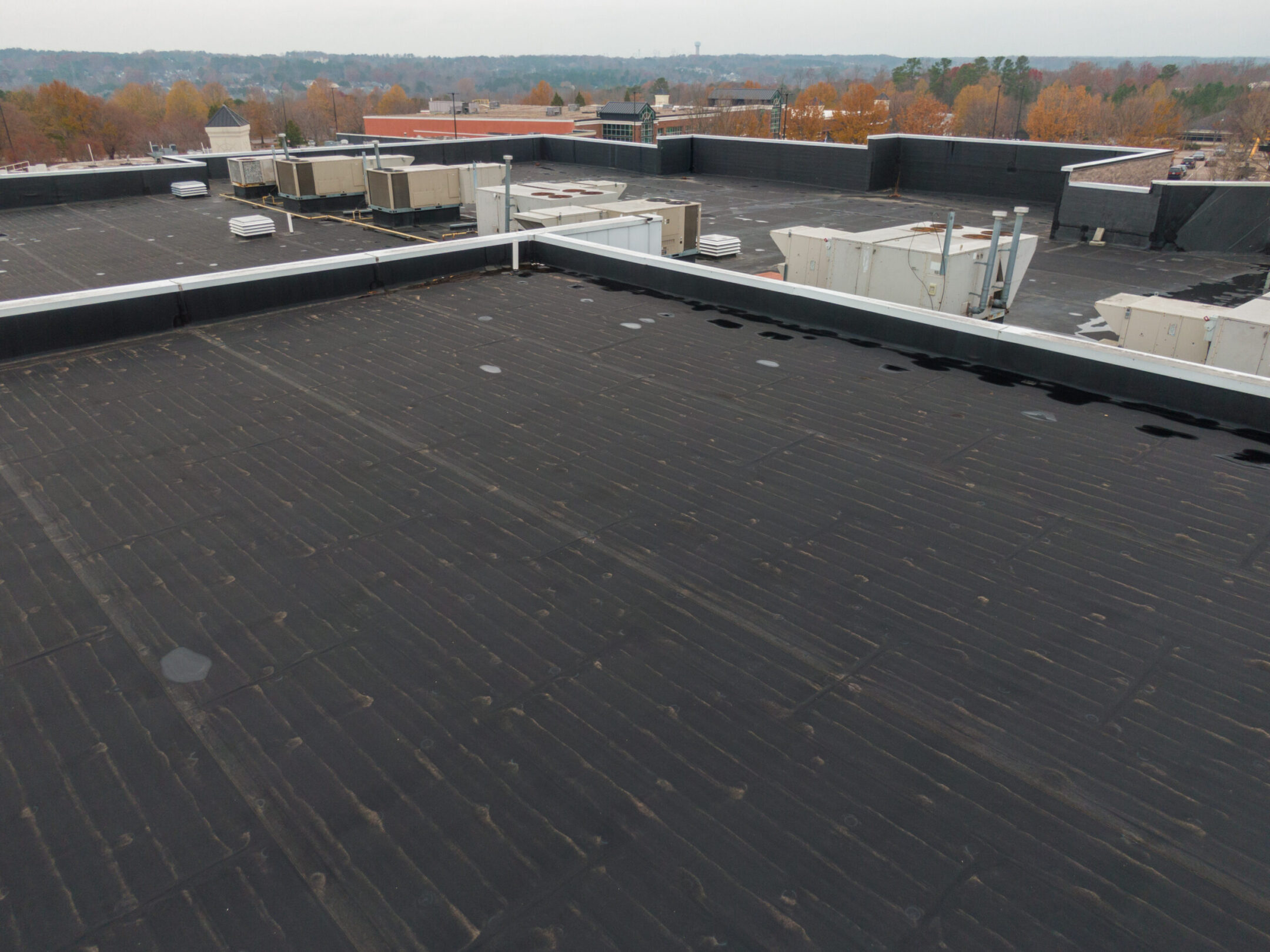
Signs your current commercial EPDM roof needs replacement include visible cracks, splits, or shrinkage of the membrane, seam failures or lifting at membrane joints, ponding water that persists more than 48 hours after rain, moisture damage visible in the ceiling or interior spaces below, energy bills that have increased without other explanation, and any roof more than 25 years old with the original 45-mil or 60-mil specification. Regular biannual roof inspections catch these signs early and allow proactive replacement planning rather than emergency repairs during a leak event. For commercial property owners planning capital budgets, a professional roof condition assessment provides the specific remaining service life estimate needed for accurate financial planning.
- Membrane cracks: Visible splits or shrinkage.
- Seam failures: Lifting or separation at joints.
- Persistent ponding: Water lasting 48+ hours after rain.
- Age plus original spec: 25+ years on 45-mil or 60-mil systems.
Frequently Asked Questions
How Long Does EPDM Roofing Actually Last?
EPDM roofing typically delivers 25 to 40+ years of service life depending on thickness, attachment method, installation quality, and rooftop use patterns. The EPDM Roofing Association’s 2025 industry research confirmed properly installed and maintained EPDM roofs routinely deliver at least 38 years of service, with many installations exceeding 40 to 50 years. Thicker membranes and adhered attachment methods generally deliver the longest service lives. Basic 45-mil ballasted systems on high-traffic roofs may last 20 to 25 years, while adhered 90-mil systems on protected buildings can approach 50 years.
Is 45-Mil EPDM Enough for a Commercial Building?
45-mil EPDM is enough for many commercial buildings with limited rooftop foot traffic, standard flat commercial configuration, and moderate warranty requirements, but 60-mil is a safer specification for most commercial applications in Ohio’s climate. For buildings with frequent rooftop access, heavy service equipment, or ownership horizons over 25 years, 60-mil or 90-mil is typically the better specification. The additional upfront cost is usually offset by the extended service life and better warranty coverage.
How Does EPDM Thickness Compare to TPO Thickness?
EPDM and TPO both come in similar mil thicknesses (45-mil, 60-mil, 80-mil, and 90-mil), but the two materials perform differently. EPDM is a vulcanized rubber that stays flexible across a wider temperature range and handles Ohio’s freeze-thaw cycles well. TPO is a thermoplastic that reflects heat better (making it a “cool roof” option) but can become more brittle over decades. The thickness question is separate from the material choice; both benefit from thicker specifications for demanding applications.
Can I Replace 45-Mil EPDM with 90-Mil EPDM During a Re-Roof?
Yes, you can upgrade from 45-mil EPDM to 90-mil EPDM during a re-roof project, and this is often a smart choice if the original 45-mil roof has reached the end of its service life prematurely due to weathering, foot traffic damage, or other factors. Upgrading to a thicker membrane extends the expected service life of the new roof and often qualifies for stronger warranty terms. The upgrade cost is typically 20 to 40 percent above a like-for-like 45-mil replacement.
What Does “Reinforced” vs “Non-Reinforced” EPDM Mean?
Reinforced EPDM (Type II under ASTM D4637) has an embedded polyester scrim or fiberglass mesh that provides enhanced tear resistance and puncture strength, particularly for mechanically attached systems where wind uplift creates pull-through stresses at the fasteners. Non-reinforced EPDM (Type I) is a homogeneous sheet with maximum elasticity for fully adhered systems where flexibility around penetrations and details matters more than tear resistance. Thickness (mils) and reinforcement (Type I vs Type II) are separate specifications; you can have 45-mil or 60-mil in either reinforced or non-reinforced options.
Does EPDM Thickness Affect Insurance Coverage?
EPDM thickness does not typically affect insurance eligibility, but thicker membranes with better warranty coverage may support lower building deductibles or specific coverage discounts depending on the insurer. What insurance companies care about most is whether the roof is in good condition, properly maintained, and installed to manufacturer specifications; thickness is one input to overall building risk assessment. Contact your specific carrier to confirm any thickness-related coverage considerations for your building.
Why Beavercreek Property Owners Trust Johnson Restoration for Commercial EPDM Roofing
EPDM thickness specification is a decision that reasonable property owners can make several different ways depending on their specific building, ownership horizon, and operating priorities, and the right answer requires balancing upfront cost against long-term service life and warranty coverage. Johnson Restoration brings over a decade of industry experience to commercial roofing projects in Beavercreek and surrounding areas, with workmanship warranties, financing options, and the expertise to help property owners specify the right thickness, attachment method, insulation package, and manufacturer system for their specific building. Whether you are planning a new commercial roof, addressing an aging EPDM system, or evaluating a re-roof option, contact Johnson Restoration today for a free estimate and let our team help you make a specification decision that protects the building for its full expected service life.