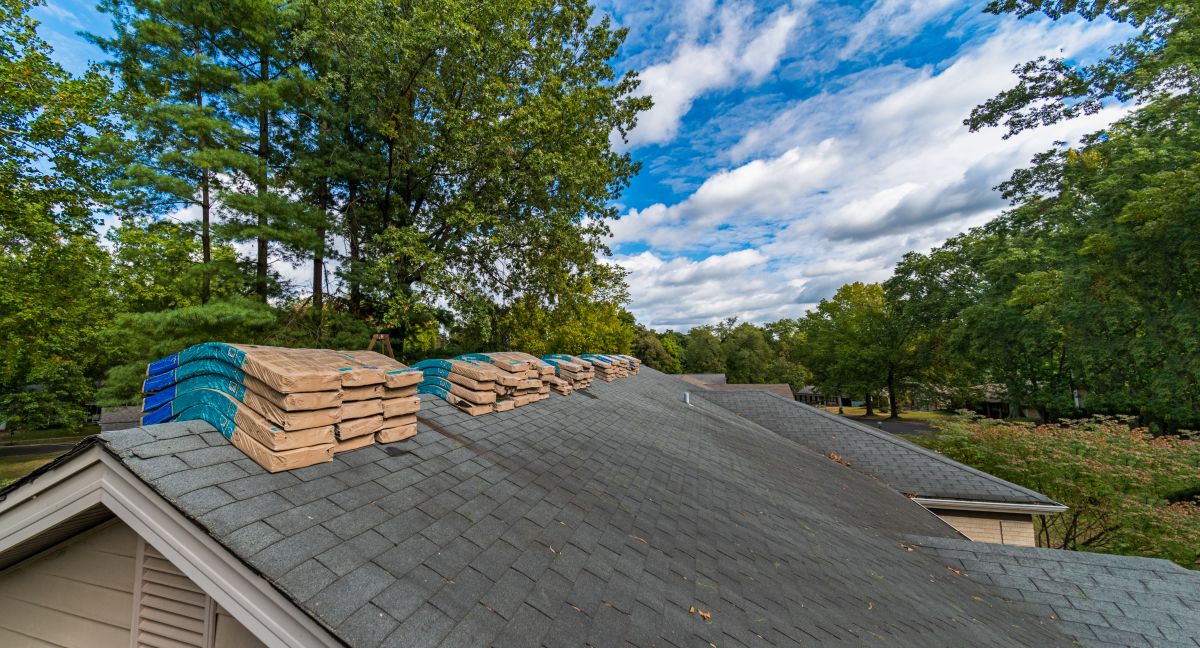

“How much does a new roof cost” is one of the first questions homeowners ask when they start thinking about replacement, and the honest answer is that pricing varies more than most people expect. The national average for a full roof replacement sits around $9,500, but real-world prices can range from under $6,000 for a small ranch home with basic asphalt shingles to over $40,000 for a large home with premium materials and complex architecture. Roof size, material, pitch, complexity, labor rates, and several other factors all play a role, which is why two homes on the same street can receive very different quotes. Homeowners in Centerville and surrounding areas benefit from understanding these factors before getting estimates so they can compare quotes apples to apples.
- What drives pricing: Roof size, material choice, pitch, complexity, and tear off all influence the bottom line.
- What homeowners often miss: Permits, deck repairs, ventilation upgrades, and disposal costs can add thousands.
- What you will learn: The 8 main cost factors, real price ranges by material, and answers to the most common pricing questions.
What Is the Average Cost of a New Roof in 2026?
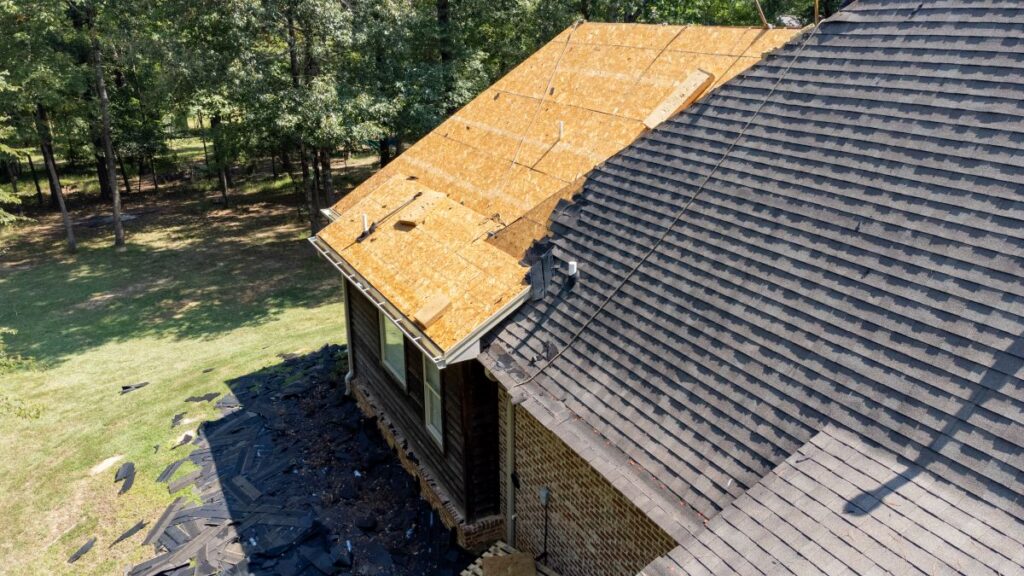
The average cost of a new roof in 2026 depends heavily on roof size, material, and regional labor rates, but national data offers a useful starting point. Knowing the typical range helps homeowners avoid both overpriced bids and suspiciously low quotes.
What Is the National Average Roof Replacement Cost?
The national average roof replacement cost is approximately $9,537, with most homeowners spending between $5,891 and $13,271 for a full replacement of a standard sized home. According to HomeAdvisor, which surveys over 30,000 real customers to develop its pricing data, the average cost works out to about $4 to $11 per square foot, with an overall average of roughly $7 per square foot. These figures reflect typical asphalt shingle installations on average sized homes. Premium materials like slate, clay tile, or standing seam metal can push costs to $25 to $40 per square foot or higher, and large homes with complex rooflines can easily exceed $30,000. Homeowners in Centerville and surrounding areas tend to fall near the national midpoint, slightly below high-cost coastal urban markets.
- National average: $9,537 for a typical roof replacement.
- Typical range: $5,891 to $13,271 for most homes.
- Per square foot: $4 to $11 on average, up to $40 for premium materials.
- Variation: Local labor rates, roof size, and material choice drive most of the difference.
How Is Roof Pricing Measured?
Roof pricing is measured in roofing squares, where one square equals 100 square feet of roof surface area. A typical 2,000 square foot home has a roof that covers approximately 2,200 to 2,400 square feet, or 22 to 24 squares, once pitch and overhangs are factored in. Contractors quote on a per square or per square foot basis, with the total cost including materials, labor, underlayment, flashing, ridge cap, and disposal. Understanding this measurement helps homeowners compare quotes accurately, since a quote of $400 per square is actually $4 per square foot, and a quote that omits accessories may look cheaper while leaving out essential components.
- One roofing square: 100 square feet of roof area.
- Roof vs. home square footage: Roof is typically 1.1 to 1.2 times the home’s footprint.
- Per square pricing: Divide by 100 to convert to per square foot.
- Compare full scope: A complete quote includes underlayment, flashing, drip edge, and ridge cap.
8 Main Factors That Determine New Roof Cost
A roof estimate is not a single line item; it is a calculation built from eight major cost drivers that combine to set the final price. Understanding each one helps homeowners interpret quotes and identify where they have room to save.
1. Roof Size and Square Footage
Roof size and square footage is the largest single driver of total cost because every additional square requires more materials, labor hours, and disposal volume. A 1,500 square foot roof might cost $6,800 to $17,200, while a 2,500 square foot roof in the same condition and material typically runs $10,700 to $27,100. Roof size also affects how much underlayment, ice and water shield, flashing, and ridge cap are needed, all of which scale with the roof’s footprint. Most homeowners underestimate their roof size because they think in terms of their home’s living area rather than the actual roof surface, which is usually 10 to 20 percent larger due to pitch and overhangs.
- 1,500 sq ft roof: $6,800 to $17,200 average range.
- 2,000 sq ft roof: $8,800 to $22,100 average range.
- 2,500 sq ft roof: $10,700 to $27,100 average range.
- Roof vs. home: Roof is 1.1 to 1.2 times the home’s floor plan.
2. Roofing Material Choice
Roofing material choice is the second largest cost driver and the one where homeowners have the most decision making power. Architectural asphalt shingles ($4 to $6 per square foot) remain the most popular choice because they balance affordability, 25 to 50 year lifespans, and strong manufacturer warranties. Metal roofs ($7 to $30 per square foot) cost two to three times more upfront but last 40 to 70 years, while premium materials like slate ($15 to $30 per square foot) and clay tile ($10 to $20 per square foot) can last 50 to 100 years. The right choice depends on how long the homeowner plans to stay in the home, the architectural style, and the long term value calculation.
- 3-tab asphalt shingles: $3 to $5 per square foot; 15 to 25 year lifespan.
- Architectural asphalt: $4 to $6 per square foot; 25 to 50 year lifespan.
- Metal: $7 to $30 per square foot; 40 to 70 year lifespan.
- Slate or tile: $10 to $30+ per square foot; 50 to 100 year lifespan.
3. Roof Pitch and Slope
Roof pitch and slope significantly affect labor costs because steeper roofs are slower, more dangerous, and require additional safety equipment. Pitch is measured as inches of rise per 12 inches of horizontal run, with anything 9/12 or steeper considered exceptionally steep. Steep roofs require harnesses, scaffolding, roof jacks, and slower work pace, which can add $1,000 to $3,000 to a project. Steeper pitches also increase the actual square footage of the roof itself, since a 12/12 pitch (45 degree angle) covers about 1.4 times the floor area it sits over, compared to roughly 1.05 times for a 3/12 low slope roof.
- Low slope (3/12 or less): Easiest and cheapest to install.
- Standard slope (4/12 to 8/12): Most common; no major surcharge.
- Steep slope (9/12 and above): Requires safety equipment and slower work.
- Cost impact: Steep roofs can add $1,000 to $3,000 to the total.
4. Roof Complexity and Penetrations
Roof complexity and penetrations include every chimney, skylight, vent, dormer, valley, and ridge that interrupts the open field of the roof. Each penetration requires custom flashing, careful sealing, and extra labor, which can add $200 to $1,000 per feature. A simple rectangular ranch roof with two plumbing vents and a single chimney is far cheaper to install than a multi-gabled colonial with three dormers, two skylights, and four valleys. Skylights specifically should almost always be replaced at the same time as the roof, since reusing old skylight flashing is one of the leading causes of post-installation leaks.
- Chimneys: Add labor and custom flashing; replacement averages $300 to $1,500.
- Skylights: Best replaced with the roof; averages $1,900 installed.
- Dormers: Add valleys and flashing; can increase cost by $1,000 or more.
- Valleys: Each valley adds material and labor; high water flow areas need premium flashing.
5. Tear-Off and Disposal
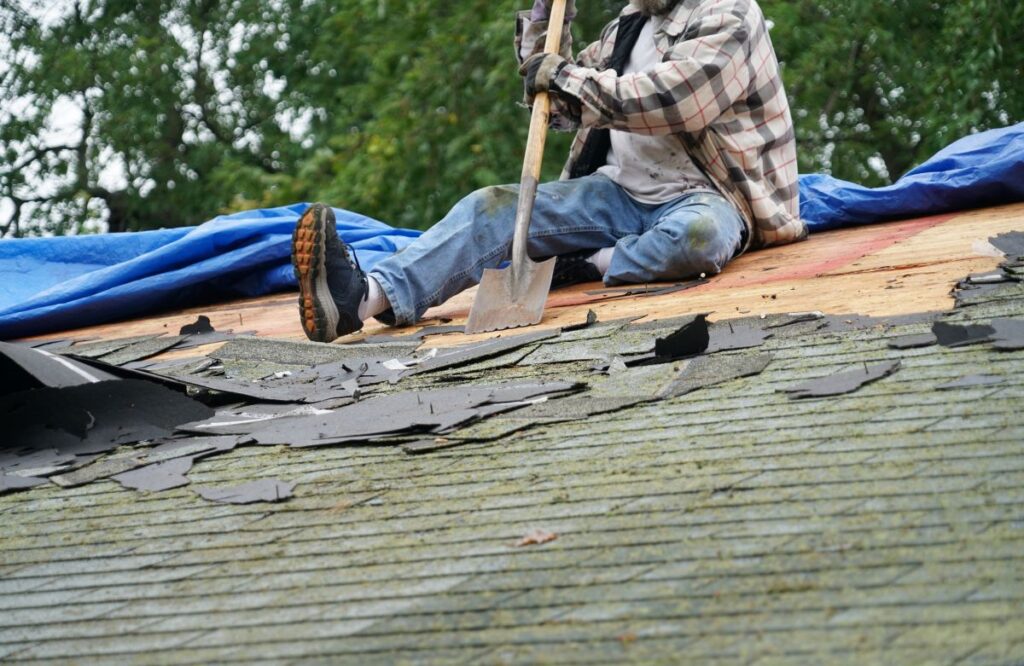
Tear-off and disposal adds $1,000 to $3,000 to a typical roof replacement because removing the old roof generates 2 to 4 tons of debris that has to be hauled and disposed of properly. Tear-off costs run $1 to $5 per square foot depending on how many shingle layers are present and how steep the roof is. Many municipal codes (including those serving Centerville and surrounding areas) limit roofs to two total layers, meaning a homeowner with two existing layers must do a full tear-off rather than an overlay. Full tear-off is also recommended even when overlay is technically allowed, because it lets the contractor inspect the deck for rot and ensures the new roof carries its full warranty.
- Tear-off labor: $1 to $5 per square foot.
- Disposal fees: $500 to $1,500 for hauling and dump fees.
- Two layer limit: Most building codes cap roofs at two layers total.
- Why full tear-off is preferred: Allows deck inspection and preserves manufacturer warranties.
6. Labor Rates and Contractor Experience
Labor rates and contractor experience account for 50 to 60 percent of the total roof replacement cost, making it the single biggest portion of the bill. Skilled crews charge $200 to $300 per square (or $3 to $7 per square foot in labor alone) and that rate reflects safety training, certifications, insurance, warranties, and crew experience. A bid that is significantly lower than the others is often a red flag that the contractor is uninsured, underpaying their crew, or planning to skip steps that show up later as leaks or premature failure. Manufacturer certifications (such as GAF Master Elite or Owens Corning Platinum) also reflect a higher labor standard and unlock enhanced warranty options that uncertified contractors cannot offer.
- Labor share of cost: 50 to 60 percent of the total project.
- Per square labor: $200 to $300 per square.
- Watch for outliers: Bids significantly below the others often signal corners being cut.
- Certifications matter: GAF and Owens Corning programs require higher installation standards.
7. Permits, Code Upgrades, and Deck Repairs
Permits, code upgrades, and deck repairs are the cost factors most often missed in initial estimates. Building permits range from $100 to $1,400 depending on the municipality, and Ohio building codes may require code upgrades such as new ice and water shield, drip edge, or attic ventilation that the old roof did not have. Once the old roof is torn off, any rotted or damaged decking has to be replaced before the new roof goes on, typically at $50 to $100 per 4 x 8 sheet of plywood, including labor. Homeowners should always ask whether their estimate includes a contingency for deck repair, because finding $1,000 to $3,000 in additional charges mid-project is a frequent and unwelcome surprise.
- Permits: $100 to $1,400 depending on jurisdiction.
- Code upgrades: Ice and water shield, drip edge, ventilation may be required.
- Deck repair: $50 to $100 per sheet of plywood, including labor.
- Build in a contingency: Ask for an estimated deck repair allowance in writing.
8. Geographic Location and Climate
Geographic location and climate influence both material choice and labor pricing, with regional variations that can shift a roof cost by 20 to 40 percent. Coastal markets and high-cost metropolitan areas (Boston, San Francisco, New York) typically run 25 to 50 percent above the national average due to labor rates and stricter building codes. Centerville and surrounding areas sit near the national midpoint, with labor costs slightly below coastal metros but higher than rural Midwest markets. Climate also dictates material requirements, with cold weather regions requiring thicker ice and water shield at eaves and valleys (typically 3 to 6 feet up from the eave) to protect against ice dam damage.
- High-cost markets: Coastal and metro areas run 25 to 50 percent above average.
- Midwest pricing: Generally near or slightly below the national average.
- Cold climate add-ons: Extended ice and water shield is standard in Ohio.
- Wind zones: Coastal markets require wind-rated shingles and additional fastening.
Frequently Asked Questions
How Much Does an Asphalt Shingle Roof Cost?
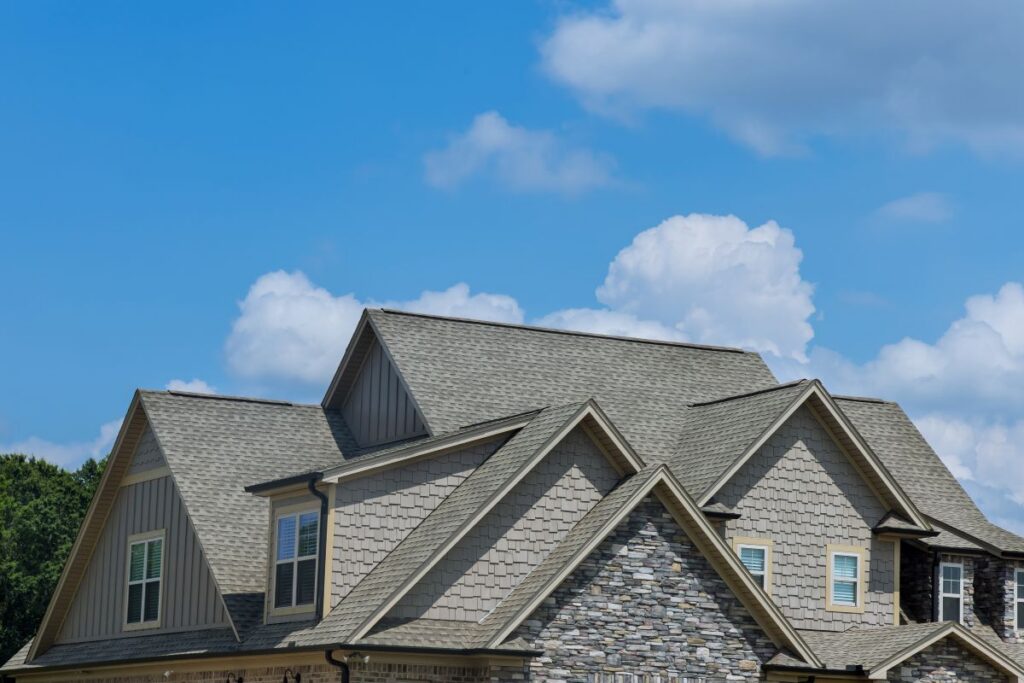
An asphalt shingle roof costs $5,800 to $20,000 for a typical 1,500 to 2,000 square foot home, with architectural shingles running $4 to $6 per square foot installed. Most homeowners in Centerville and surrounding areas spend $8,000 to $14,000 on a complete architectural shingle replacement. 3-tab shingles are cheaper but last only 15 to 25 years compared to 25 to 50 years for architectural.
How Long Does It Take to Replace a Roof?
Replacing a roof takes 1 to 3 days for an average asphalt shingle installation on a typical home, and 3 to 7 days for metal, tile, or complex projects. Weather delays, deck repairs, and material delivery timing can extend the schedule. The entire process from inspection to final cleanup may span 1 to 3 weeks when scheduling and permitting are included.
When Should I Repair Instead of Replace?
Repair instead of replace makes sense when the damage is localized, the roof is under 15 years old, and less than 25 percent of the roof is affected. Repair typically costs $400 to $1,900 versus $9,000 or more for full replacement. If the roof is over 20 years old or showing widespread granule loss, full replacement is usually the better long term value.
What Time of Year Is Cheapest to Replace a Roof?
The cheapest time of year to replace a roof is typically late winter through early spring (February through April), when contractor demand is lowest. Summer and fall are the busiest seasons in Ohio, when homeowners often pay full price. Off-season scheduling can save 5 to 15 percent and also makes it easier to lock in preferred crews.
Does Insurance Cover a New Roof?
Insurance covers a new roof only when the damage is caused by a sudden and accidental event like a storm, hail, wind, or fallen tree. Age-related wear, gradual leaks, and lack of maintenance are not covered. Filing a claim within the policy timeline and documenting damage thoroughly are critical for approval.
Will Financing Help Me Afford a New Roof?
Financing helps many homeowners afford a new roof by spreading the cost over 5 to 15 years with manageable monthly payments. Options include home equity loans, manufacturer-backed financing programs, and contractor-arranged plans. Johnson Restoration offers financing options that let homeowners proceed with needed work without waiting to save the full cost upfront.
Why Centerville Homeowners Trust Johnson Restoration for Roof Replacement
A new roof is one of the largest home improvement investments a homeowner ever makes, and choosing the right contractor matters as much as choosing the right material. Johnson Restoration brings over a decade of industry experience to every roof replacement in Centerville and surrounding areas, with workmanship warranties, financing options, and the transparent pricing homeowners need to understand exactly what they are paying for. Whether you are weighing asphalt versus metal, comparing contractor bids, or planning a full replacement, contact Johnson Restoration today for a free estimate and let our team walk you through a clear, honest cost breakdown for your home.