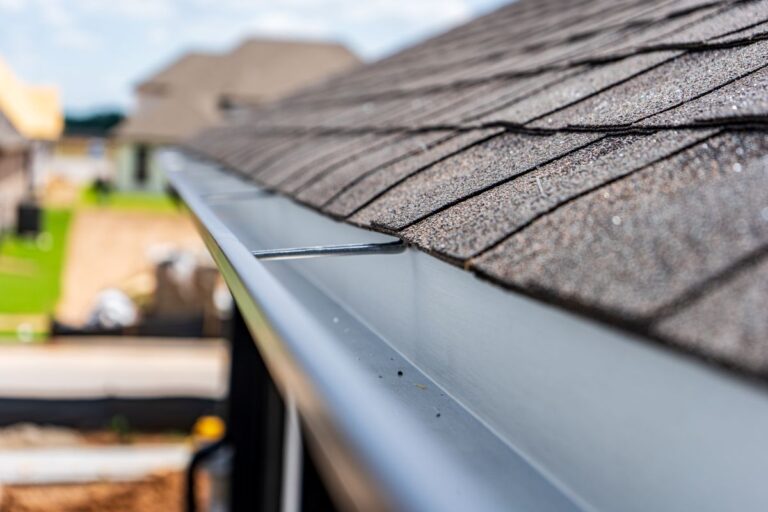
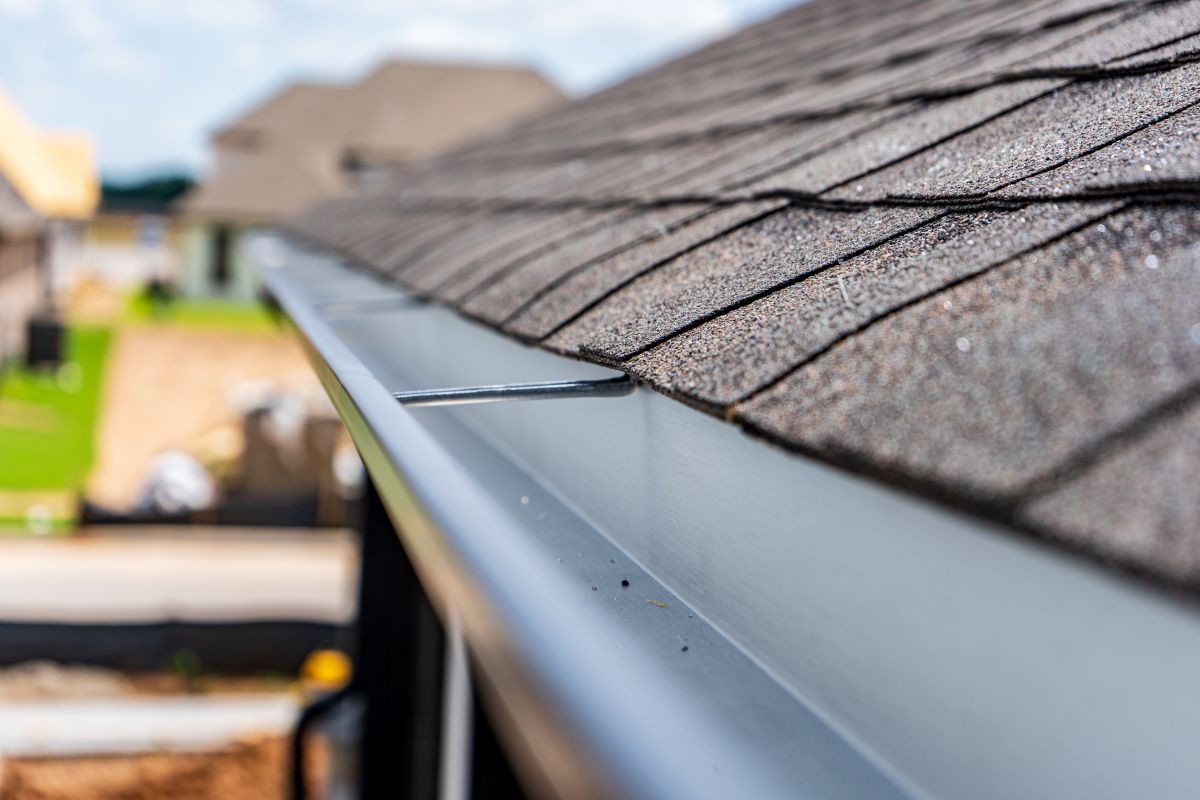

Knowing how to calculate the gutter slope is essential to keeping rainwater flowing smoothly off your roof and away from your home’s foundation. Even the best gutter system can fail if it isn’t angled correctly, leading to water pooling, leaks, and long-term damage. By learning how to measure and maintain the right slope, homeowners can prevent costly drainage issues and extend the life of their roofing and gutter system.
- Purpose: Gutter slope controls how fast water drains through your gutters.
- Common issue: A slope that’s too flat causes standing water and debris buildup.
- Simple solution: Proper measurement ensures efficient drainage and long-term protection.
For homeowners in Oakwood and surrounding areas, understanding the basics of gutter slope can help maintain your home’s exterior and prevent foundation problems during heavy Ohio rainfall.
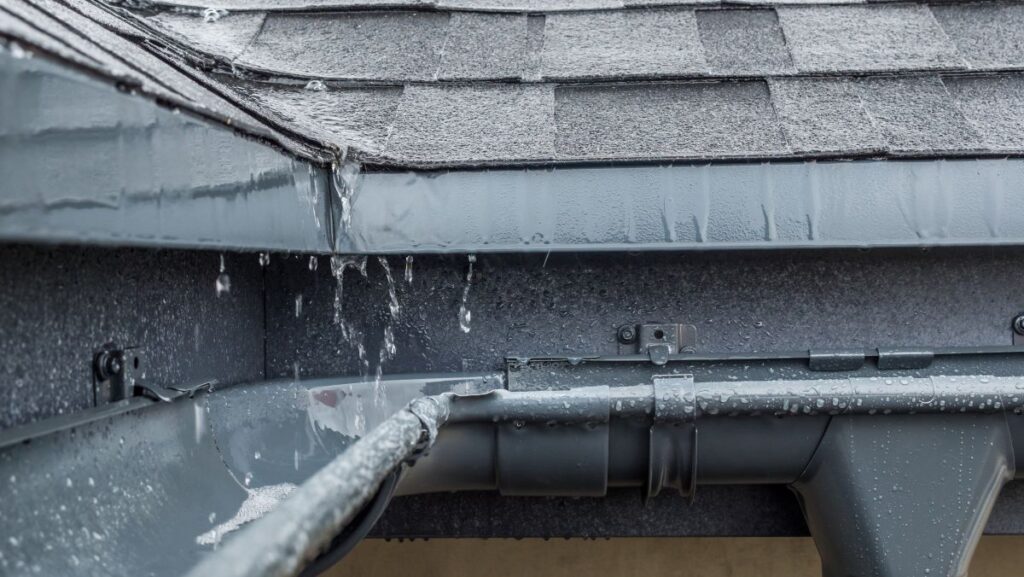
Why Gutter Slope Matters
The gutter slope—also known as pitch—is the slight downward angle that directs water toward the downspouts. While it’s not always noticeable from the ground, this small adjustment makes all the difference in preventing clogs and overflows.
- Efficient water flow: A well-sloped gutter system ensures water drains quickly and completely.
- Prevents pooling: Standing water can corrode gutters and attract pests.
- Protects foundation: Proper drainage keeps water from collecting near your home’s base.
Without the correct slope, gutters can fill with water, sag under pressure, or spill over during storms, leading to leaks along the roofline or fascia boards.
The Ideal Gutter Slope for Homes
Getting the slope right is critical for gutter performance. Too much pitch can make the system look uneven, while too little causes standing water.
- Standard recommendation: Gutters should slope ¼ inch for every 10 feet of run length.
- Minimum acceptable slope: Never less than ⅛ inch per 10 feet, especially on longer rooflines.
- Downspout placement: Every 30–40 feet of gutter should lead to a downspout for optimal drainage.
These measurements ensure steady water movement without visibly distorting the appearance of the roofline.
Signs of Incorrect Gutter Slope
You don’t have to be a contractor to tell when your gutter slope is off. Certain warning signs indicate the system isn’t draining properly and may need adjustment.
- Pooling water after rain: Suggests gutters aren’t pitched enough toward the downspout.
- Overflowing during storms: Could mean too much water is collecting in one section.
- Sagging or pulling away: Standing water adds weight, loosening hangers over time.
- Dripping or leaking joints: Indicates poor water flow or an uneven slope.
- Uneven streaks or stains: Discoloration along the fascia or siding points to misdirected runoff.
When these symptoms appear, it’s time to measure your gutter pitch and make necessary corrections.
6 Steps To Calculate and Adjust Gutter Slope
While professional installation is always recommended, homeowners can understand the process and spot problems early by following these six basic steps.
- Inspect for Obvious Issues
Before measuring, look for visible sagging, standing water, or clogged sections. Clean debris to ensure accurate measurements. - Measure Gutter Length
Use a tape measure to determine the total horizontal length of each gutter run between corners or downspouts. This helps calculate how much drop you’ll need. - Calculate Proper Slope
Multiply your total length (in feet) by ¼ inch per 10 feet to determine the total drop from the high point to the downspout. For example, a 40-foot gutter should slope 1 inch total. - Mark Reference Points
Starting at the high end of the gutter run, mark the starting point and ending drop using a chalk line. This provides a guide for realignment. - Adjust the Hangers
Loosen or reposition the gutter hangers along the fascia board to create a consistent slope toward the downspout. Check alignment with a level or string line. - Test for Drainage
After adjustment, pour water into the gutter or wait for a light rain to ensure proper flow. Water should move steadily to the downspout without pooling.
Following these steps ensures even water distribution and protects your roof, siding, and foundation from overflow damage.
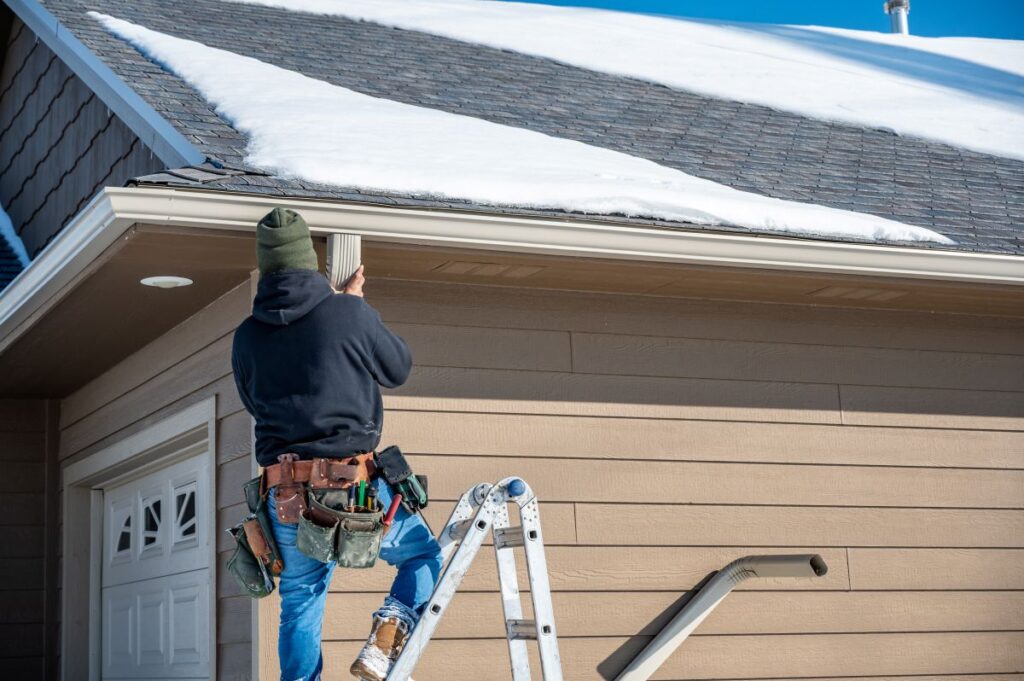
Common Mistakes in Gutter Slope Installation
Even small errors during installation can cause major drainage problems. Avoiding these mistakes helps maintain your home’s overall drainage system.
- Flat gutters: Water won’t drain properly and may stagnate after rainfall.
- Excessive slope: Creates rapid water flow that overshoots downspouts and causes noise.
- Uneven sections: Gaps or irregular angles lead to weak spots and potential leaks.
- Improper hanger spacing: Hangers too far apart allow sagging and uneven drainage.
- Downspouts too far apart: Overloaded sections can overflow during heavy rain.
Correcting these mistakes early prevents structural issues and keeps your gutters performing efficiently.
Maintenance Tips for Consistent Gutter Performance
Once your gutters are properly sloped, regular maintenance helps preserve their effectiveness and prevent future drainage problems.
- Clean gutters twice a year: Spring and fall cleanings remove leaves and debris.
- Inspect after storms: High winds or heavy rainfall can shift gutter alignment.
- Check slope visually: Ensure gutters still angle correctly toward downspouts.
- Tighten hangers: Loose fasteners lead to sagging and reduced pitch.
- Flush with water: Use a hose to test flow and spot hidden blockages.
These habits take just a few minutes each season but help maintain gutter alignment and extend the system’s lifespan.
How Weather in Ohio Impacts Gutter Drainage
Ohio’s unpredictable weather can put your gutter system to the test. From spring downpours to winter snow, maintaining the correct slope helps your home stay protected.
- Heavy rain: A properly sloped gutter handles sudden storms without overflowing.
- Freezing temperatures: Meltwater drains before refreezing, preventing ice dams.
- High winds: Secure hangers keep the system aligned despite strong gusts.
- Seasonal debris: Falling leaves and twigs can disrupt flow if not cleared regularly.
Because of these challenges, homeowners in Oakwood and surrounding areas benefit from professional gutter inspections at least once a year.

When To Call a Professional
While slope adjustments can seem simple, improper work can damage fascia boards or cause leaks. If your gutters are visibly sagging, leaking at joints, or overflowing despite cleaning, it’s best to bring in an expert.
- Structural alignment: Professionals ensure correct slope without harming the fascia.
- Downspout optimization: Technicians can reroute drainage for better flow.
- Repairs and replacement: Damaged or rusted sections may require new materials.
- Preventive inspection: Contractors identify potential slope or support issues early.
Calling a professional ensures long-lasting results and peace of mind that your home’s drainage system is performing as designed.
Protect Your Home With Johnson Restoration
At Johnson Restoration, we understand how important proper gutter slope is to your home’s overall protection. Our team helps homeowners in Oakwood and surrounding areas identify and correct drainage issues before they turn into costly problems. From roof inspections to complete exterior solutions, we make sure your property is ready to handle every Ohio season.
As your trusted local roofing company, we combine quality craftsmanship, durable materials, and years of experience to deliver long-term results. If you’re experiencing water pooling, foundation staining, or uneven gutter flow, contact Johnson Restoration today for expert assistance and reliable peace of mind.