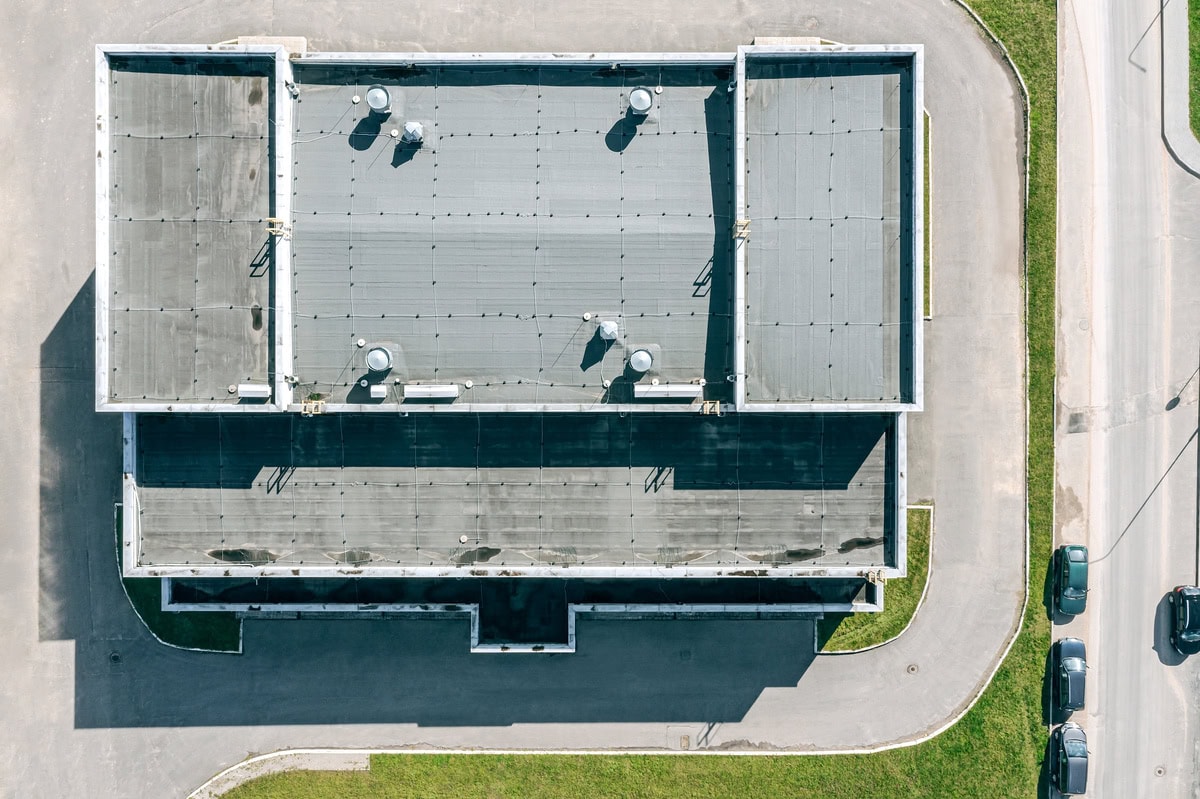

Flat roofs have long been a staple in commercial building design, offering a sleek, modern aesthetic and practical advantages. In recent years, they’ve also gained popularity in residential construction for their contemporary appeal and potential space-saving benefits.
However, choosing the right flat roof material is crucial for ensuring:
- Longevity
- Durability
- Performance
In this expert guide, we’ll delve into the world of flat roof materials, covering everything from what a flat roof is to signs you need to replace it, the various materials available, and tips for maintenance and consultation with roofing professionals.
What is a Flat Roof?
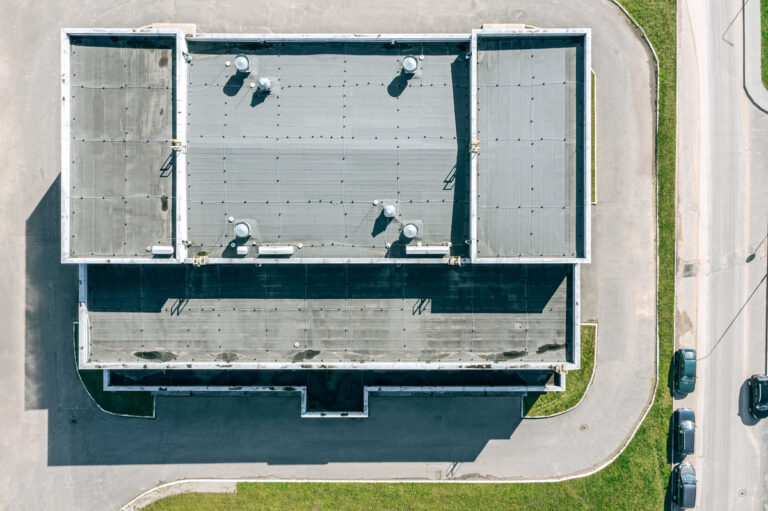
A flat roof, as the name suggests, is nearly level with a slight pitch to facilitate water drainage. Unlike traditional pitched roofs, which have a steep slope, flat roofs offer a more contemporary and minimalist appearance. They are commonly found on:
- Commercial buildings
- Industrial facilities
- Modern residential properties
Why Flat Roofs Are Common for Commercial Buildings
Flat roofs are a popular choice for commercial buildings for several reasons:
- Cost-Effectiveness: Flat roofs typically require fewer materials and less labor compared to pitched roofs, making them more cost-effective, especially for large commercial structures.
- Utilization of Space: Flat roofs provide additional usable space for rooftop installations such as HVAC units, solar panels, and recreational areas, maximizing the building’s footprint.
- Accessibility: Maintenance and repair tasks are often easier to perform on flat roofs due to their accessibility, making them practical for commercial properties with complex infrastructure needs.
- Aesthetics: Flat roofs offer a modern, streamlined aesthetic that complements contemporary architectural designs, making them an attractive choice for commercial properties seeking a sleek appearance.
Signs That You Need to Replace Your Flat Roof
While flat roofs are durable, they are still susceptible to wear and tear over time. Here are some common signs that indicate it may be time to replace your flat roof:
- Leaks: Persistent leaks, especially in multiple locations, suggest that the roofing membrane may be compromised and in need of replacement.
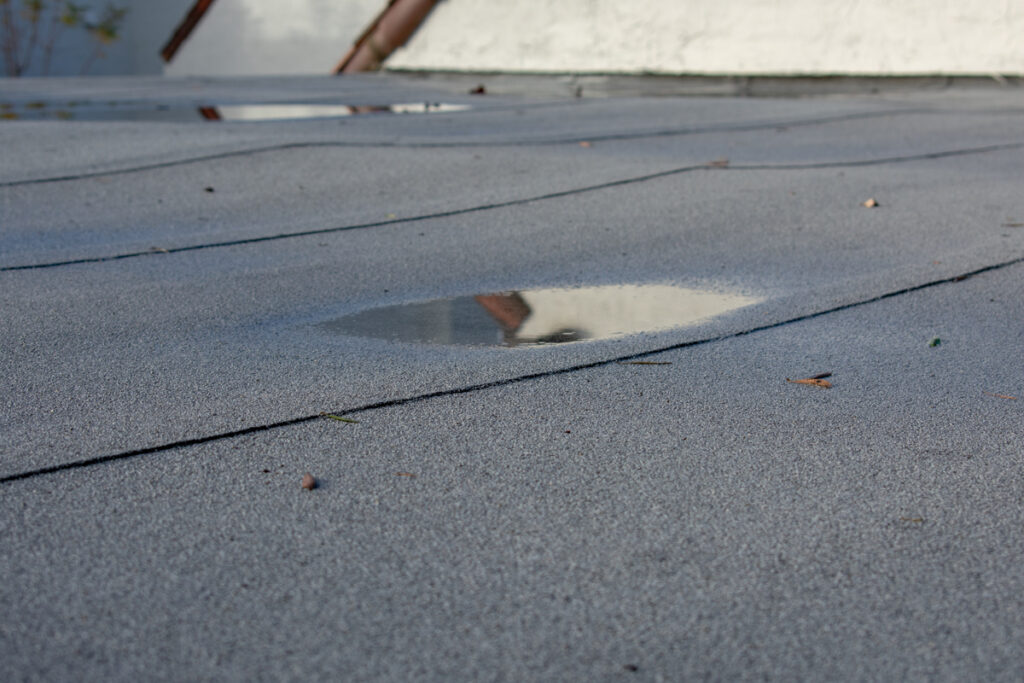
- Pooling Water: Prolonged water accumulation or ponding on the roof surface indicates poor drainage, which can lead to structural damage and leaks if not addressed promptly.
- Visible Damage: Cracks, blisters, or tears in the roofing membrane are indicators of deterioration and may necessitate roof replacement to prevent further damage.
- Sagging or Deformation: Any noticeable sagging or unevenness in the roof structure could indicate structural issues or insufficient support, requiring immediate attention and potential replacement.
- Age: Flat roofs have a limited lifespan, typically ranging from 10 to 30 years depending on the material used. If your roof is nearing the end of its expected lifespan, replacement may be necessary to maintain structural integrity and prevent future problems.
5 Different Flat Roof Materials
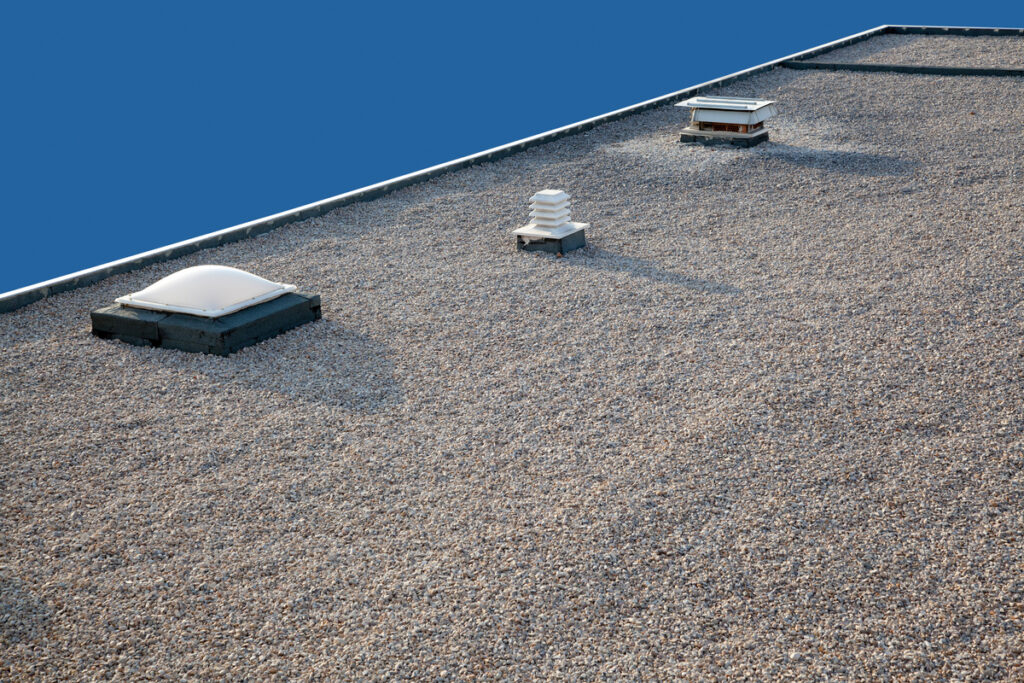
Flat roofs can be constructed using various materials, each offering unique advantages in terms of durability, cost, and maintenance requirements. Here are some common flat roof materials:
1) Built-Up Roofing (BUR):
Also known as tar and gravel roofing, BUR consists of multiple layers of asphalt-impregnated felt alternated with layers of bitumen and surfaced with gravel or mineral granules. BUR is known for its durability and resistance to foot traffic, making it suitable for high-traffic commercial buildings.
2) Single-Ply Membrane:
Single-ply membranes, such as EPDM (ethylene propylene diene terpolymer), TPO (thermoplastic polyolefin), and PVC (polyvinyl chloride), offer lightweight, flexible roofing solutions that are easy to install and repair. These materials provide excellent weather resistance and UV protection, making them popular choices for commercial and residential applications.
3) Modified Bitumen:
Modified bitumen roofing combines the durability of traditional BUR with the flexibility of modern membrane roofing. It consists of reinforced asphalt sheets with added modifiers for enhanced strength, flexibility, and weather resistance. Modified bitumen roofs can be installed using heat welding or cold adhesive methods, offering versatility and performance in various climates.
4) Metal Roofing:
Metal roofs, typically made of steel, aluminum, or copper, offer exceptional durability, longevity, and energy efficiency. Metal roofing systems can be installed as panels or standing seam systems, providing sleek, modern aesthetics and robust weather protection. While initially more expensive than other flat roof materials, metal roofs offer long-term savings through reduced maintenance and energy costs.
5) Green Roofing:
Green roofs, also known as vegetative or eco-roofs, consist of living vegetation planted on a waterproof membrane installed over the roof surface. Green roofs provide numerous environmental benefits, including improved insulation, stormwater management, and air quality. While green roofs require specialized design and installation techniques, they offer unique aesthetic appeal and sustainability benefits for both commercial and residential buildings.
How to Choose the Right Flat Roof Material for You
Selecting the right flat roof material involves considering several factors, including:
- Climate: Choose a roofing material that can withstand the climatic conditions of your region, including temperature fluctuations, precipitation levels, and exposure to UV radiation.
- Durability: Prioritize materials with proven durability and resistance to weathering, impact, and foot traffic, especially for commercial buildings with high traffic or extreme weather conditions.
- Cost: Evaluate the initial installation costs as well as long-term maintenance and repair expenses to determine the most cost-effective roofing solution for your budget and requirements.
- Energy Efficiency: Consider roofing materials with high solar reflectance and thermal emissivity ratings to reduce heat absorption and energy consumption, particularly in warm climates.
- Aesthetics: Choose a roofing material that complements the architectural style and design aesthetic of your building, whether you prefer a traditional, modern, or eco-friendly look.
- Environmental Impact: Explore eco-friendly roofing options, such as green roofs or recycled materials, to minimize environmental impact and promote sustainability in your building design.
Average Cost of Flat Roof Replacement
The cost of flat roof replacement varies depending on factors such as the size of the roof, choice of materials, labor costs, and any additional features or modifications required. On average, the cost of replacing a flat roof can range from $5 to $15 per square foot, with total costs typically ranging from $5,000 to $30,000 for an average-sized commercial building.
How to Take Care of Your Flat Roof
Proper maintenance is essential for maximizing the lifespan and performance of your flat roof. Here are some tips for maintaining your flat roof:
- Regular Inspections: Conduct routine inspections of your flat roof to check for signs of damage, such as leaks, cracks, or ponding water. Address any issues promptly to prevent further damage or deterioration. Because standing water can lead to structural strain and membrane failure, understanding the specific causes and solutions for ponding on a flat roof is essential for maintaining a dry and secure building.
- Clear Debris: Remove leaves, branches, and other debris from the roof surface to prevent clogging of drains and gutters, which can lead to water accumulation and structural damage.
- Trim Overhanging Branches: Trim nearby trees to prevent branches from scraping or puncturing the roof membrane and to minimize the risk of falling debris during storms.
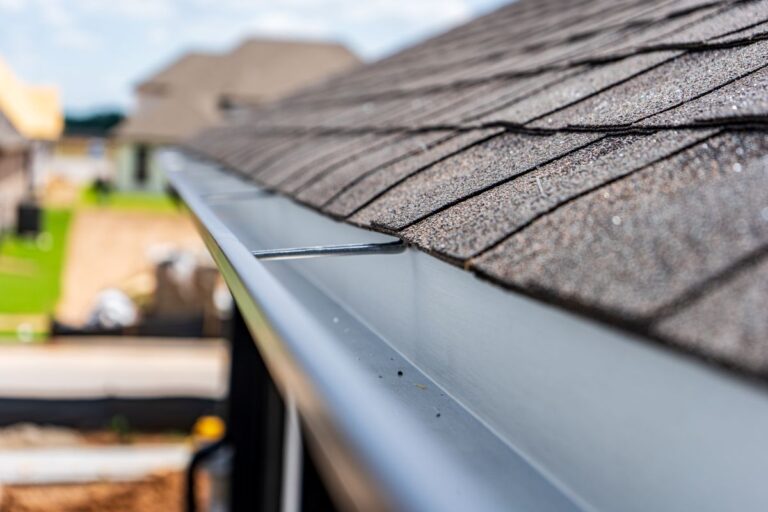
- Clean Gutters and Drains: Ensure that gutters, downspouts, and roof drains are clear of debris and properly functioning to facilitate water drainage and prevent water backup.
- Schedule Professional Maintenance: Hire a professional roofing contractor to perform regular maintenance tasks, such as roof cleaning, inspection, and minor repairs, to identify and address potential issues before they escalate.
- Monitor Roof Traffic: Minimize foot traffic on the roof surface to reduce the risk of damage to the roofing membrane and ensure the safety of maintenance personnel.
Why You Should Always Consult With a Professional Roofer
When it comes to flat roof installation, replacement, or repair, it’s essential to consult with a qualified roofing professional. Here are some reasons why:
Expertise:
Professional roofers have the knowledge, skills, and experience to assess your roofing needs accurately and recommend the most suitable materials and solutions for your building.
Quality Workmanship:
Hiring a reputable roofing contractor ensures that the installation or repair work is performed to the highest standards of quality and craftsmanship, minimizing the risk of future problems and ensuring the longevity of your roof.
Safety:
Roofing work can be hazardous, especially on flat roofs with limited slope and potential fall hazards. Professional roofers are trained in safety protocols and have the necessary equipment to perform the work safely and efficiently.
Warranty Protection:
Many roofing materials come with manufacturer warranties that require professional installation to remain valid. Hiring a certified roofer ensures that your warranty coverage is upheld, providing added peace of mind and protection against defects or issues with the roofing materials.
Code Compliance:
Professional roofers are familiar with local building codes and regulations governing roofing installations, ensuring that your roof meets all necessary requirements and passes inspections.
Long-Term Savings:
While DIY roofing may seem cost-effective initially, improper installation or repairs can lead to costly damage and repairs down the line. Investing in professional roofing services ensures that the job is done right the first time, saving you time, money, and frustration in the long run.
Learn More About Flat Roofing Materials
Choosing the right flat roof material is a critical decision that can impact the longevity, performance, and aesthetics of your building. By understanding the different types of flat roof materials available, considering factors such as climate, durability, cost, and energy efficiency, and consulting with a professional roofer, you can make an informed decision that meets your needs and budget.
Whether you opt for traditional built-up roofing, modern membrane systems, eco-friendly green roofs, or durable metal roofing, proper maintenance and professional installation are key to ensuring the success and longevity of your flat roof investment. Contact Johnson Restoration today to learn how we can help.