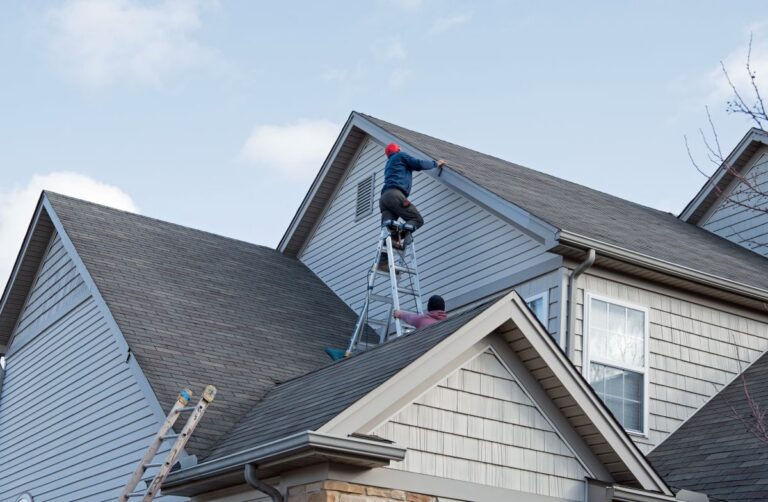

Your home’s exterior doesn’t just make your property look good, it plays a crucial role in protecting your house from the elements. While most homeowners focus on roofs, siding, or windows, there’s one component that often goes overlooked until it’s in need of a full replacement: the soffit. At Johnson Restoration, we know how important it is to maintain every detail of your home, which is why we’re here to walk you through everything you need to know about soffit repair vs replacement, including:
- What a soffit is
- Signs of damage
- How to know whether to repair or replace
What is a Soffit?
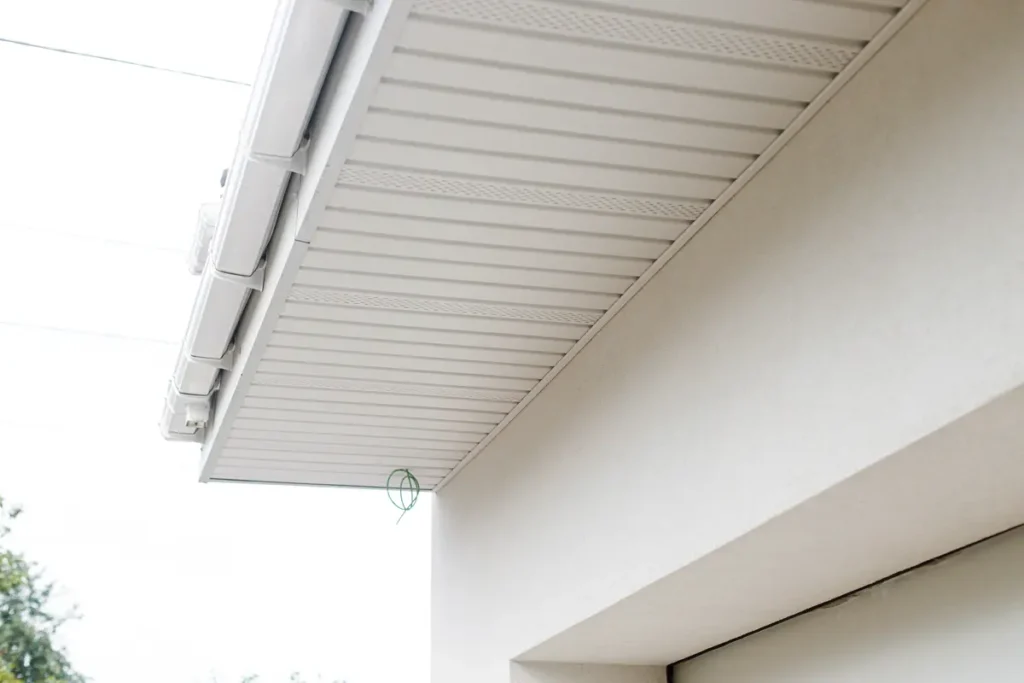
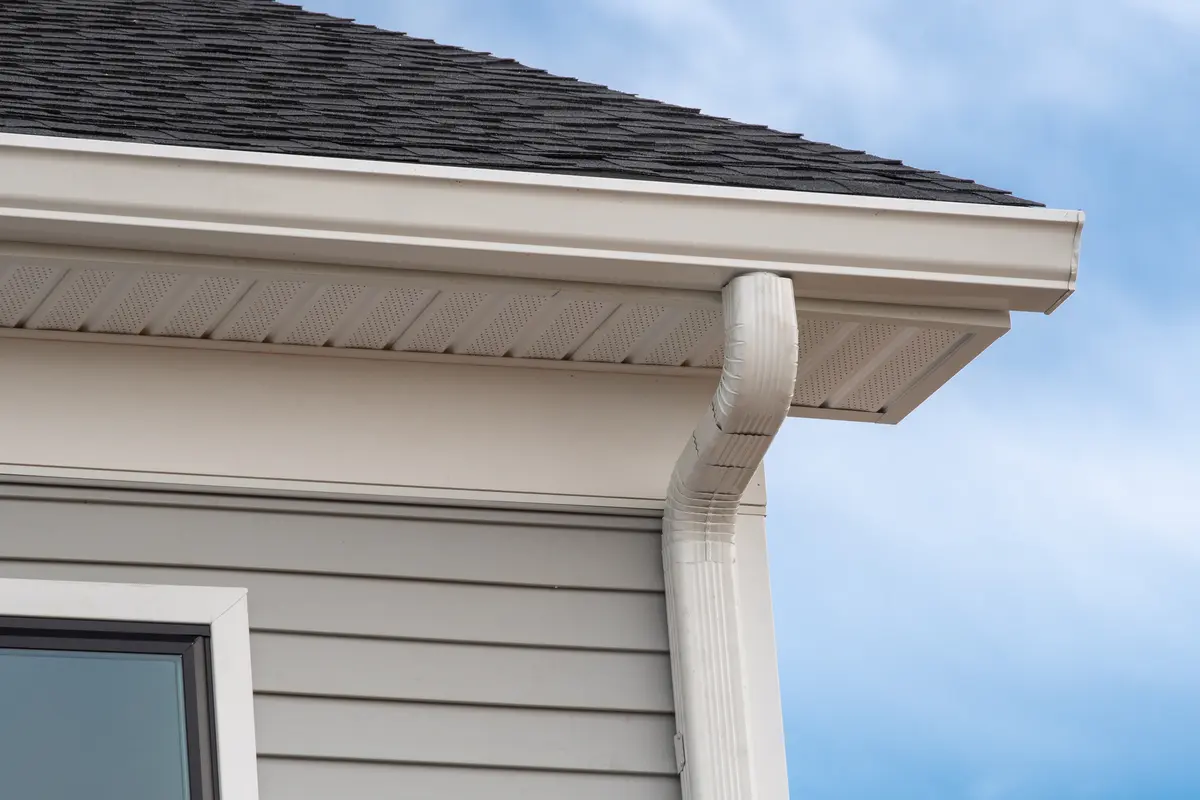
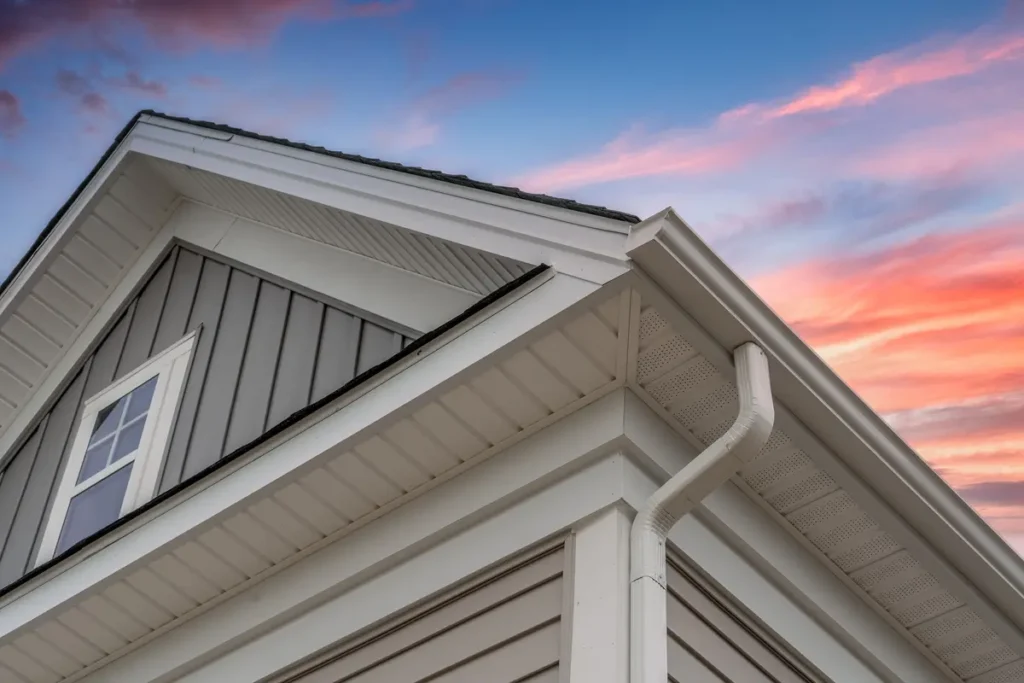
Before we get into the nitty-gritty of soffit repair vs replacement, it’s essential to understand what a soffit actually is. The soffit is the flat or slightly sloped surface that lies beneath the eaves of your roof. If you stand outside your house and look up at the underside of your roof’s overhang, you’re looking at the soffit.
Soffits are not just a decorative element—they serve several critical purposes, including:
- Ventilation: Many soffits are vented, allowing airflow into your attic. This helps prevent moisture build-up, mold growth, and rot in the roof structure.
- Protection: The soffit acts as a shield, preventing pests, dirt, and debris from entering your roof’s underside. It also keeps water from seeping into vulnerable spots on your roof.
- Aesthetic Appeal: A well-maintained soffit complements your home’s exterior and improves curb appeal.
Different Soffit Styles
When it comes to soffit styles, homeowners have a variety of options that can complement the architectural design of their home. Some common styles for soffits include:
- Solid Soffits: These provide a clean, seamless look and are best suited for areas where ventilation is not a primary concern.
- Vented Soffits: Designed with perforations or openings, vented soffits are ideal for promoting airflow and reducing moisture in the attic.
- Beaded/Decorative Soffits: Featuring a more ornate design, beaded or decorative soffits are perfect for adding a touch of charm, especially in traditional or Victorian-style homes.
Each style offers its own set of benefits, so it’s important to choose one that aligns with both functional needs and aesthetic preferences.
Soffit Repair vs Replacement: Common Materials
Soffits are also available in a variety of materials, each with its own advantages and considerations. Popular materials include:
- Vinyl: A low-maintenance, durable option that resists moisture and doesn’t require repainting. It’s also cost-effective and widely available.
- Aluminum: Known for its lightweight and weather-resistant properties, aluminum soffits are ideal for areas prone to harsher climates. They can also be painted to match your home.
- Wood: Offering a classic, natural look, wood soffits are well-loved for their timeless style. However, they require regular maintenance to prevent rot and damage.
- Fiber Cement: Highly durable and resistant to both weather and pests, fiber cement soffits provide a balance of strength and low upkeep.
- Composite Materials: Combining the benefits of multiple materials, composite soffits offer durability, style, and versatility.
By understanding the different soffit styles and materials available, you can make an informed decision that meets the needs of your home both functionally and aesthetically.
Why is Proper Maintenance of a Soffit Important?
Because soffits are tucked under roof overhangs, they are easy to ignore—out of sight, out of mind. However, damaged or deteriorating soffits can lead to severe problems, including water damage, pest infestations, and even structural issues within your home.
Keeping your soffits in good shape ensures your roof and attic remain protected while maintaining your home’s overall aesthetics.
How to Spot Damaged or Deteriorating Soffits
The first step in knowing whether you need soffit repair vs replacement is identifying whether there’s a problem in the first place. Some soffit issues can be hard to spot, but it’s important to act quickly to prevent more extensive damage. Here are some common signs that your soffits may need repair or replacement:
- Peeling Paint: If the paint on your soffits is chipping or peeling, it could indicate moisture damage or exposure to harsh weather.
- Signs of Rot: Soft, crumbly wood or discoloration usually signals rotting material, often caused by persistent moisture.
- Pest Infestations: Squirrels, birds, wasps, and other critters can take advantage of cracks or gaps in damaged soffits to nest inside.
- Water Stains: Staining or streaking on your soffits may signal a leak in your roof or gutter problem.
- Ventilation Issues: Poor attic ventilation, like excessive heat or condensation, may point to clogged or damaged vented soffits.
- Visible Gaps or Cracks: Even small cracks in your soffit can grow over time, allowing water or pests to enter.
If you notice any of these issues, it’s time to for a soffit replacement. The sooner you address soffit damage, the easier and more affordable replacement will be.
6 Steps for Soffit Replacement
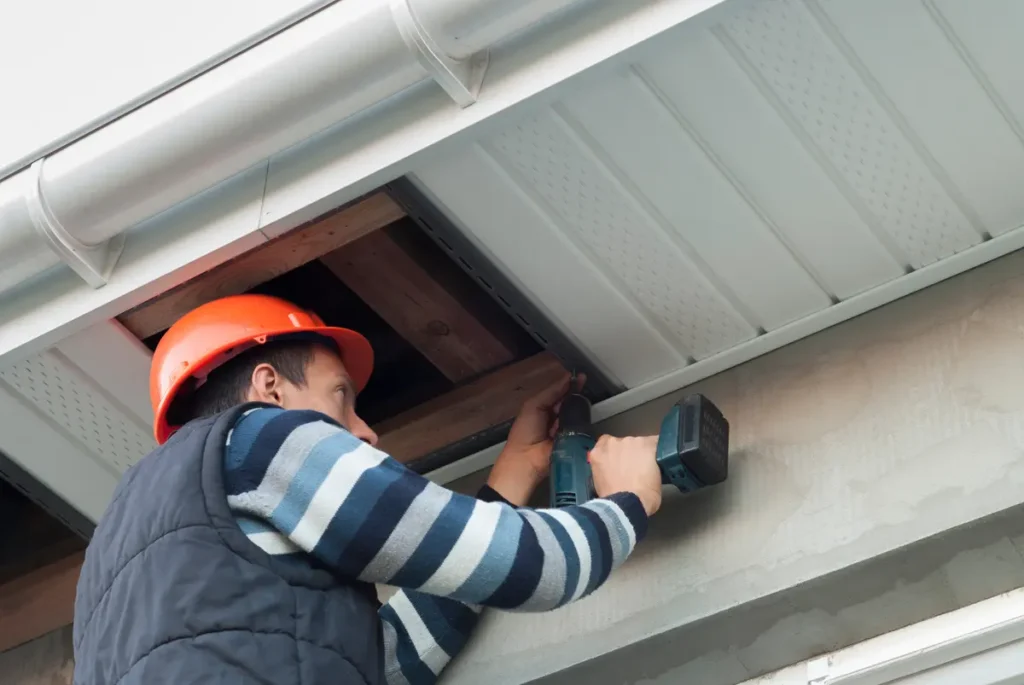
If your soffit is suffering from minor wear and tear or requires a full soffit replacement, the following steps can guide you toward a durable and safe solution.
Step 1. Inspect the Damage
Start by closely examining your soffits to understand the scope of the damage. Is the problem limited to peeling paint, or is there evidence of rot or pest infiltration? Take note of any water stains, holes, or areas where ventilation is blocked.
Step 2. Gather the Right Tools and Materials
For soffit replacement, you’ll need some basic tools and materials, such as:
- A ladder (ensure it’s secure for safety)
- Screwdriver or drill
- Pry bar
- Replacement soffit boards (if necessary)
- Sealant or caulk
- Paint or wood primer
- Gloves and safety goggles
If you’re dealing with wood soffit repair vs replacement, you will need wood filler or epoxy.
Step 3. Remove the Damaged Sections
If the damage is isolated to a specific section of your soffit, you’ll need to carefully remove the damaged area. Use your pry bar or screwdriver to loosen and remove any screws or nails holding the affected board in place. Be gentle to avoid accidentally damaging nearby components like fascia or gutters.
Step 4. Repair or Replace the Material
Get ready to replace soffit systems by doing the following:
- For Minor Damage: Small cracks or holes can often be patched using a filler material, followed by sanding and repainting to match the surrounding area.
- For Severe Damage: If your soffit is rotting or fully broken, you’ll need to replace the damaged section. Cut a new piece of soffit material to match the original size, ensuring it’s securely fastened in place.
Step 5. Seal and Paint
After replacement is complete, it’s critical to seal the soffit to protect it from future water damage or pests. Apply a high-quality caulk or sealant around the edges. Once the sealant has dried, apply a primer and repaint the soffit for a polished, weather-resistant finish.
Step 6. Reassess Ventilation
If your soffits are vented, make sure there’s proper airflow. Replace clogged or damaged screens and ensure no debris is obstructing ventilation.
When to Replace Your Soffits
If repair is not an option for your home (i.e. soffits are severely rotted, warped, or structurally compromised), a full replacement is likely the most practical solution. Persistent mold or mildew that cannot be thoroughly removed may also indicate the need for new soffits to prevent health risks and further damage.
Additionally, if your home has outdated or poorly ventilated soffits, upgrading to modern, vented options can improve airflow and energy efficiency. Finally, consider replacement if the soffits are no longer aesthetically pleasing or matching the style of your home, as this can enhance both the curb appeal and value of your property.
When to Call a Professional
While minor repairs can often be tackled after deciding on soffit repair vs replacement, there are times when calling in the experts at Johnson Restoration for soffit replacement is your safest bet. Professional assistance is recommended if:
- The damage is extensive or widespread
- The soffit issue seems connected to a larger roofing or gutter problem
- You’re concerned about safely reaching high places
Our team of experienced professionals can assess your specific soffit repair vs soffit replacement needs, offer tailored solutions for your home, and ensure the job is done to the highest standard.
Preventative Maintenance for Your Soffits
Prevention is always better than repair. To keep your soffits in excellent condition, incorporate these maintenance tips into your routine:
- Clean Your Gutters Regularly: Clogged gutters can overflow, causing water to damage your soffits.
- Inspect After Storms: Harsh weather can lead to cracks, peeling paint, or clogged vents—check your soffits after storms.
- Keep an Eye on Ventilation:** If you notice poor attic ventilation, address it quickly to prevent moisture build-up in your soffits.
- Repaint Every Few Years:** Adding a fresh protective layer of paint ensures your soffits remain weatherproof.
Soffit Repair vs Replacement: Let Johnson Restoration Help You Decide
If you’ve noticed signs of damage or simply want a professional inspection for peace of mind, give Johnson Restoration provide you with honest answers about scheduling soffit repair vs replacement. We’ll be happy to guide you every step of the way. Contact us today to schedule a consultation. Your home deserves the best, and we’re here to deliver.