Most homeowners never think about what holds their roof together at the peak, but that hidden framing works hard every time the wind picks up. Roof collar ties are horizontal boards that connect opposing rafters near the ridge, keeping the top of your roof from pulling apart. If they are missing, damaged, or were removed during an attic project, your home may be more vulnerable than you realize. For homeowners in Miamisburg and surrounding areas, knowing the warning signs is a simple way to keep the structure over your family solid.
Here is a quick look at what this guide covers:
- What collar ties do and how they differ from rafter ties
- Six warning signs that your roof framing needs attention
- How collar ties are added, repaired, or replaced
- Answers to common homeowner questions
Why Collar Ties Matter More Than You Might Think
Collar ties are easy to overlook because they sit high in the attic, often tucked just below the ridge. Yet these simple framing members play a specific structural role, and understanding it leads to smarter repair and remodeling decisions.
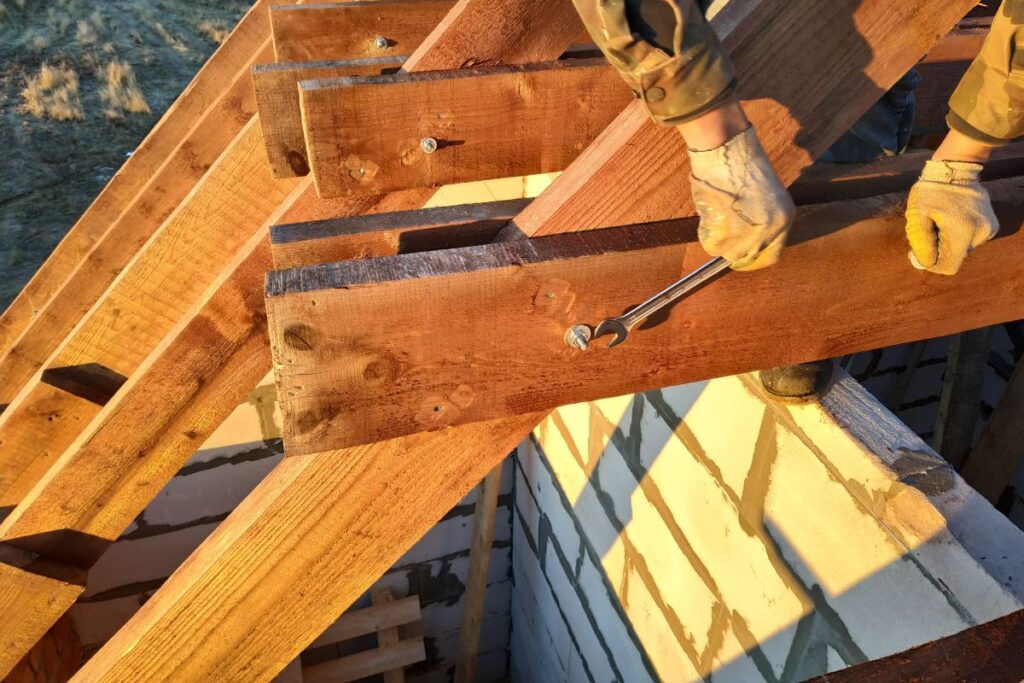
When wind blows across a pitched roof, it creates upward suction, a force known as uplift. Collar ties sit in the upper third of the attic and tie each pair of rafters together so that suction cannot pry the ridge open. Here is why that matters:
- Stronger wind resistance: By locking opposing rafters together, collar ties help prevent the ridge from separating during severe thunderstorms and high wind events.
- Better load sharing: Some engineers believe collar ties help spread heavy loads, such as snow, between both sides of the roof, which may ease stress on undersized rafters.
- Protection for your roofing system: A stable ridge keeps shingles, ridge caps, and vents sitting flat, which lowers the chance of leaks and wind damage.
- Smarter remodeling decisions: Knowing where your collar ties are and why they are there helps you avoid removing something structural when finishing an attic.
It is worth noting that collar ties are not the same as rafter ties, which sit lower in the attic and resist the outward push of the roof on your walls. Once you see how these two framing members divide the work, the difference becomes clear quickly. Both matter, and a healthy roof frame depends on each one doing its own job.
6 Signs Your Roof May Need Collar Ties or Framing Repairs
You do not need to be a framing expert to spot trouble. Many of the warning signs show up from the curb or during a careful look around your attic with a good flashlight.
1. Gaps or Movement at the Ridge
The ridge is where your two roof planes meet, and it is exactly the area collar ties are meant to protect. If you notice daylight peeking through at the peak, or the ridge board looks like it has pulled away from the rafters, uplift may already be taking a toll.
- Visible separation where rafters meet the ridge board
- Loose or lifted ridge cap shingles
- Nails backing out near the peak
2. Collar Ties Were Removed During an Attic Project
Homeowners often ask to have collar ties taken out to gain headroom for storage or a bonus room. If that happened in your home without a structural plan to replace their function, the roof may be missing a key line of defense against wind.
3. Cracked, Split, or Loose Ties
Existing collar ties can fail over time. Wood can crack along the grain, and the nails or bolts connecting each tie to the rafters can loosen as the house settles and the framing expands and contracts with the seasons.
- Splits running through the length of the tie
- Ties hanging from only one side
- Rust or corrosion on metal connectors

4. Ties That Are Too Few or Too Low
Spacing and placement matter. Building codes generally call for collar ties in the upper third of the attic, spaced no more than four feet apart. Older homes sometimes have ties on only every third or fourth rafter pair, or ties installed so low that they are really acting as something else.
5. Wind Damage Concentrated Near the Peak
After a strong storm, pay attention to where the damage shows up. Missing ridge caps, shifted vents, or shingles lifted along the top of the roof can point to movement in the framing underneath, not just surface wear.
6. Sagging Rafters or a Wavy Roofline
A roofline that dips or looks wavy is a serious red flag. Sagging is usually linked to undersized rafters, missing rafter ties, or rotted decking rather than collar ties alone, but it signals that the overall frame needs a professional evaluation right away.
- Dips between the ridge and the eaves
- New ceiling cracks in upper-floor rooms
- Interior doors that suddenly stick
If you spot any of these warning signs, avoid adding or removing framing on your own. A trained inspector can determine whether the issue involves collar ties, rafter ties, the ridge, or a combination, then recommend the right fix.
What Adding or Repairing Collar Ties Involves
Many homeowners assume framing work means tearing off the roof. In most cases, collar ties can be added, reinforced, or replaced from inside the attic without disturbing your shingles at all.
Start With an Inspection
A thorough attic and roof inspection always comes first. The inspector looks at rafter size and spacing, the condition of the ridge, whether ceiling joists or rafter ties are present, and any signs of moisture or rot that could weaken new connections.
Choose the Right Material
Code generally requires collar ties to be at least a nominal 1×4, though 2×4 or 2×6 lumber is common in practice. Some roofs use metal ridge straps instead, which fasten across the ridge and can be a good option when attic space is tight.
Fasten Everything Correctly
A collar tie is only as strong as its connections. Each end needs the right number and type of fasteners, matched to code requirements, so the tie can actually hold the rafters together under load.
Check Local Permit Requirements
Structural framing changes may require a permit depending on your municipality. A local contractor will know what your building department expects and can take care of the paperwork for you.
Doing this work correctly protects both your roof and your investment. Properly sized and fastened ties can quietly do their job for decades.
Collar Ties Compared to Other Roof Framing Supports
Collar ties are just one piece of the framing puzzle. Comparing them with the other supports in your attic makes it easier to understand what a contractor is recommending and why it matters.
| Framing Member | Where It Sits | Main Job |
| Collar ties | Upper third of the attic, near the ridge | Resist ridge separation from wind uplift |
| Rafter ties | Lower third of the attic | Resist outward thrust on exterior walls |
| Ceiling joists | Top of the exterior walls | Support the ceiling and often act as rafter ties |
| Ridge straps | Across the top of the ridge | Metal alternative to collar ties for uplift |
| Structural ridge beam | At the peak, supported by posts | Carries roof load so ties may not be needed |
What If Your Home Has Trusses?
Many newer homes use prefabricated trusses instead of individual rafters. Trusses are engineered as complete triangles with built-in webbing, so they typically do not need added collar ties. Still, never cut or alter trusses without an engineer’s approval.
Knowing which system your home has is the first step toward the right fix. Around Miamisburg and surrounding areas, many neighborhoods mix older stick-framed houses with newer truss-built homes, so the right answer always depends on what is actually overhead.
Frequently Asked Questions About Roof Collar Ties
Collar ties raise plenty of questions, especially during attic projects or after storm damage. Here are quick answers to the ones we hear most often.
Are collar ties required by building code?
Residential code calls for uplift resistance at the ridge of conventionally framed roofs, typically through collar ties or ridge straps. Whether your specific home needs them depends on how the roof was designed, so a professional assessment is the best way to know for sure.
Can I remove collar ties to make more attic space?
Not without guidance from a structural engineer or qualified contractor. Ridge straps, a structural ridge beam, or other engineered solutions can sometimes replace collar ties, but removing them without a plan can weaken your roof.
What is the difference between collar ties and rafter ties?
Collar ties sit high near the ridge and resist uplift from wind. Rafter ties sit low in the attic and keep the rafters from pushing your walls outward under the weight of the roof.
How much does it cost to add collar ties?
Costs vary based on roof size, attic access, and how many ties are needed. Because the work is usually done from inside the attic, it is often far less involved than a full roof replacement. An inspection will give you a clear number.
How often should collar ties be inspected?
A good rule is to have your attic framing checked during routine roof inspections and after any major wind or hail storm. Catching a loose or cracked tie early keeps a small repair from turning into a bigger one.
If your question is not covered here, our team is always happy to talk through your specific roof. One quick conversation can replace a lot of guesswork.
Keep Your Roof Strong From the Ridge Down
Collar ties may be small, but they play a big role in keeping your roof together when severe weather rolls through Southwest Ohio. Whether you have noticed movement at the ridge, removed ties during a remodel, or simply want confirmation that your roof frame is sound, a professional inspection gives you clear answers. Johnson Restoration has helped homeowners across Miamisburg and surrounding areas protect their homes since 2012, with free estimates and a written scope of work on every project. If you are ready to find out what is happening above your ceiling, contact us today to schedule your free inspection.